Glass cutting is delicate. Many manufacturers struggle with edge chipping, cracking, or inconsistent results. Choosing the wrong laser type can lead to costly damage or failure.
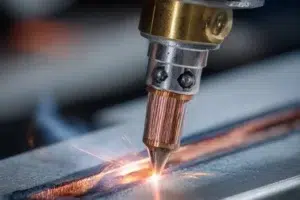
The best laser for cutting glass is the picosecond laser, which offers ultra-short pulses to minimize heat impact and achieve high-precision, clean cuts.
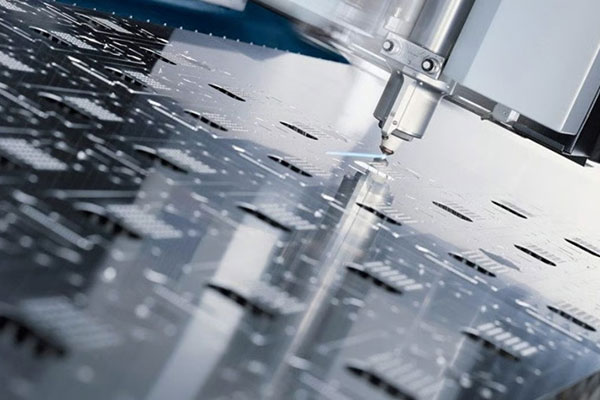
For glass manufacturers or high-end scientific applications, precision and reliability are critical. In this article, we’ll explore why picosecond lasers stand out, the common pitfalls in glass cutting, and how laser pump sources affect performance.
What are common mistakes when cutting glass?
Glass cutting with lasers sounds simple, but many teams encounter problems like thermal cracks1 or uneven edges.
Common mistakes include using lasers with too much heat, incorrect pulse durations, or unstable beam quality. These issues can cause micro-cracks or reduce yield.
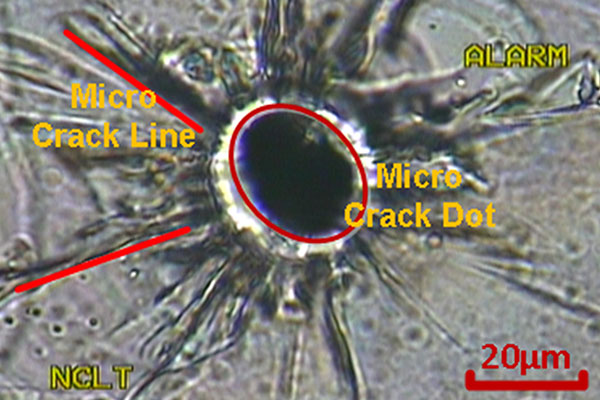
Why these mistakes happen and how to avoid them
Let’s break down where teams go wrong and what you can do differently.
Mistake 1: Using the wrong laser type
Lasers with long pulse durations (like nanosecond or continuous-wave) generate excess heat. This causes expansion, micro-cracking, or shattering.
| Lasertyp | Pulse Duration | Heat Effect on Glass | Suitability |
|---|---|---|---|
| CO₂ Laser | Continuous | Hoch | Arm |
| Nanosecond Laser | ~10⁻⁹ seconds | Mäßig | Fair |
| Picosecond Laser | ~10⁻¹² seconds | Sehr niedrig | Exzellent |
Mistake 2: Poor thermal management
If your laser setup lacks precision cooling or thermal control, even short pulses can lead to instability. Use active cooling and ensure your diode pump source is efficient.
Mistake 3: Inconsistent beam quality
Lasers with unstable beam profiles (TEM modes) can result in uneven energy delivery. Always select a laser with consistent Gaussian beam output and tight wavelength control.
What is the principle of picosecond laser?
A picosecond laser emits extremely short light pulses—so short that heat doesn’t have time to spread into surrounding materials.
Picosecond lasers operate using ultra-short light bursts (1 picosecond = 10⁻¹²s) to remove material with minimal heat, allowing ultra-fine, clean micro-processing.
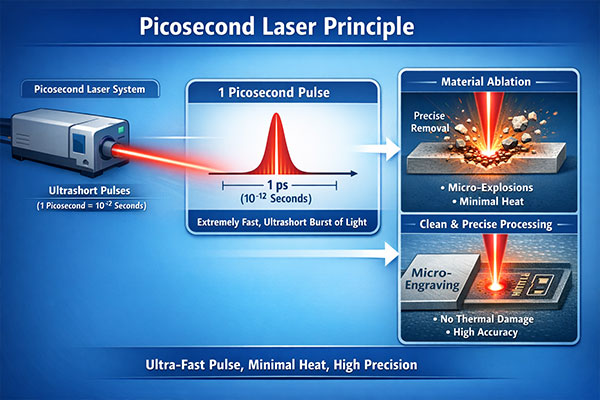
How picosecond laser technology works
Picosecond lasers belong to a class of ultrafast lasers. Their fundamental principle lies in “cold ablation2,” where material is ejected before it heats up.
The process
- The laser pulse strikes the material.
- Energy is absorbed in a few picoseconds.
- Electrons are excited and material evaporates before heat spreads.
| Besonderheit | Impact on Glass Cutting |
|---|---|
| Ultra-short pulse | Prevents thermal cracks |
| High peak power | Enables precise micro-machining |
| Minimal heat-affected zone | Clean, smooth edges |
Technologies involved
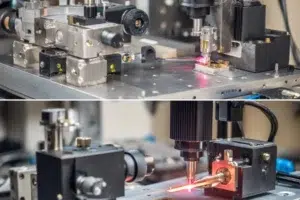
Most picosecond lasers are based on diode-pumped solid-state architectures (DPSS). These systems use semiconductor lasers as pump sources and generate pulses using Q-switching or mode-locking mechanisms.
What’s the laser pump source in picosecond laser?
Every laser needs a power source. In DPSS picosecond lasers, that’s usually a highly efficient semiconductor laser diode.
The laser pump source in picosecond systems is often a wavelength-locked 888nm diode laser, optimized for Nd:YVO₄ crystals in ultrafast laser applications.
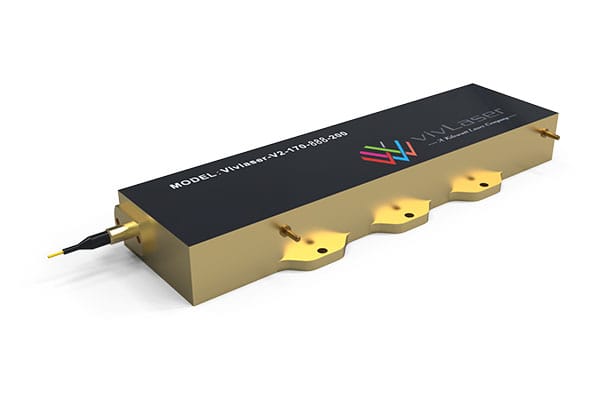
Why pump sources matter in laser performance
The pump source determines power, wavelength stability, and overall efficiency. In ultrafast lasers, Die 888nm pump wavelength3 is most commonly used because it precisely matches the absorption peak of Nd:YVO₄.
Vivlaser’s 888nm locked-wavelength diode pump sources4 are designed for high-reliability and narrow spectral output, using external cavity designs with VBG locking.
| Parameter | Typical Value |
|---|---|
| Central Wavelength | 888 nm |
| Spektrale Breite | < 1 nm |
| Power Output | 25W–175W |
| Wavelength Locking | VBG external cavity |
| Anwendung | Ultrafast DPSS laser pumping |
These modules offer excellent optical efficiency, minimal thermal drift, and stable performance—ideal for demanding industrial or research-grade picosecond systems.
What are the benefits of picosecond laser?
Using picosecond lasers unlocks a range of advantages in precision cutting and micro-fabrication.
Picosecond lasers deliver cold, clean, and ultra-fast processing, with unmatched precision and minimal damage to surrounding material.
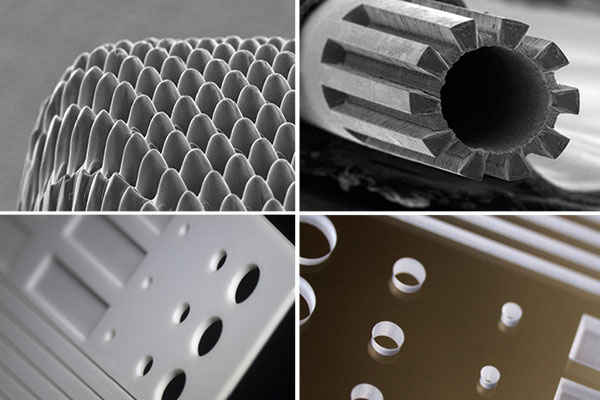
Advantages of picosecond laser for industrial users
Whether you’re cutting brittle glass or processing micro-electronic components, picosecond lasers offer unique benefits.
Key benefits include:
- Hohe Präzision – Sub-micron resolution
- Geringe thermische Auswirkung – Cold ablation avoids microcracks
- Material versatility – Works on glass, Keramik, sapphire, metals
- Faster throughput – High repetition rates increase yield
- Cleaner results – Less post-processing required
| Besonderheit | Nutzen |
|---|---|
| Short pulse width | No heat-affected zone |
| High beam quality | Uniform cutting results |
| Stable wavelength | Consistent operation in production |
| Compact design | Easy integration into equipment |
For industries like medical device manufacturing, Halbleiterverpackung, and glass panel fabrication, these advantages translate directly to reduced cost and better product quality.
Abschluss
Picosecond lasers are the best choice for precision glass cutting. They deliver cold, clean results and are supported by advanced pump technologies like Vivlaser’s wavelength-locked modules.
-
Understanding thermal cracks is crucial for improving glass cutting quality and avoiding costly mistakes. ↩
-
Understanding cold ablation is crucial for grasping how picosecond lasers achieve precision without heat damage. ↩
-
Understanding the 888nm pump wavelength is crucial for optimizing laser performance and efficiency in ultrafast applications. ↩
-
Exploring Vivlaser’s sources can provide insights into high-reliability and efficiency in laser technology, essential for advanced applications. ↩