Laser Cladding with High-Power Diode Lasers
Dense, low-dilution metallurgical coatings for wear, corrosion, and high-temperature protection
- 95% uniform Top-Hat beam → stable melt pool
- 50–60% electrical-to-optical efficiency → lower operating cost
- Powder / Wire / Multi-Wire / Hot-Wire compatible
- Scalable from precision repair to large-area production
What Is Laser Cladding?
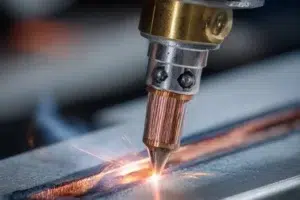
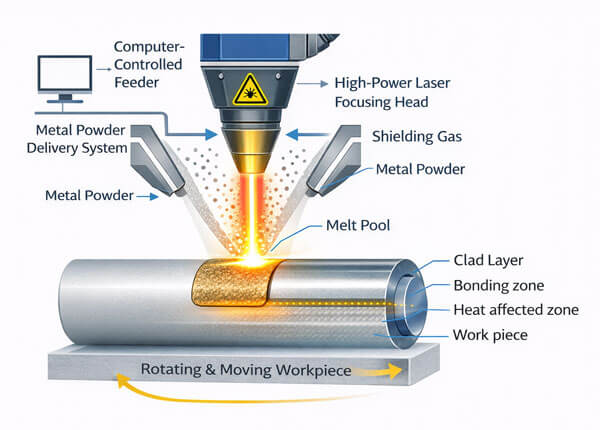
Laser cladding (Laser Metal Deposition) is a surface engineering process that uses a high-power laser to create a metallurgically bonded coating on a substrate. Metal powder or wire is melted together with a thin surface layer of the base material, forming a dense, low-dilution alloy layer.
Compared with thermal spraying or hard chrome plating, laser cladding delivers superior bonding strength, lower porosity, and significantly longer service life.

High Efficiency
Electrical-to-optical efficiency up to 60%, significantly reducing energy compared with fiber lasers.
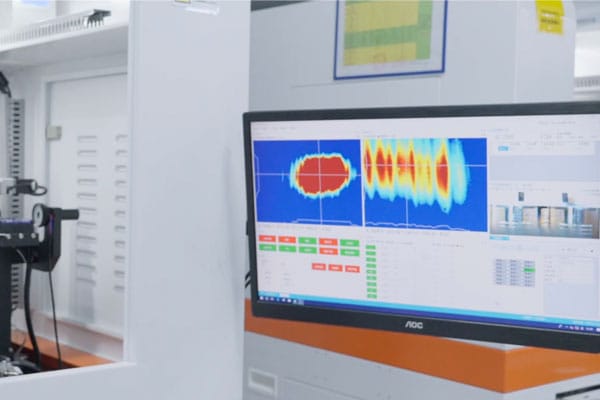
Uniform Energy Distribution
95% beam uniformity eliminates hotspots, stabilizes the melt pool, and reduces cracks and porosity.
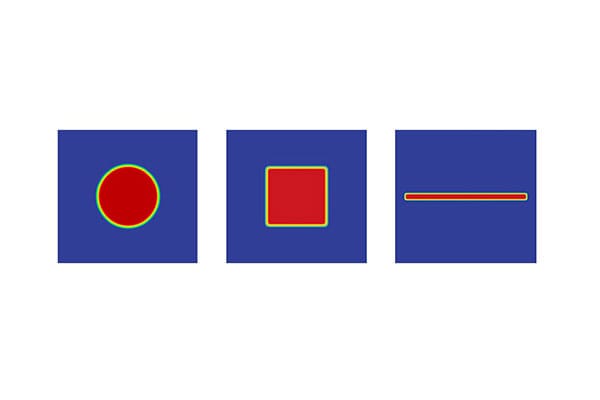
Flexible Beam Geometry
Rectangular, circular, elliptical, or linear beams engineered to match real cladding tracks and part geometry.
Laser Cladding Process Options
Powder Laser Cladding
Coaxial or side-feed powder delivery
Dense coatings with controlled dilution
Ideal for wear- and corrosion-resistant alloys
Suitable for complex geometries and gradient layers

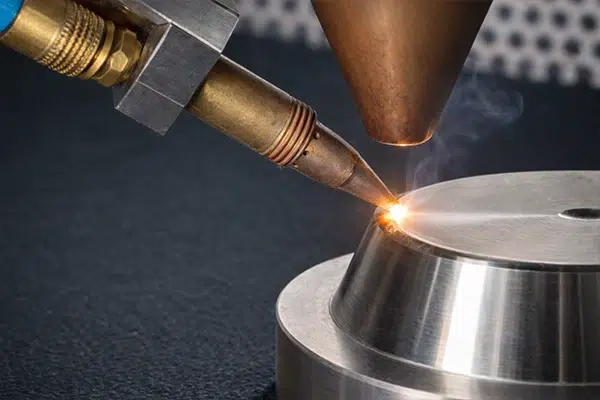
Wire & Multi-Wire Laser Cladding
Nearly 100% material utilization
Lower consumable cost
Ideal for large-area and thick-layer deposition
Optional Hot-Wire for higher efficiency and lower dilution
Laser Cladding vs Conventional Technologies
Laser Cladding

What it is
Laser Cladding (also called Laser Metal Deposition, LMD) ist ein surface engineering and additive manufacturing process that creates a new functional layer on a metal surface using a high-power laser.
Wie es funktioniert
A focused laser creates a small, controlled melt pool on the substrate
Metall powder or wire is fed into the melt pool
The coating material and a thin layer of the base material melt together
After solidification, a metallurgical bond is formed between coating and substrate
Typical applications
Wear-, corrosion-, and heat-resistant coatings
Hydraulic cylinders, Wellen, bearings, Formen
Brake discs, drilling tools, agricultural wear parts
Replacement for hard chrome plating and some thermal spray applications
Thermal Spray
What it is
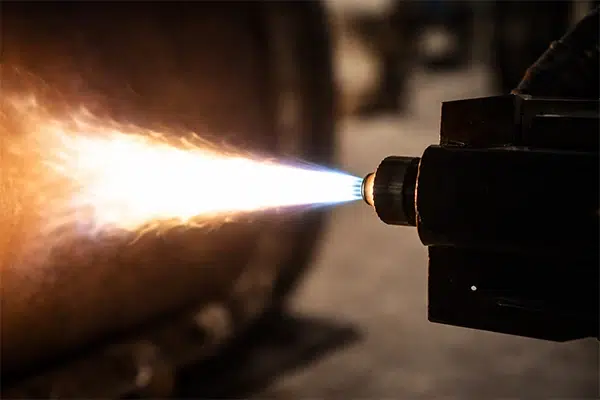
Thermal Spray is a group of coating technologies (such as flame spray, plasma spray, and HVOF) that deposit material onto a surface by spraying molten or semi-molten particles.
Wie es funktioniert
A heat source (flame, plasma, or electric arc) melts the coating material
Molten particles are accelerated toward the substrate at high speed
Particles flatten and solidify on impact
The coating adheres mainly through mechanical bonding, not metallurgical fusion
Typical applications
Large-area wear or corrosion protection
Structural components with low thermal sensitivity
Maintenance and repair coatings
Situations where high deposition rate is required
Hard Chrome Plating
What it is
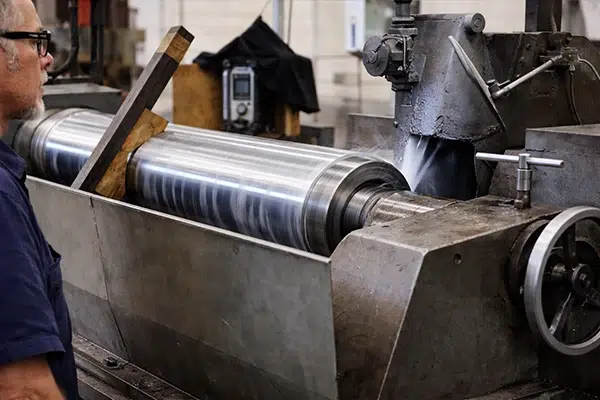
Hard Chrome Plating is an electrochemical surface treatment that deposits a thin layer of chromium onto a metal part to improve hardness and wear resistance.
Wie es funktioniert
The workpiece is immersed in a chromium-based electrolyte
An electric current causes chromium ions to deposit on the surface
A thin, hard chromium layer is formed
The bond is non-metallurgical and relatively brittle
Typical applications
Hydraulic rods and cylinders
Shafts, guide columns, mold components
Parts requiring low friction and high surface hardness
Einschränkungen
Uses hexavalent chromium (environmental and regulatory concerns)
Limited coating thickness
Risk of cracking or peeling under high load or impact
Summary of Key Differences
| Process | Bonding | Porosity | Thickness Control | Umweltauswirkungen |
|---|---|---|---|---|
| Laser Cladding | Metallurgical | Sehr niedrig | Exzellent | Eco-friendly |
| Thermal Spray | Mechanisch | Medium–High | Beschränkt | Medium |
| Hard Chrome Plating | Mechanisch | Niedrig | Beschränkt | ❌ Hexavalent Chromium |
Key Advantages of VivLaser Laser Cladding
Engineered for stable processes, easy system integration, and industrial-scale production.
Stable Melt Pool
Uniform energy distribution ensures low dilution and a narrow heat-affected zone (HAZ).
Minimal Distortion
Controlled heat input minimizes thermal deformation, ideal for precision components.
Modular Design
Modular laser and optics architecture simplifies system integration and long-term maintenance.
300 W – 100 kW Platform
One unified diode laser platform covers applications from precision repair to large-area cladding.
Automation Ready
Designed for seamless integration with robots, gantry systems, and CNC machines.
Typical Laser Cladding Applications
Proven in wear-critical, corrosion-intensive, and high-value industrial components.
Laser cladding creates dense, wear-resistant coatings on friction surfaces, significantly reducing brake wear and particulate emissions while maintaining stable braking performance.
Typical Benefits
- Reduced brake dust generation
- Improved wear resistance
- Compatible with large-scale automotive production
Laser cladding replaces hard chrome plating with corrosion- and wear-resistant alloy coatings, extending service life under high load and harsh environments.
Typical Benefits
- Metallurgical bonding, no peeling
- Environmentally compliant alternative to chrome
- Suitable for new parts and remanufacturing
Oil & Gas Drilling Tools
High-hardness, carbide-reinforced laser cladding layers protect drilling tools against extreme abrasion, erosion, and impact in downhole environments.
Typical Benefits
- Extended tool lifetime
- Reduced downtime and repair frequency
- Localized reinforcement on critical areas
Agricultural Wear Parts
Laser cladding enhances the durability of blades, discs, and soil-engaging components while minimizing distortion and post-machining requirements.
Typical Benefits
- Longer service life in abrasive soil
- Minimal thermal deformation
- Lower total ownership cost
Precision laser cladding enables controlled repair and surface restoration of high-value components with minimal heat input and dimensional change.
Typical Benefits
- Accurate dimensional recovery
- Reduced scrap and downtime
- Ideal for repair and life extension
Heat Exchangers & Chemical Pipelines
Corrosion-resistant laser cladding layers protect components exposed to aggressive chemicals, high temperatures, and erosive flow conditions.
Typical Benefits
- Improved corrosion and erosion resistance
- Controlled coating thickness
- Suitable for on-site or factory processing
Here you will find a solution for laser cladding
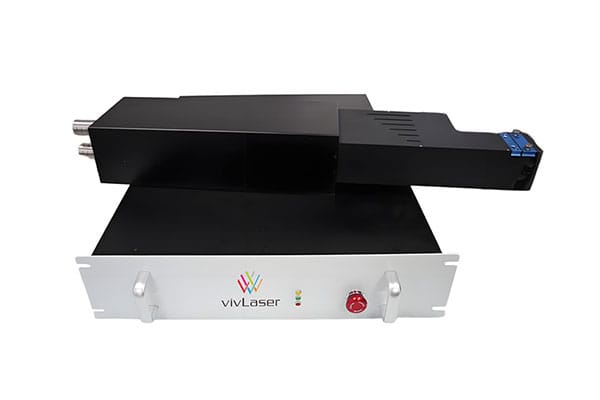
High Power Diode Laser →
6KW Compact diode laser optimizes for laser cladding.
Warum wählen Vivlaser
Was unterscheidet uns?
- Über 20 Jahre der Diodenlaser -Expertise
- Zertifiziert durch ISO9001, Ce, ROHS -Zertifizierung
- 10,000+ M² moderne Fabrik, 100,000+ Einheiten jährliche Kapazität
- Vertrauen von Top -Laserbranchenführern und globalen Gerätemarken
- Schnelle Lieferung und reaktionsschnelle globale Unterstützung
Wählen Sie Vivlaser - wo Zuverlässigkeit, Skala, und bewährte Leistungsleistung für Ihr Geschäft.
Starten Sie Ihr Projekt mit Vivlaser
Planning a Laser Cladding Project?
- Send us your part drawing & material
- Define target lifetime or wear resistance
- Get a process feasibility & laser configuration recommendation