Modern fabric processing demands precision, Geschwindigkeit, and minimal waste. CO₂ lasers deliver all three, making them a staple in textile manufacturing.
CO₂ lasers, with their 10.6 μm wavelength, are uniquely efficient at cutting organic and synthetic fabrics cleanly and precisely.
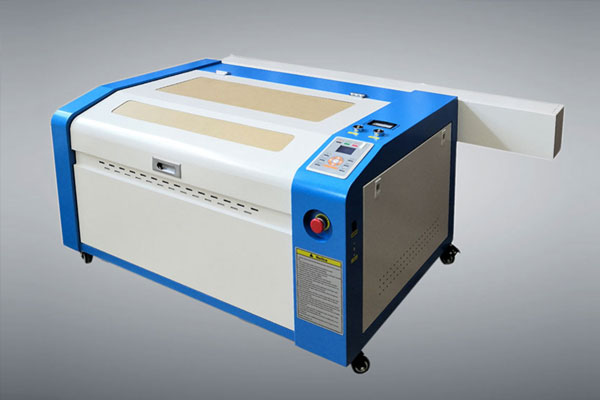
From fashion to filtration, their unmatched absorption and thermal behavior make them the top choice.
What makes CO₂ lasers suitable for fabric cutting?
CO₂ lasers operate at 10.6 μm, which aligns with the molecular vibrations of organic materials like cotton, wool, and polyester.
This wavelength ensures high absorption in textiles, allowing energy to convert efficiently into heat with minimal material damage.
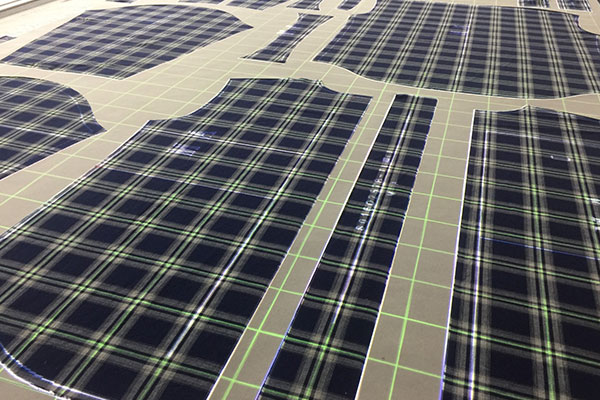
Superior Absorption and Material Compatibility
This high infrared absorption enables clean, quick vaporization of the material surface without physical contact. Unlike mechanical tools, CO₂ lasers prevent tearing, stretching, or fraying during processing. The 10.6 μm light is especially effective for materials containing cellulose or polymers, making it versatile across natural and synthetic fabrics.
| Materialtyp | Absorption at 10.6 μm | Suitability |
|---|---|---|
| Cotton | Exzellent | Hoch |
| Polyester | Exzellent | Hoch |
| Nylon | Very Good | Hoch |
| Silk | Good | Medium-High |
| Non-woven | Exzellent | Hoch |
How do CO₂ lasers ensure clean and sealed edges on textiles?
When the laser cuts, it doesn’t just slice—it seals. The heat slightly melts synthetic fiber edges.
This thermal sealing effect prevents fraying and gives fabrics a finished edge straight from the cutter.
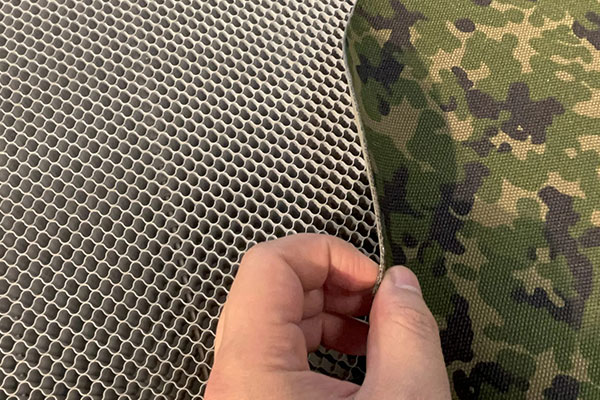
Clean, Sealed Edges: A Built-In Thermal Finish
As the laser beam vaporizes the material, its residual heat melts and fuses the surrounding fibers, sealing the cut edges. This is particularly effective for synthetic fabrics like polyester or nylon, which benefit from edge sealing that prevents unraveling. Natural fibers like cotton may not seal as fully but still produce smooth edges without mechanical disruption.
| Fabric | Edge Finish | Post-Processing Needed |
|---|---|---|
| Polyester | Sealed | NEIN |
| Nylon | Sealed | NEIN |
| Cotton | Clean cut | Minimal |
| Silk | Precise | NEIN |
What types of fabrics can be cut with CO₂ lasers?
CO₂ lasers are highly adaptable and can process a wide variety of textile materials.
From delicate silks to rugged leathers, CO₂ lasers handle them with precision and care.
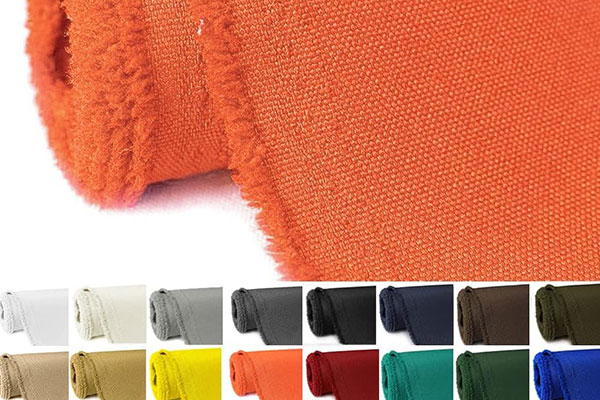
Versatile Fabric Compatibility
-
Cotton: Soft, clean cuts with minimal charring when settings are optimized.
-
Polyester & Nylon: Excellent for sealed cuts; ideal for clothing and upholstery.
-
Silk & Satin: Maintains fabric integrity without heat distortion.
-
Non-woven Fabrics: Perfect for medical disposables like gowns or masks.
-
Leather & Suede: Supports high-detail patterns with strong edge contrast.
CO₂ vs. Fiber vs. Diode Lasers: Which works best on textiles?
Different laser technologies offer different strengths. For fabrics, wavelength is everything.
CO₂ lasers outperform others by matching the absorption characteristics of textile materials.
Laser Type Comparison
| Lasertyp | Wellenlänge | Textile Suitability | Key Limitation |
|---|---|---|---|
| CO₂ | 10.6 μm | Exzellent | None on fabrics |
| Faser | 1.06 μm | Arm | Reflects off textiles |
| Diode | 800-980 nm | Low to Moderate | Limited penetration, uneven results |
Fiber lasers excel in metal cutting but lack fabric compatibility. Diode lasers show limited performance except on dark textiles. CO₂ lasers provide consistent results across a broad range of cloth types.
Where are CO₂ laser cutters used in the textile industry?
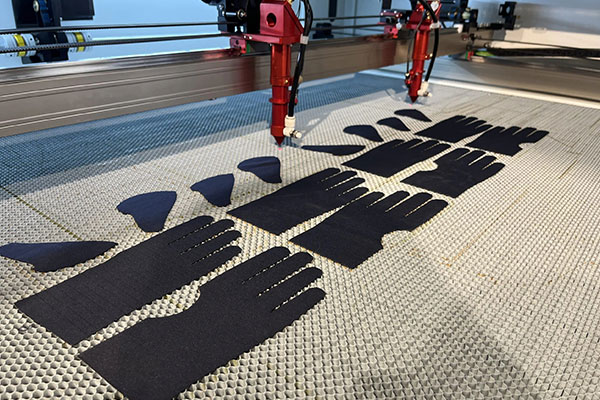
CO₂ laser cutters play a central role in automated textile production lines.
They enable high-speed, contactless cutting for mass production across diverse textile sectors.
Broad Textile Industry Applications
-
Apparel & Fashion: Pattern cutting, lace detail, and logo cutouts.
-
Home Textiles: Used for curtains, cushions, and decorative fabrics.
-
Medical Textiles: Producing hygienic cuts in non-woven masks and gowns.
-
Technical Textiles: Applied in filtration, Luft- und Raumfahrt, and composite layering.
| Industrie | Use Case | Benefit of CO₂ Laser |
|---|---|---|
| Fashion | Pattern cutting | Präzision, Geschwindigkeit |
| Medizinisch | Disposable masks | Clean, hygienic cuts |
| Furniture | Upholstery | Smooth edge finish |
Abschluss
CO₂ lasers remain the most effective, zuverlässig, and scalable solution for fabric cutting—from cotton to composite. Their unmatched compatibility with textile materials makes them a cornerstone of modern manufacturing.