Laser Softening & Recuit
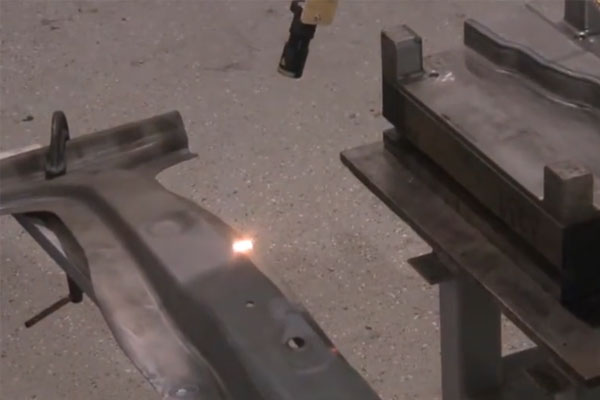
Laser softening is a localized heat treatment process that reduces material hardness and relieves internal stress by controlled laser heating.
It improves ductility, toughness, and machinability without affecting the entire component.
- Local hardness reduction
- Stress relief after welding or cladding
- Improved machinability for secondary processing
What Is Laser Softening / Recuit?
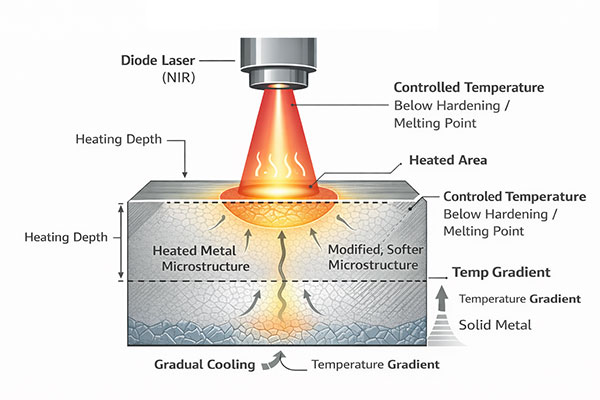
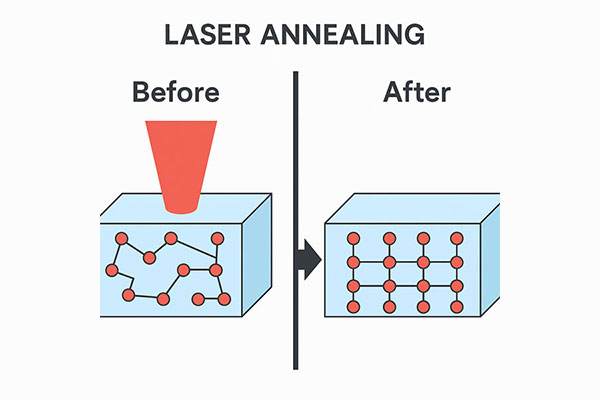
Laser softening, also referred to as laser annealing or laser tempering, is a thermal process in which a laser heats the material to a controlled temperature below the hardening or melting point.
The process modifies the microstructure, reduces hardness, and increases toughness while maintaining dimensional stability.
Key characteristics:
No melting, no coating
Localized treatment only
Hardened surface + tough core
Why Laser Softening Instead of Conventional Heat Treatment?
- Localized Treatment — Only the target area is heated, leaving surrounding material unaffected.
- Minimal Distortion — Low overall heat input reduces warping and dimensional changes.
- Process Flexibility — Suitable for selective softening on complex or assembled components.
How Laser Softening Works
A laser beam heats the material surface to a controlled temperature range, allowing microstructural transformation and stress relaxation.
Heat dissipates naturally into the surrounding material, resulting in controlled cooling without quenching.
Caractéristiques clés
No melting, no material removal
Controlled temperature and heating depth
Repeatable and programmable process
Why Diode Lasers for Softening & Recuit
Uniform Energy Distribution
Top-hat beam profiles enable controlled heating without overheating or hotspots.
Precise Thermal Control
Adjustable beam size and power allow accurate temperature management.
Non-Contact Process
No mechanical load, ideal for precision and thin-wall components.
When to Choose Laser Softening
- When local hardness reduction is required
- When stress relief is needed without reheating the entire part
- When dimensional accuracy must be preserved
- When selective machinability improvement is required
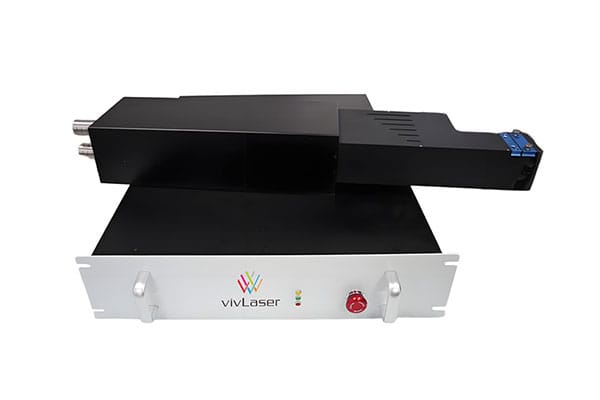
Here you will find a solution for laser softening

High Power Diode Laser →
6KW Compact diode laser optimizes for laser cladding.
Pourquoi choisir Vivlaser
Ce qui nous distingue?
- Sur 20 années d'expertise en matière de laser à diode
- Certifié ISO9001, CE, Certification RoHS
- 10,000+ m² usine moderne, 100,000+ unités capacité annuelle
- Approuvé par les principaux leaders de l'industrie du laser et les marques mondiales d'appareils
- Livraison rapide et support mondial réactif
Choisissez Vivlaser, où la fiabilité, échelle, et des performances éprouvées dynamisent votre entreprise.
Démarrez votre projet avec Vivlaser
Need Controlled Hardness Reduction?
Share your material, hardness range, and target processing area.
Our engineers will evaluate feasibility and recommend a laser-based softening solution.
Looking to increase surface hardness instead?

High Power Diode Laser →
6KW Compact diode laser optimizes for laser softening.