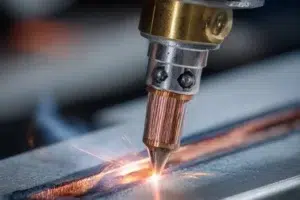
Le décapage de peinture au laser est devenu un nettoyant, plus efficace, et méthode précise par rapport aux techniques traditionnelles de décapage abrasif ou chimique. Cependant, les performances de cette méthode dépendent fortement du choix de la source laser.
Les lasers à semi-conducteurs fournissent la puissance, flexibilité, et contrôle du faisceau qui les rendent parfaits pour les systèmes modernes de décapage de peinture au laser.

Unlike older systems that compromise surface integrity or require post-treatment, laser paint removal using semiconductor lasers offers contactless, non-damaging, and environmentally safe processing. Let’s explore why this technology is reshaping the industry.
What Makes Laser Paint Removal a Better Alternative to Traditional Methods?
Conventional paint stripping methods often involve abrasive blasting, chemical solvents, or mechanical scraping, which are inefficient and potentially harmful.
Laser paint removal1 offers a contactless, residue-free, and highly controllable method, making it safer, nettoyeur, and more precise.
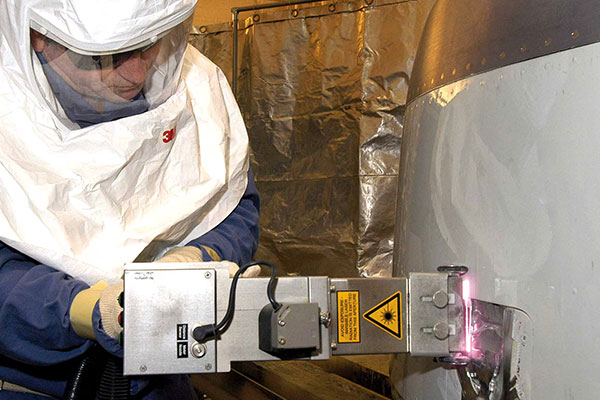
Comparing Removal Techniques
| Méthode | Inconvénients | Laser Advantage |
|---|---|---|
| Sandblasting | Surface damage, high dust | Sans contact, no debris |
| Chemical stripping | Toxic, slow process | Environmentally friendly |
| Manual scraping | Labor intensive, uneven | Automated, uniform results |
Laser paint removal1 eliminates toxic residues and mechanical wear. It ensures better environmental compliance and higher repeatability.
How Do Semiconductor Lasers Achieve Uniform and Controllable Beam Profiles?
Paint removal demands a stable, evenly distributed beam that can be precisely shaped to the target area. This is where semiconductor lasers2 outperform others.
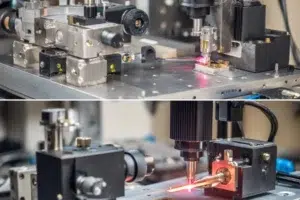
Vivlaser semiconductor lasers2 integrate beam homogenization3, optical shaping, and customizable fiber-coupled output for fine control over the energy profile.
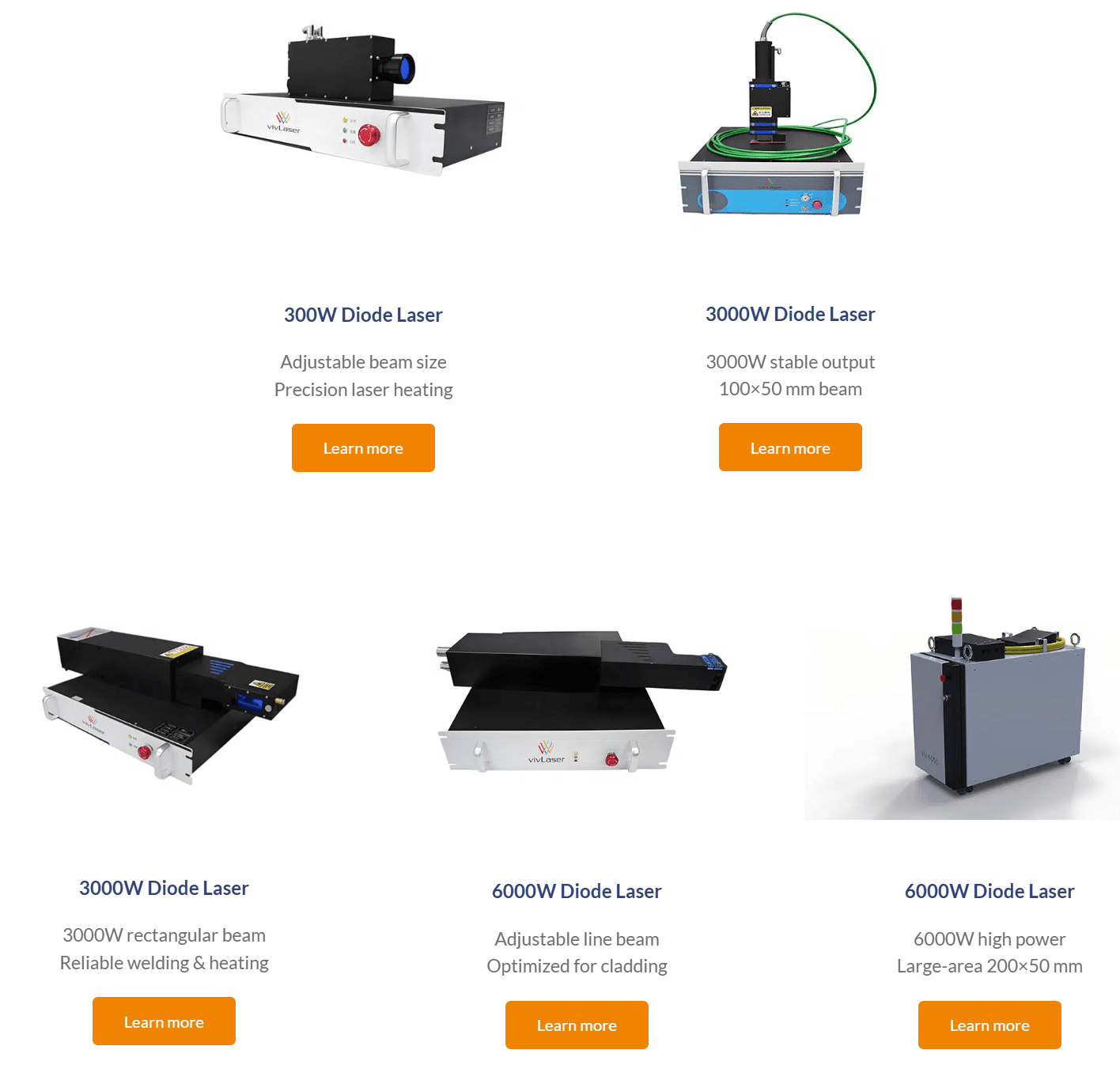
Enabling Precision Through Design
-
Beam Homogenization: Advanced optics ensure smooth Gaussian-like distribution.
-
Fiber-Coupling: Enables remote delivery with adjustable core sizes (par ex., 105µm, 200µm).
-
Shape Control: Output beams can be tailored to rectangular or square profiles via optical shaping.
-
Stability: Locked-wavelength design ensures consistent performance under varying temperatures.
From a system engineering perspective, laser paint removal is a demanding application that balances high energy density with surface protection, répétabilité, and process control. The laser source must not only deliver sufficient optical power, but also do so in a tightly controlled beam shape, longueur d'onde, and thermal footprint. This is precisely where semiconductor lasers2—especially fiber-coupled, wavelength-locked modules—have a structural advantage over traditional solid-state or fiber laser systems.
Why Is Beam Homogenization So Critical in Paint Removal Applications?
A non-uniform beam leads to inconsistent heating, overburn in hotspots, and incomplete paint removal. This is a serious problem in precision industries.
Uniform beam profiles4 eliminate hotspots, reduce damage risk, and ensure even coating removal with minimum substrate impact.
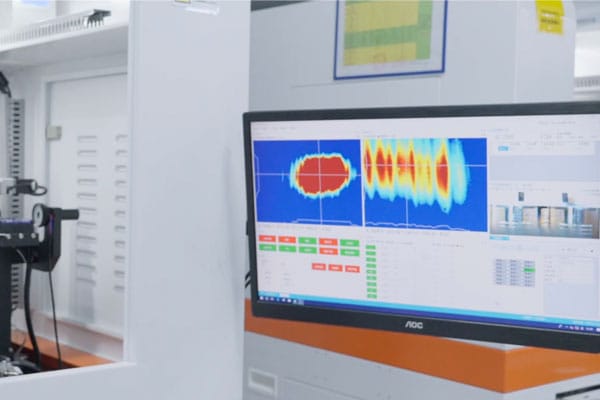
Consequences of Poor Beam Quality
-
Overheating: Causes substrate damage
-
Underheating: Leaves paint residues
-
Inconsistency: Increases process time and labor costs
Vivlaser homogenized beams5 solve this through integrated collimation and shaping optics, optimizing energy delivery to the surface.
Most laser damage in surface processing arises from non-uniform energy distribution—a notorious problem in fiber or DPSS systems. Vivlaser’s diode lasers integrate collimation + homogenization optics to produce rectangular or square beam profiles with even energy spread. This eliminates "hot spots" that would otherwise burn or over-strip, especially critical in aerospace, automobile, and precision tooling sectors where substrate preservation is non-negotiable.
Which Semiconductor Laser Specifications Are Most Suitable for Paint Removal Systems?
Choosing the right laser configuration ensures optimal removal speed, thermal efficiency, and equipment lifetime.
Key specifications include power range (30W~3000W), diamètre du noyau de la fibre, QUE, and spectral width.
Ideal Parameters for Paint Removal
| Paramètre | Recommended Value | Role |
|---|---|---|
| Longueur d'onde | 976nm / 915nm6 | Suitable for paint absorption |
| Pouvoir | 100W – 3000W | Rapide, scalable removal |
| Noyau de fibre | 105µm / 200µm / 400µm | Adjustable beam size |
| Qualité du faisceau | Gaussian-like, uniform | Prevents overburn |
| Largeur spectrale | < 1nm (locked) | Ensures thermal consistency |
Paint removal hinges on differential absorption—where the coating absorbs laser energy far more efficiently than the substrate. Semiconductor lasers, particularly at 915nm and 976nm, hit a sweet spot for many industrial paints and coatings. These wavelengths penetrate the coating with high efficiency, vaporizing it while sparing the metal or composite underneath. Unlike fiber lasers (typically at 1064nm), which often require more energy or risk substrate damage, Vivlaser’s diode sources offer spectral tunability that helps optimize for each coating type.
How Can OEM Integrators Benefit from Vivlaser’s Custom Laser Modules?
System integrators require flexibility, performance, and supplier reliability to scale their laser paint removal solutions.
Vivlaser offers OEMs rapid prototyping, wavelength customization, compact modules, and a responsive support system to simplify system integration.
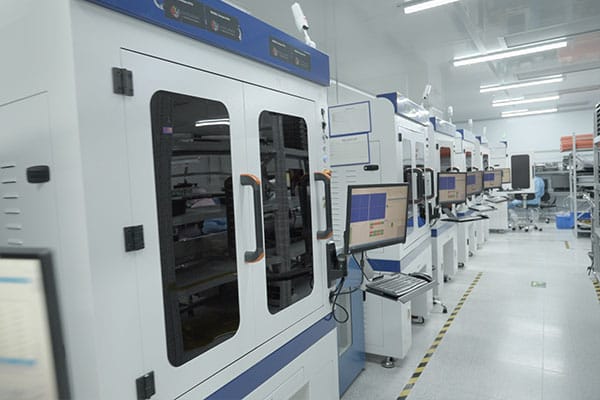
What Sets Vivlaser Apart?
-
Compact, Modular Power Scalability: Vivlaser’s semiconductor modules are highly modular and thermally optimized, allowing integration into robotic arms or handheld tools. OEMs benefit from reduced system bulk, easier maintenance, and better power-to-volume ratio.
-
Thermal Efficiency and Cooling Advantage: Direct diode designs achieve >50% efficacité électro-optique, significantly reducing thermal waste. Vivlaser modules feature internally engineered water flow channels and ready-to-connect ports for industrial chillers, enabling effective liquid cooling. This simplifies thermal management and ensures continuous operation, even in high-duty environments.
-
Speed, Repeatability, and Eco-Compliance: With locked-wavelength stability and automated beam delivery systems, Vivlaser modules enable OEMs to build systems that are fast, fiable, and adaptable to multiple coating types without frequent retooling.
-
High Stability: <1% failure rate after 16,000+ hours testing
-
Modular Design: Fits robotic arms, handheld tools, scanning heads
-
Responsive Support: 24-hour tech support and on-site assistance for key clients
Core Technology and Features
Vivlaser’s high-power semiconductor laser modules are built for industrial-scale paint removal, offering scalable performance from 1000W to 6000W. These systems integrate the laser source with the beam delivery head, creating a compact, energy-efficient, and highly uniform large-area output.
Key Product Highlights
-
High Power Configurations: Available in 1000W, 2000W, 3000W, 4000W, and 6000W versions
-
Adjustable Spot Size: Electronically tunable beam sizes from 5mm to 200mm; customizable beam shaping modules available
-
Wavelength Options: 915nm, 976nm, and 1060nm, optimized for paint and coating absorption
-
Superior Electro-Optical Efficiency: >50% efficiency standard, jusqu'à 60% in optimized configurations
Innovation-Driven Design Advantages
-
High Integration Structure: Combines high-efficiency thermal design with compact optics, enabling >50% overall energy conversion from electric input to uniform large-area beam
-
Beam Homogenization: Proprietary shaping optics achieve >95% beam uniformity across the target area
-
Customizable Output Geometry: Spot size and shape can be tailored electronically or optically for different substrates and surface geometries
-
Streamlined Architecture: Simple, compact module design supports easier system integration and better long-term reliability
These characteristics make Vivlaser’s modules the right fit for advanced paint removal systems that demand energy efficiency, consistent thermal application, and mechanical simplicity.
Conclusion
Semiconductor lasers bring control, pouvoir, and consistency to laser paint removal, making them the ideal solution for modern, automated, and eco-conscious surface processing systems.
For B2B buyers and integrators in aerospace, automobile, shipbuilding, and heavy equipment maintenance, the move toward semiconductor-based laser paint removal systems is more than a trend—it’s a technical evolution. Vivlaser’s engineering focus on beam quality, system flexibility, and fast customization directly aligns with what these sectors need: précis, scalable, and environmentally responsible surface processing solutions.
Let Vivlaser help you build the next generation of smart, laser-powered cleaning tools.
-
Discover the advantages of laser paint removal, including its safety and precision, compared to traditional methods. ↩ ↩
-
Explore this link to understand the technology behind semiconductor lasers and their applications in various fields. ↩ ↩ ↩
-
Learn about beam homogenization to see how it enhances laser performance and precision in applications like paint removal. ↩
-
Discover how uniform beam profiles enhance precision and efficiency in laser applications, crucial for industries like aerospace and automotive. ↩
-
Learn about the advantages of homogenized beams in laser technology, ensuring consistent results and minimizing substrate damage. ↩
-
Exploring the significance of these wavelengths can help you choose the best laser for effective paint removal. ↩