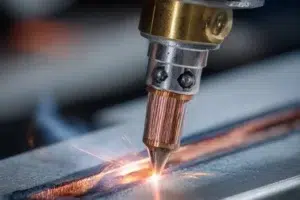
블루 레이저는 구리와 같은 까다로운 재료를 처리하는 방식을 변화시키고 있습니다.. 하지만 파이버 커플링을 갖춘 고출력 블루 레이저란 정확히 무엇입니까?, 그리고 왜 그렇게 효과적인가요??
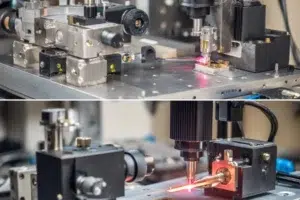
파이버 커플링을 이용한 고출력 블루 레이저는 청색광을 방출하는 레이저 시스템입니다. (일반적으로 450nm에서) 광섬유 케이블을 통해 전달합니다.. This combination enables precise, long-distance, and high-efficiency material processing—especially for reflective metals like copper and gold.
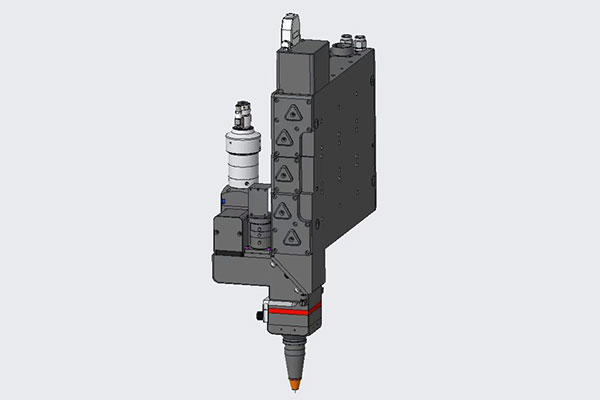
Unlike free-space lasers, fiber-coupled blue lasers use optical fibers to transmit the beam, which brings additional benefits like stable beam quality, long-distance delivery, and better compatibility with industrial equipment. This "hybrid" structure combines the high absorption of blue light with the flexibility and stability of fiber optics.
Here are five key ways this technology is transforming industrial production:
Why is Blue Laser the Best Choice for Copper Welding?
Welding copper is notoriously difficult with infrared lasers. Why does blue laser make it easier and more efficient?
Blue lasers offer up to 20x better absorption in copper compared to infrared lasers, making welding faster, deeper, and more stable.
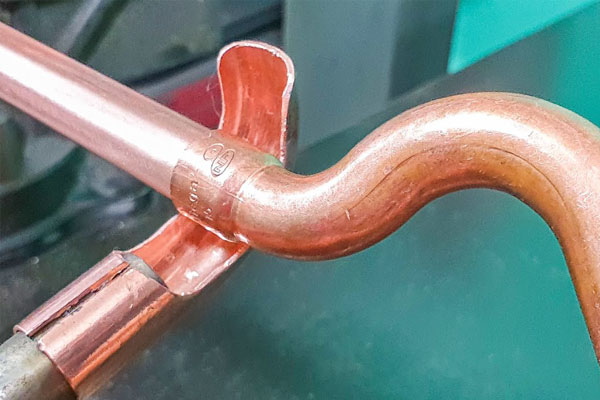
Why IR Lasers Fail on Copper
-
Copper reflects over 95% of infrared light, making energy delivery inefficient.
-
Inconsistent welding results, 튐, and shallow penetration are common.
Blue Laser Welding Advantages
-
At 450nm, copper absorbs over 65% of blue light.
-
Enables low-spatter, high-speed, stable welds.
-
Reduces need for preheating or surface treatment.
Fiber Coupling Advantages
-
Beam is delivered consistently even across long distances.
-
Compact output head fits into tight welding spaces.
-
Better process repeatability for automation.
Applications in Copper Welding
| 사용 사례 | 이익 |
|---|---|
| EV Battery Tabs | Deep, narrow welds with minimal heat-affected zone |
| Copper Busbars | 빠른, stable joins with high conductivity |
| PCB Contacts | Precision without damaging surrounding materials |
Can Blue Lasers Improve Precision in Electronics Manufacturing?
Microelectronics require sub-millimeter accuracy. Can blue lasers deliver that level of precision?
예, because blue lasers offer a smaller focus spot and higher energy density, perfect for fine-feature material processing.
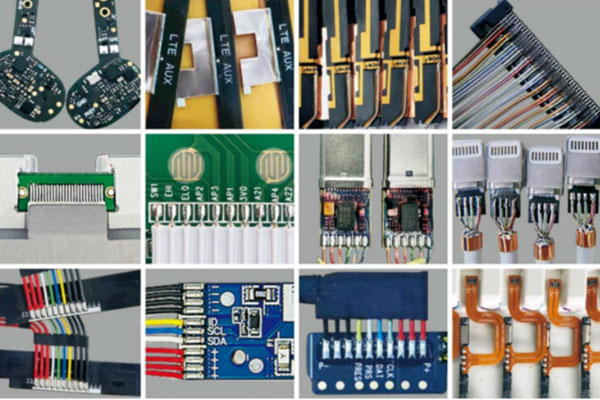
Why Precision Matters
- Circuit boards, micro-sensors, and camera modules require ultra-fine cuts and minimal thermal distortion.
Blue Laser in Electronics
-
Enables clean, burr-free cuts on delicate materials.
-
Compact modules integrate easily into automated SMT lines.
-
Ideal for glass, 폴리머, and thin metal films.
Fiber Coupling Role
-
Maintains beam quality over distance.
-
Enables flexible routing inside complex production lines.
-
Supports robotic arm integration and motion control systems.
How Do Blue Lasers Help in Additive Manufacturing (3D Printing)?
Additive manufacturing needs energy-efficient, high-absorption lasers. Can blue lasers support that?
Absolutely. Blue lasers increase melt efficiency for copper, bronze, and aluminum powders in metal 3D printing.

Powder Bed Challenges
-
Traditional IR lasers waste energy on reflective powders.
-
Uneven melts lead to porosity and defects.
Blue Laser Solutions
-
Higher absorption improves melt pool consistency.
-
Reduces defects, boosts part density and conductivity.
Why Fiber Coupling Helps
-
Delivers stable energy distribution to precise 3D printing nozzles.
-
Allows flexible system design with centralized laser source.
-
Improves alignment and print repeatability.
Example Use Cases
| 재료 | Blue Laser Impact |
|---|---|
| 구리 | Improves layer adhesion, 전도도 |
| Bronze | Enables stronger, defect-free prints |
| 알류미늄 | Expands printable alloy options |
What Makes Blue Lasers Ideal for Battery and EV Component Processing?
As EV adoption grows, how do manufacturers process complex battery and copper components reliably?
Blue lasers enable safe, clean, and repeatable processing of battery tabs, foils, and connectors with minimal heat damage.

EV Production Demands
-
재료: 구리, 알류미늄, nickel.
-
Requirements: speed, 안전, 정도.
Blue Laser Benefits
-
Lower heat input preserves insulation layers.
-
High-contrast processing for multilayer foils.
-
Small spot size suits narrow tab welding.
Fiber Coupling Advantages
-
Protects laser source from vibration or contamination.
-
Easy integration into multi-station EV production lines.
-
Enables compact, robot-mounted laser heads.
Typical Applications
| Component | Process |
|---|---|
| Battery Foils | Precision cutting and joining |
| Cooling Plates | Selective welding without warping |
| Connectors | 빠른, stable electrical joins |
How Do Blue Lasers Support High-Reflective Metal Applications Without Cutting?
Blue lasers offer excellent interaction with high-reflectivity materials. Even without cutting, what advantages do they offer?
Blue lasers improve surface treatment, 마킹, and micro-welding on reflective metals like gold and aluminum.
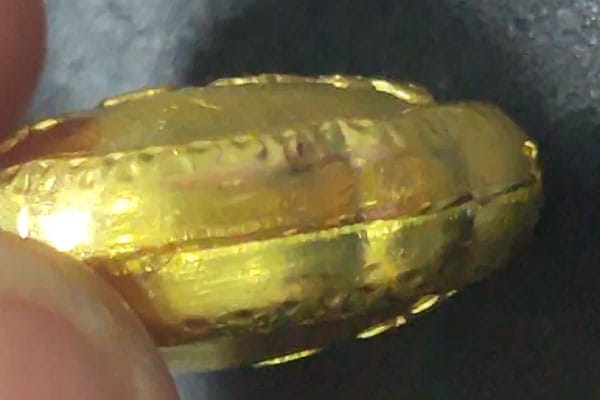
High-Reflectivity Processing Challenges
-
Reflect IR light, leading to energy inefficiency.
-
Surface damage and process instability.
Blue Laser Advantages
-
Better absorption, reduced energy loss.
-
Precise, controlled interaction with surface layers.
Fiber Coupling Benefits
-
Allows safe, controlled energy delivery even on delicate surfaces.
-
Simplifies integration with marking or scanning systems.
-
Enables modular system design for production scalability.
Example Applications
| 금속 | Process Type |
|---|---|
| 금 | Fine-feature engraving and spot welding |
| 알류미늄 | Surface structuring and bonding |
결론
High-power blue lasers with fiber coupling are unlocking new capabilities across industrial sectors, from EV batteries to 3D printing. The fiber-coupled design ensures precision, 유연성, and safety—making them the future of high-performance material processing. Vivlaser offers blue laser modules with fiber output, including the V1-B1000F3000 hybrid welding system, for customers seeking stable, high-efficiency solutions in demanding environments.