The global market for home-use beauty devices has grown rapidly in recent years. From hair removal tools to skin rejuvenation systems, many handheld products are now marketed as “laser beauty devices.”
하지만, from an engineering perspective, an important question often remains unclear:
Do these devices actually use real laser technology?
In reality, most consumer beauty devices rely on different light-generation methods — and only a small portion truly employ semiconductor laser sources. Understanding the difference between 원자 램프, IPL, and LED technologies helps explain both performance differences and future industry trends.
The Three Main Light Technologies Used in Home Beauty Devices

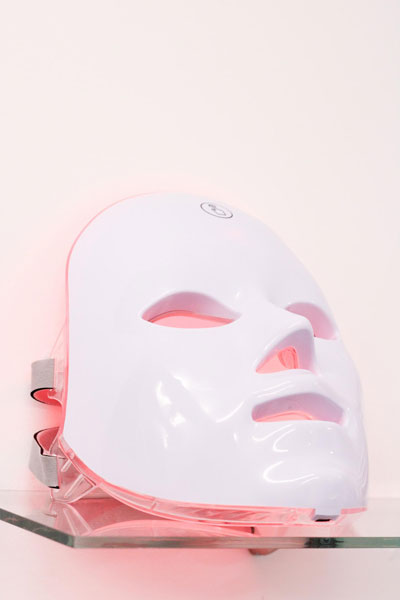
Although many products are marketed similarly, home beauty devices generally fall into three technical categories:
| 기술 | Light Type | Coherence | Typical Applications |
|---|---|---|---|
| LED1 | Incoherent light | 아니요 | Skin care, acne treatment |
| IPL2 | Broad-spectrum flash | 아니요 | Hair reduction |
| 다이오드 레이저3 | Monochromatic laser | 예 | Professional hair removal & aesthetic systems |
The fundamental difference lies in how light energy is generated and delivered to biological tissue.
LED Devices: Low Energy Photobiomodulation
LED-based beauty devices are widely used due to their safety, low cost, and compact design.
LED systems emit non-coherent light across relatively wide spectral bands. Instead of producing thermal effects, they primarily rely on photobiomodulation — stimulating cellular activity through low-energy illumination.
Typical examples include:
-
Multi-color facial therapy tools
Because energy density is low, LED devices are generally safe for daily home use. 하지만, their penetration depth and thermal interaction with tissue remain limited.
From an engineering standpoint, LED devices function more as optical stimulation systems rather than energy-based treatment platforms.
IPL Devices: The Most Common “Pseudo-Laser”
IPL (Intense Pulsed Light) devices6 dominate the consumer hair-removal market.
Despite frequent marketing claims, IPL systems are not lasers.
대신에, IPL uses a xenon flash lamp that emits broadband light typically ranging from 500 nm to 1200 nm. Optical filters remove unwanted wavelengths, allowing part of the spectrum to target melanin in hair follicles.
Key characteristics include:
-
Non-coherent light output
-
Wide spectral distribution
-
Relatively low energy efficiency
-
Large-area illumination
Because energy spreads across many wavelengths, only a portion contributes to effective follicle heating.
This explains why IPL devices often require repeated long-term use to achieve visible results.
Engineering-wise, IPL represents a compromise between safety, 비용, and manufacturability rather than precision energy delivery.
True Diode Laser Systems: Controlled Optical Energy
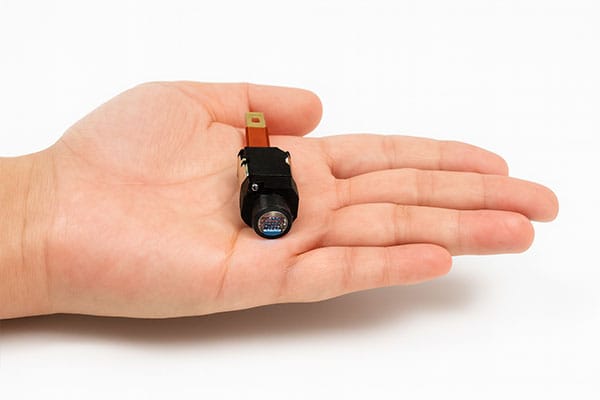
Unlike LED or IPL technologies, diode laser systems generate coherent, monochromatic light at a precisely defined wavelength.
Common wavelengths used in aesthetic applications include:
These wavelengths are selected based on selective absorption characteristics of biological chromophores such as melanin or water.
Because laser energy is concentrated at a single wavelength, diode lasers enable:
-
Deeper penetration
-
Higher energy efficiency
-
Controlled thermal interaction
-
Predictable treatment outcomes
For this reason, professional medical and dermatology systems predominantly rely on semiconductor diode lasers rather than IPL sources.
Why Most Home Devices Avoid True Laser Sources
If laser technology offers higher efficiency, why are many handheld devices still based on IPL or LED?
The answer lies in engineering constraints.
열 관리
Laser diodes generate high optical power density within extremely small junction areas. Without adequate heat dissipation, temperature rise quickly affects wavelength stability and lifetime.
Historically, laser modules required bulky cooling systems unsuitable for handheld products.
Integration Complexity
Integrating a laser source requires:
-
Stable current drivers
-
Optical alignment
-
Temperature monitoring
-
Safety protection systems
These requirements increase system complexity compared with flash-lamp or LED solutions.
Cost Considerations
Laser-based architectures traditionally resulted in higher manufacturing costs, limiting adoption in consumer electronics markets.
Miniaturization Is Changing Handheld Device Design
Recent advances in semiconductor packaging and thermal efficiency are rapidly changing this situation.
Modern diode laser modules now achieve:
-
Higher electro-optical efficiency
-
Reduced footprint
-
Improved thermal performance
-
Longer operational lifetime
Compact laser sources are making true laser-based handheld beauty devices increasingly feasible.
Companies specializing in miniaturized semiconductor laser technology, such as Vivlaser, are contributing to this transition by providing 콤팩트, integration-friendly laser modules9 suitable for portable system design.
The Future of Home Beauty Devices: From Light Therapy to Energy Control
The evolution of home beauty devices reflects a broader technological shift.
Early consumer products focused on safe light exposure.
Next-generation systems are moving toward precise energy delivery and controlled photothermal interaction.
As handheld aesthetic platforms continue advancing, device manufacturers are placing greater emphasis on:
-
Wavelength accuracy
-
Energy stability
-
Thermal efficiency
-
Module miniaturization
In this context, selecting an appropriate diode laser module becomes a critical foundation for future handheld laser-based beauty systems.
통찰력:
From my perspective, the real question is not whether the device is labeled “laser,” but whether your product positioning truly requires controlled photothermal energy delivery or simply light-based stimulation. If your brand strategy targets entry-level, high-volume consumer markets, IPL or LED may be sufficient for cost efficiency and regulatory simplicity. 하지만, if you are building a premium platform that promises faster results, higher consistency, and clinical-grade performance, then only a true semiconductor diode laser can deliver the wavelength precision, energy density, and thermal control required to differentiate your device technically — not just cosmetically. For serious OEM/ODM buyers, the decision is strategic: are you building a marketing-driven light product, or an energy-engineered treatment system with measurable performance advantages?
-
Understand LED principles and skincare mechanisms. ↩
-
Learn IPL mechanism and hair reduction science. ↩
-
Explore professional laser hair removal fundamentals. ↩
-
Understand red light skin repair benefits. ↩
-
Learn blue light antibacterial mechanism. ↩
-
Understand IPL structure and operating principle. ↩
-
Understand why 808nm laser dominate the hair removal industry. ↩
-
Expore Vivlaser’s 1470nm 6W diode laser module ↩
-
Find out how small Vivlaser’s laser module can be ↩