What Causes Cracks in Laser Glass Engraving? (And How to Avoid Them)
Cracks and breakage are common problems in glass engraving. They reduce product quality and increase rejection rates. Many systems fail due to poor parameter control. Cracks in laser glass engraving1 are caused by excessive energy, thermal stress, poor focusing, and improper micro-point spacing2, which lead to uncontrolled fracture propagation. To eliminate defects, you need to […]
Nanosecond vs Picosecond Lasers for Crystal Engraving: Which Is Better?
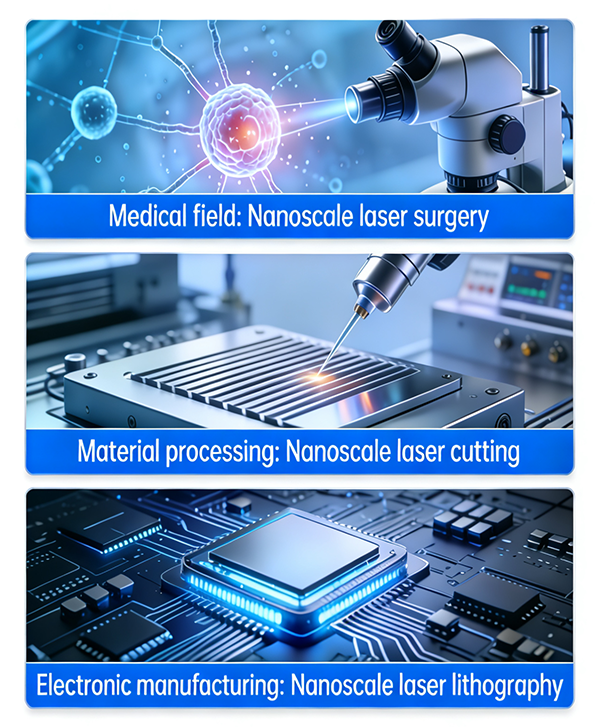
Choosing the wrong laser type can lead to poor engraving quality or unnecessary cost. Many buyers overpay for precision they do not need or sacrifice quality for price. Nanosecond lasers are best for cost-effective production, while picosecond lasers are used for high-precision applications requiring minimal thermal effects and finer micro-point control1. To make the right […]
What Type of Laser Is Used for Glass Internal Engraving?
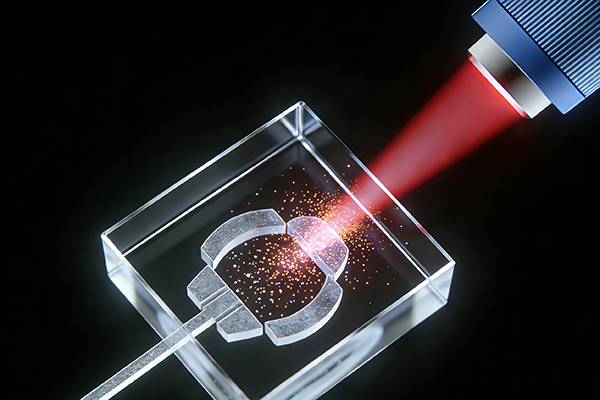
Glass is transparent and difficult to process. Many laser types1 cannot interact with it effectively. This creates confusion when selecting the right laser system for internal engraving. The most common lasers for glass internal engraving2 are Nd:ياج (1064 نانومتر), green lasers (532 نانومتر), and picosecond lasers, all of which enable precise energy focusing and internal […]
Why Can Lasers Engrave Inside Glass Without Breaking It?
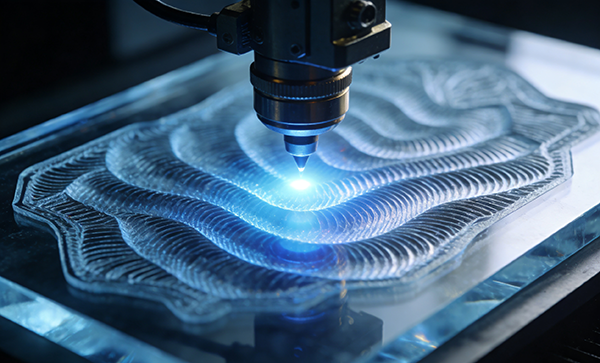
Glass is fragile and prone to cracking. Traditional machining easily damages it. This limits precision processing. Laser engraving1 solves this by modifying only the internal structure without stressing the surface. Lasers can engrave inside glass because energy is concentrated at a focal point, triggering nonlinear absorption2 and localized micro-fractures3 without affecting the surrounding material. To […]
How Does 3D Laser Crystal Engraving Work?

Surface engraving damages materials and limits design depth. This reduces durability and value. Manufacturers need a better solution. 3D laser crystal engraving enables internal structures without affecting the surface. 3D laser crystal engraving works by focusing high-energy pulsed lasers inside transparent materials, inducing optical breakdown1 and forming localized micro-fracture points that build 3D images. To […]
What Is Subsurface Laser Engraving? (Complete Guide)
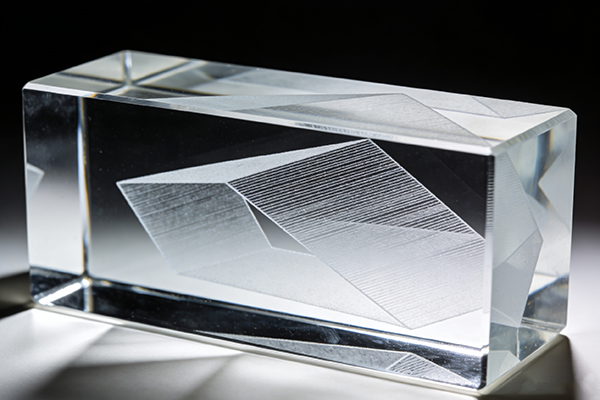
Material marking often damages surfaces. Scratches, wear, and fading reduce product value. This creates reliability issues. Subsurface laser engraving solves this by writing inside materials instead of on them. Subsurface laser engraving is a process where a focused laser creates micro-fractures inside transparent materials like glass or crystal, forming 2D or 3D patterns without affecting […]
What Are the Future Trends in High-Resolution Laser 3D Printing?
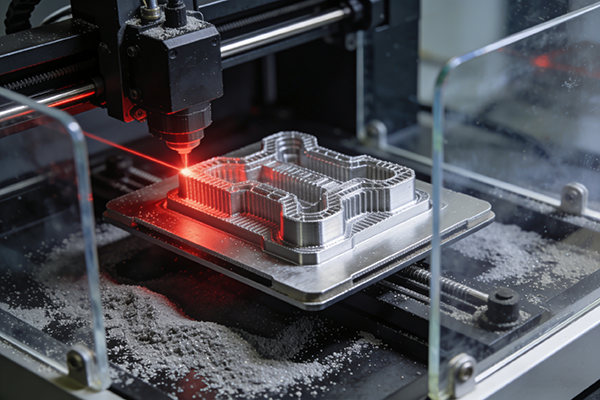
High-resolution laser 3D printing already produces extremely fine features, but industries now demand even smaller structures and faster production speeds. Future high-resolution laser 3D printing will combine micro-scale additive manufacturing1, faster photopolymer resins, and multi-laser architectures2 to improve both resolution and industrial productivity. These trends reflect a broader shift in additive manufacturing from prototyping toward […]
What Limits the Resolution of 405 nm Laser 3D Printing?

Resin printers promise micron-level accuracy, but many systems cannot achieve it consistently. The limitation is not only software or mechanics. The resolution of 405 nm laser 3D printing1 is primarily determined by laser spot size, diffraction limits, and the quality of the optical system that focuses the beam onto the resin surface. Understanding these limits […]
لماذا 405 nm Is the Standard Wavelength for Resin 3D Printing?
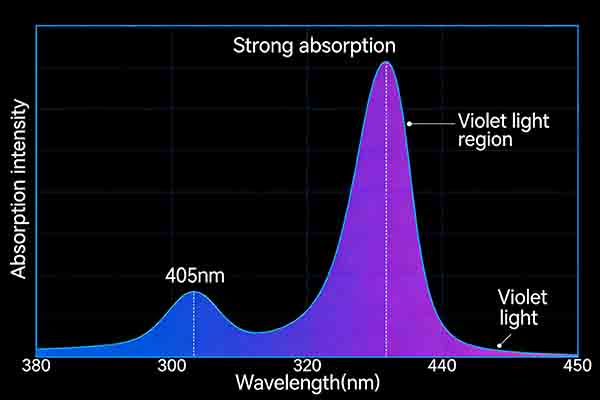
Resin 3D printing depends on precise light-driven chemistry, but the wrong wavelength can cause slow curing and unstable printing. Many early systems struggled with this mismatch. 405 nm became the standard wavelength for resin 3D printing because common photoinitiators absorb strongly in the violet region, enabling efficient polymerization while remaining compatible with affordable semiconductor light […]
كيف 405 nm Lasers Enable High-Resolution Resin 3D Printing?
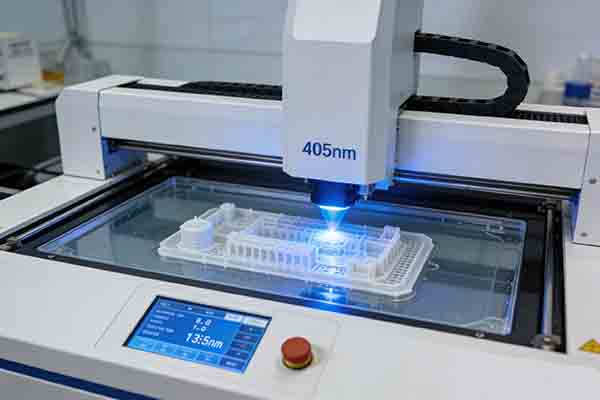
Resin 3D printing requires extremely precise light control to cure microscopic features. Without the right wavelength and beam quality, printed parts lose detail and dimensional accuracy. 405 nm lasers enable high-resolution resin 3D printing because their wavelength efficiently activates photopolymer resins1 while allowing tightly focused beams that produce extremely fine cured features. Understanding how 405 […]