Key Takeaways
Nanosecond lasers offer cost-effective and stable performance for most crystal engraving applications
Picosecond lasers provide higher precision with minimal thermal effects
Pulse duration directly impacts micro-point quality and crack control
System cost and complexity increase significantly with picosecond technology
Diode pump source stability remains critical for both laser types in solid-state systems
Choosing the wrong laser type can lead to poor engraving quality or unnecessary cost. Many buyers overpay for precision they do not need or sacrifice quality for price.
Nanosecond lasers are best for cost-effective production, while picosecond lasers are used for high-precision applications requiring minimal thermal effects and finer micro-point control1.
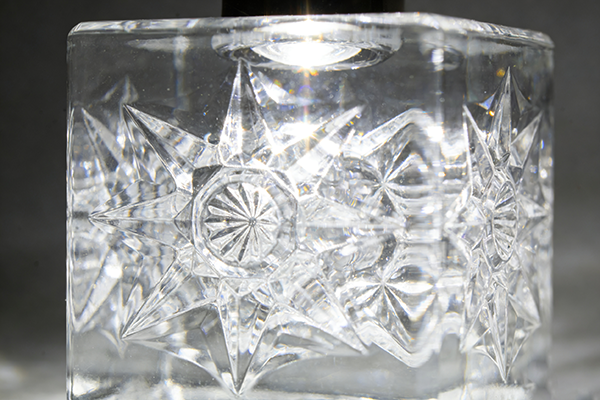
To make the right decision, you need to understand how pulse duration2 affects engraving physics and system performance.
What Is the Difference Between Nanosecond and Picosecond Lasers?
Many users think all pulsed lasers behave the same. This leads to incorrect equipment selection.
The key difference is pulse duration, which determines how energy interacts with the material and affects heat, Präzision, and micro-fracture behavior.

Deep Explanation
Pulse Duration Comparison
| Lasertyp | Pulse Duration |
| Nanosecond | 10⁻⁹ seconds |
| Picosecond | 10⁻¹² seconds |
Picosecond lasers deliver energy 1000 times faster than nanosecond lasers3.
Energy Delivery Mechanism
Nanosecond lasers:
- Longer interaction time
- More heat diffusion
- Larger thermal-affected zone
Picosecond lasers:
- Ultra-fast energy deposition
- Minimal heat transfer
- Highly localized interaction
Micro-Point Formation
| Besonderheit | Nanosecond | Picosecond |
| Micro-point size | Larger | Kleiner |
| Edge quality | Mäßig | Sharp |
| Thermal effect | Höher | Minimal |
Engineering Implications
Shorter pulses improve:
- Präzision
- Repeatability
- Crack control
But they require more advanced system design.
Role of Pump Source
Both laser types often rely on diode-pumped solid-state architectures4. Pump source stability affects:
- Pulse energy consistency
- Output stability
- Long-term reliability
High-performance pump sources with strong thermal management ensure stable operation across different pulse regimes.
Practical Insight
Pulse duration defines the interaction physics. It is the most important parameter when comparing these two technologies.
Engineering Check
“Shorter pulse duration reduces thermal diffusion and improves engraving precision.”
Energy is deposited faster than heat can spread, reducing thermal damage.
“Nanosecond and picosecond lasers produce identical material interaction effects.”
Their interaction mechanisms differ significantly due to pulse duration.
When Should You Use a Nanosecond Laser?
Many applications do not require extreme precision. Using high-end lasers unnecessarily increases cost.
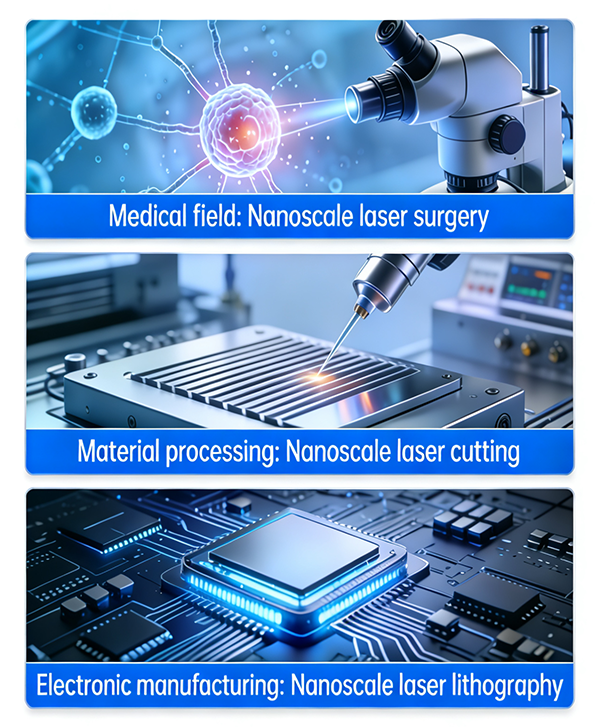
Nanosecond lasers are ideal for general crystal engraving where cost, Zuverlässigkeit, and production speed are the main priorities.
Deep Explanation
Advantages of Nanosecond Lasers
- Lower system cost
- Mature and stable technology
- High throughput
- Easier maintenance
Typical Performance
Nanosecond lasers can:
- Produce clear micro-points
- Handle most decorative engraving
- Support mass production
Einschränkungen
- Larger heat-affected zone5
- Less precise micro-point control
- Higher risk of minor thermal stress
Anwendungsszenarien
| Anwendung | Suitability |
| Crystal gifts | Hoch |
| Awards | Hoch |
| Standard 3D engraving | Hoch |
| Precision optics | Beschränkt |
Engineering Considerations
Nanosecond systems require:
- Stable pulse energy
- Proper focus control
- Optimized parameter tuning
Role of Pump Source (Your Advantage)
Nanosecond solid-state lasers depend heavily on pump source quality. Key factors include:
- Wavelength stability
- Output power consistency
- Wärmemanagement
These directly affect engraving consistency and system lifetime.
Practical Insight
Nanosecond lasers provide the best cost-performance balance6 for most commercial applications.
Engineering Check
“Nanosecond lasers are suitable for most standard crystal engraving applications.”
They provide sufficient precision at a lower cost.
“Nanosecond lasers cannot create internal engraving in glass.”
They are widely used for subsurface engraving.
When Should You Use a Picosecond Laser?
High-end applications demand better precision and minimal thermal effects. Standard systems may not meet these requirements.
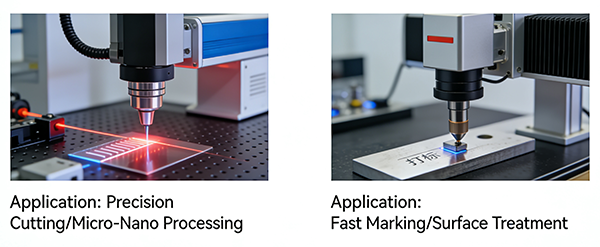
Picosecond lasers are used when ultra-fine detail, minimal heat impact, and precise micro-point control are required.
Deep Explanation
Advantages of Picosecond Lasers
- Minimal heat-affected zone7
- Higher precision micro-points8
- Better edge quality
- Reduced crack risk
Performance Characteristics
Picosecond lasers enable:
- Smaller micro-points
- Higher resolution images
- Cleaner internal structures
Einschränkungen
- High system cost
- More complex system integration
- Lower cost-efficiency for mass production
Anwendungsszenarien
| Anwendung | Suitability |
| High-end optics | Hoch |
| Scientific research | Hoch |
| Micro-structuring | Hoch |
| Mass production | Beschränkt |
System Requirements
Picosecond systems require:
- High-end optics
- Precise synchronization
- Stable pump source
Even in ultrafast systems, diode pump sources remain critical for solid-state laser architectures.
Engineering Insight
The main benefit is not just precision. It is reduced thermal stress, which improves material integrity.
Practical Insight
Picosecond lasers are justified when performance requirements outweigh cost constraints.
Engineering Check
“Picosecond lasers reduce thermal damage due to ultra-short pulse duration.”
Short pulses confine energy in time, limiting heat diffusion.
“Picosecond lasers are always the best choice regardless of application.”
They are only suitable when high precision is required.
How to Choose Between Nanosecond and Picosecond Lasers?
Many buyers focus only on specifications. But the right choice depends on application needs and cost constraints.
Choose nanosecond lasers for cost-effective production and picosecond lasers for high-precision applications with strict quality requirements.
[image placeholder]
Deep Explanation
Decision Framework
| Requirement | Empfohlener Laser |
| Cost-sensitive | Nanosecond |
| Hohe Präzision | Picosecond |
| High volume | Nanosecond |
| Minimal thermal effect | Picosecond |
Cost vs Performance Trade-off
| Faktor | Nanosecond | Picosecond |
| Kosten | Niedrig | Hoch |
| Präzision | Medium | Hoch |
| Speed | Hoch | Medium |
| Komplexität | Niedrig | Hoch |
System Integration Perspective
For system integrators:
- Nanosecond → easier integration
- Picosecond → higher technical requirements
Role of Laser Source Supply Chain
Stable pump source supply ensures:
- Reliable system performance
- Consistent delivery timelines
- Lower maintenance risk
This is especially important for OEM and ODM partners9.
Practical Insight
Do not choose based on “best technology.” Choose based on application requirements and ROI.
Engineering Check
“Laser selection should be based on application requirements rather than maximum performance.”
Over-specifying increases cost without adding value.
“Higher precision lasers always deliver better business outcomes.”
Cost-performance balance is critical in real-world applications.
Abschluss
Nanosecond lasers offer cost-effective reliability, while picosecond lasers provide superior precision. The right choice depends on balancing performance, kosten, and application requirements.
Einblick
In crystal engraving, the real decision is not nanosecond vs picosecond—it is ROI vs over-specification10. Most production lines achieve stable, high-quality output with nanosecond systems, while picosecond lasers only deliver meaningful value when micro-point size, thermische Kontrolle, and crack sensitivity become critical. In both cases, long-term consistency11 ultimately depends less on pulse duration itself and more on how stable the pump source keeps that pulse energy over time.
- Micro-point control is crucial for achieving fine details and precision in laser engraving, especially with picosecond lasers. ↩︎
- Understanding pulse duration helps in selecting the right laser for your engraving needs, balancing precision and cost. ↩︎
- This resource provides a detailed comparison of nanosecond and picosecond lasers, highlighting their unique characteristics and implications for precision and material interaction. ↩︎
- Diode-pumped solid-state architectures offer stability and efficiency, making them ideal for advanced laser systems with varying pulse durations. ↩︎
- Understanding the heat-affected zone is crucial for determining the suitability of nanosecond lasers in various applications, especially for those concerned with material integrity. ↩︎
- This keyword highlights the efficiency of nanosecond lasers in providing high-quality results at a lower cost, making it a valuable resource for businesses looking to optimize their operations. ↩︎
- This keyword highlights a key advantage of picosecond lasers, making it valuable for users seeking precision in applications where thermal damage is a concern. ↩︎
- This keyword emphasizes the unique capability of picosecond lasers, which is crucial for high-end applications requiring detailed and accurate processing. ↩︎
- This resource provides insights into the importance of stable laser supply chains for OEM and ODM partners, helping them make informed decisions based on system integration and performance needs. ↩︎
- This link will help you understand how to make cost-effective decisions when choosing between nanosecond and picosecond lasers for crystal engraving. ↩︎
- This resource will provide insights into the factors that influence the stability and reliability of laser systems over time. ↩︎