Modern manufacturing demands efficiency, 精度, and sustainability. When it comes to heating technologies, traditional methods often fall short in meeting these modern expectations.
Laser heating offers faster thermal response, localized energy input, and superior control, making it ideal for high-precision industrial applications, especially in environments that demand process repeatability and reduced thermal distortion.
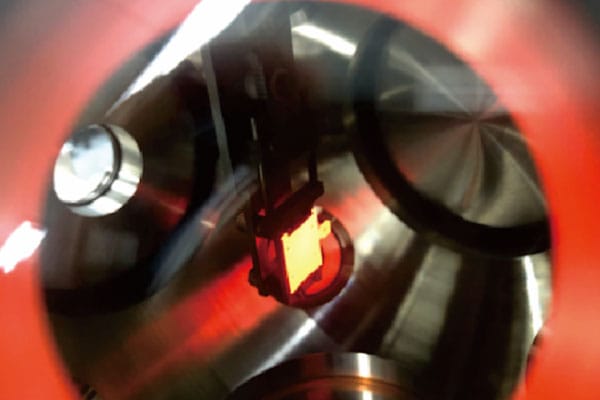
Let’s dive deep into how traditional and laser heating differ in principles, パフォーマンス, application potential, and impact on production quality.
What Is Traditional Heating and How Does It Work?
Traditional heating methods have been widely used in industries like metallurgy, 自動車, and toolmaking. They are typically based on the transfer of heat via conduction, convection, or radiation from an external source to the component that needs to be treated.
These methods usually require bulk heating of the entire part or large surface areas, often leading to heat loss, uneven temperature profiles, and substantial energy consumption.
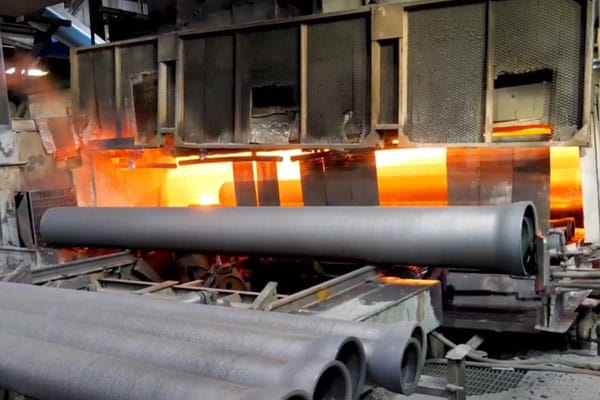
Common Traditional Heating Techniques:
| 方法 | 説明 | Use Cases |
|---|---|---|
| Furnace Heating | Encloses entire components to uniformly heat them | Annealing, forging |
| Flame Heating | Direct use of high-temperature flame on the surface | Surface hardening, bending |
| Induction Heating | Electromagnetic fields induce surface current for heating | Shaft hardening, gear hardening |
Key Characteristics:
-
Slow heating and cooling cycles, resulting in longer process times
-
Broad heat-affected zones, which may alter properties of unintended areas
-
High energy consumption, especially when large components require treatment
-
Requires quenching fluids, increasing environmental and safety concerns
-
Greater thermal distortion, especially on complex geometries or thin parts
Real-World Challenges:
In traditional methods, precision is often sacrificed for simplicity. Manual control, uneven temperature distribution, and delayed thermal response limit their compatibility with high-speed, 自動化された生産ライン.
What Is Laser Heating and Why Is It Different?
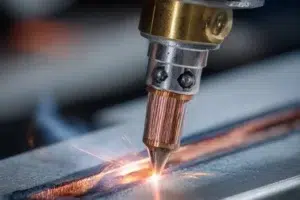
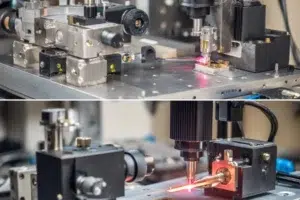
Laser heating uses focused, high-intensity beams to deliver thermal energy to a small, precise region of a component. The process is non-contact and can be precisely programmed to follow specific paths, depths, and time cycles.
This makes laser heating extremely attractive for modern manufacturing, where product miniaturization, material diversity, and tight tolerances are essential.

Technical Advantages of Laser Heating:
| 特徴 | Laser Heating Benefits |
|---|---|
| エネルギー効率 | Localized heating minimizes thermal waste |
| Thermal Response Time | Reaches target temperature in milliseconds |
| Spatial Control | Heat specific regions with micrometer-level accuracy |
| Automation Integration | Compatible with CNC and robotic systems |
| Safety & Cleanliness | No open flames, combustion gases, or hazardous fluids required |
Flexible Control Features:
-
Spot Size Customization: Use lenses or beam shaping optics to adjust heating area
-
Dynamic Beam Modulation: Adapt intensity and pulse duration in real time
-
Real-Time Monitoring: Integrated sensors can track temperature, position, and feedback
-
Non-contact Processing: Perfect for sensitive or delicate components
Laser vs Traditional Heating: A Side-by-Side Comparison
| Aspect | レーザー加熱 | 従来の暖房 |
|---|---|---|
| Heat Transfer Method | Radiative via laser beam | Conduction, convection, or combustion |
| Heating Speed | Very fast (ms-level) | 遅い (minutes to hours) |
| Targeting Accuracy | Extremely high | Low to moderate |
| 熱影響地域 | 最小限 | Large |
| Deformation Risk | Very low | High due to thermal gradients |
| エネルギーの使用 | 効率的, low overall consumption | High energy loss through dispersion |
| Environmental Impact | 低い, no by-products | 高い, uses oil/water or emits combustion gas |
| メンテナンス | 最小限, clean system | Regular cleaning and safety inspections |
| Customizability | High—software controlled | Low—depends on equipment setup |
| Cost Over Time | High upfront, lower long-term cost | Low upfront, higher operational costs |
Where Is Laser Heating Most Useful?
Laser heating is being adopted across multiple sectors that value precision, automation, and performance consistency. It’s especially effective for components that are small, complex, or require selective treatment.
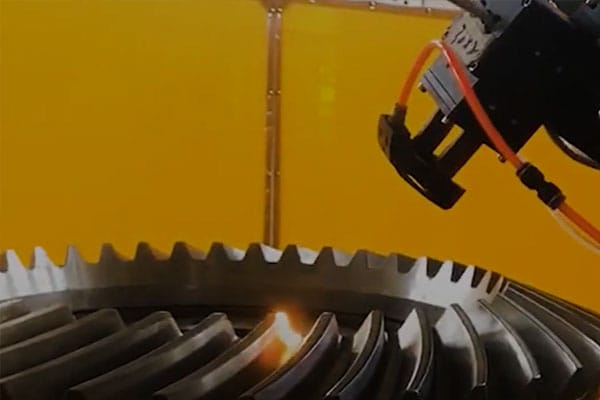
High-Value Application Areas:
| 業界 | Laser Heating Use Cases |
|---|---|
| エレクトロニクス | Soldering, chip bonding, プリント基板の修理 |
| 自動車 | Shaft hardening, precision welding, selective annealing |
| 航空宇宙 | Heat treating turbine edges, composite curing |
| Medical Devices | Micro-welding of tools, implant surface modification |
| 科学研究 | Laser-driven experiments, material phase transitions |
Support for Smart Manufacturing:
Laser heating can be integrated with:
-
Industrial robots for automated multi-axis heating paths
-
IoT systems for remote monitoring and diagnostics
-
デジタルツイン for predictive thermal modeling
Economic & Sustainability Benefits
Though laser systems often require higher initial capital investment, の total cost of ownership (TCO) can be significantly lower over time due to:
-
Lower power usage per unit
-
Less material waste
-
Reduced rework and defect rates
-
Minimal consumables (no quenching media, filters, 等)
-
Smaller environmental footprint (low emissions, recyclable systems)

Additionally, companies using laser heating can meet increasingly strict environmental and energy-efficiency regulations, opening up new markets and certifications.
結論
Laser heating isn’t just an upgrade—it’s a technological leap. Compared to traditional heating, it offers unmatched precision, スピード, automation readiness, and environmental performance. For manufacturers looking to improve quality, reduce waste, and future-proof their processes, laser heating is the smarter, クリーナー, などなど