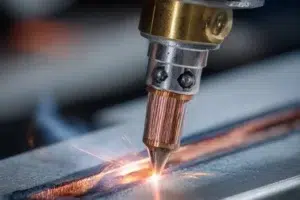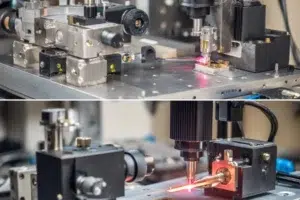
Modern industry moves at the speed of light—literally. Laser technologies are behind everything from smartphone components to eye surgery.
Lasers fall into six main categories, each tailored to specific applications with unique strengths and limitations.

Choosing the right laser means aligning not just performance, but also integration, 料金, and reliability.
Introduction — How Lasers Revolutionized Modern Technology?
Lasers were once a lab curiosity. 今日, they are everywhere, from manufacturing lines to medical rooms.
The invention of lasers opened up new possibilities in precision, スピード, and material processing that traditional tools could never achieve.

From barcode scanners to satellite systems, lasers are essential tools across industries.
How They Work: Crystals doped with rare-earth ions (例えば。, nd:ヤグ, nd:Glass)
主な特長: 高電力, strong pulse energy
アプリケーション: Cutting, drilling, 医療手術, and defense systems
The Six Main Types of Lasers Explained?
Even with the same beam, no two lasers are created equal.
Each laser type operates on a different principle and excels in specific domains. Knowing the differences is critical for effective application.
Let’s explore what sets each laser type apart, starting from the most common in industry.
1. 固体レーザー1
Lasers like Nd:YAG use a solid crystal as their gain medium, energized by a light source.
They deliver high pulse energy and power, making them suitable for heavy-duty tasks like cutting and defense.

Use Cases and Considerations
-
Material Processing: Efficient in metals and ceramics
-
Medical Use: Eye surgeries, tattoo removal
-
欠点: Requires cooling, sensitive to thermal load
| パラメータ | 価値 |
|---|---|
| 中くらい | Crystal (例えば。, nd:ヤグ) |
| 波長 | 1064 nm (common) |
| ビーム品質 | 高い |
| Cooling Needs | 高い |
| 効率 | 中くらい |
2. ファイバーレーザー2
These use doped optical fibers and are highly efficient and compact.
Fiber lasers offer excellent beam quality and are ideal for precision tasks in tough environments.

Why Industry Prefers Them
-
Cutting & 溶接: Especially with reflective metals like copper
-
Communications: Telecom-grade reliability
-
メンテナンス: Minimal due to sealed structure
| パラメータ | 価値 |
|---|---|
| 中くらい | Yb or Er-doped fiber |
| 波長 | 1064 nm (Yb), 1550 nm (Er) |
| ビーム品質 | 素晴らしい |
| Cooling Needs | Low to medium |
| 効率 | 非常に高い |
3. Gas Lasers3
Relying on gas discharge tubes, they deliver stable output in visible to IR spectra.
Gas lasers remain staples in engraving and scientific setups due to their wavelength stability.

Popular Variants
-
CO₂ Lasers: Great for cutting non-metals
-
He-Ne Lasers: Common in alignment tools
-
Argon-ion: High beam quality for lab use
| パラメータ | 価値 |
|---|---|
| 中くらい | ガス (CO₂, He-Ne) |
| 波長 | 632.8 nm, 10.6 μm |
| ビーム品質 | Moderate to High |
| Cooling Needs | 中くらい |
| 効率 | 中くらい |
4. Diode Lasers4
Semiconductor-based, these are the most compact and widely used laser type.
Diode lasers combine low cost and efficiency, perfect for mass-market products and laser pumping.

Vivlaser’s Core Advantage
-
Custom Modules: Ranging from 450nm to 976nm
-
アプリケーション: Aesthetic devices, fiber pumping, consumer electronics
-
Advancement: Our VBG-locked 878.6nm diode lasers replace foreign monopolies in solid-state systems
| パラメータ | 価値 |
|---|---|
| 中くらい | Semiconductor PN junction |
| 波長 | 450 nm – 1550 nm |
| ビーム品質 | Good |
| Cooling Needs | 低い |
| 効率 | 高い |
5. Dye Lasers5
They use organic dye solutions and are known for tunable wavelengths.
Despite their complexity, dye lasers are unmatched in spectroscopy and biomedical testing.

Why They’re Still Relevant
-
Tunable Range: 400-900nm typically
-
Lab Use: Versatile across experiments
-
Complexity: Need for dye handling limits use
| パラメータ | 価値 |
|---|---|
| 中くらい | Organic dye in solution |
| 波長 | Broad tunable range |
| ビーム品質 | 高い |
| Cooling Needs | 中くらい |
| 効率 | 低い |
6. Free Electron Lasers (FEL)6
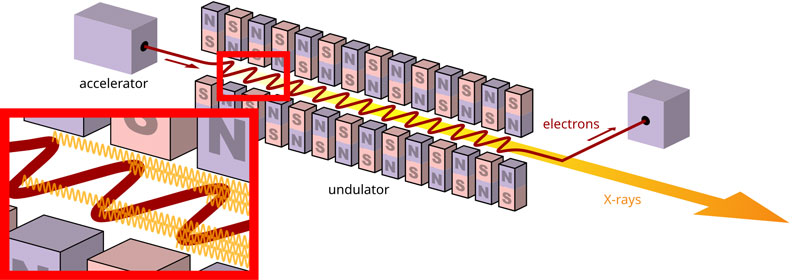
FELs don’t use traditional media. Instead, they leverage magnetic fields and electron beams.
These are the only lasers that can cover the full spectrum from microwaves to X-rays.
Where They Matter
-
Nuclear Physics: Particle interactions
-
Material Research: X-ray diffraction
-
制限事項: 高い, large footprint
| パラメータ | 価値 |
|---|---|
| 中くらい | Free electrons in vacuum |
| 波長 | Tunable (Microwave to X-ray) |
| ビーム品質 | 非常に高い |
| Cooling Needs | 高い (complex infrastructure) |
| 効率 | Variable |
Comparing Laser Types — Power, 効率, and Use Cases?
Every laser has trade-offs. Here’s a quick overview.
This table helps you compare lasers by cost, 使用, and performance in one glance.
| レーザーの種類 | 効率 | ビーム品質 | 代表的な用途 | Cost Level |
|---|---|---|---|---|
| Solid-State | 中くらい | 高い | Cutting, 手術 | $$$ |
| ファイバ | 非常に高い | 素晴らしい | 溶接, Marking | $$ |
| ガス | 中くらい | 適度 | 彫刻, 医学 | $$ |
| ダイオード | 高い | Good | エレクトロニクス, Pumping | $ |
| Dye | 低い | Adjustable | 研究 | $$$ |
| Free Electron | Variable | Tunable | 科学研究 | $$$$ |
Choosing the Right Laser for Your Application?
With so many options, how do you choose?
Focus on application needs: material, 精度, 料金, 冷却, and integration complexity.
Quick Picks by Industry
-
医学: Diode or solid-state for reliability and compactness
-
産業: Fiber lasers for high throughput, diode for pump sources
-
研究: Dye or FELs for wavelength flexibility
-
エレクトロニクス: Diode lasers for precision and price
| 要素 | Best Laser Type |
|---|---|
| Budget | ダイオード |
| Wavelength Tunable | Dye, FEL |
| メンテナンス | ファイバ |
| Beam Precision | ファイバ, Solid-State |
| カスタマイズ | ダイオード (Vivlaser modules) |
The Future of Laser Technology?
Laser technology isn’t standing still.
Advances in AI, miniaturization, and efficiency will redefine what lasers can do in the next decade.

Trends to Watch
-
AI-Controlled Systems: For adaptive beam control
-
Green Lasers: Higher energy efficiency
-
Compact Modules: For handheld devices
-
Spectral Beam Combining: Scaling power in fiber and diode systems
Conclusion — One Technology, Endless Possibilities
Lasers are reshaping how industries operate—from cutting metals to healing skin—with limitless potential ahead.
-
Explore the unique benefits of Solid-State Lasers for heavy-duty tasks like cutting and defense. ↩
-
Discover how Fiber Lasers enhance precision and efficiency in tough environments. ↩
-
Learn about the stability and versatility of Gas Lasers in various engraving and scientific setups. ↩
-
Find out why Diode Lasers are favored for their cost-effectiveness and efficiency in mass-market products. ↩
-
Understand the unmatched capabilities of Dye Lasers in spectroscopy and biomedical applications. ↩
-
Explore the unique capabilities of FELs in covering a wide spectrum from microwaves to X-rays. ↩