Industrial manufacturing increasingly demands enhanced surface properties for metal components. Laser hardening is rapidly becoming a preferred method for achieving superior durability and wear resistance.
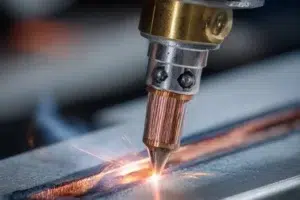
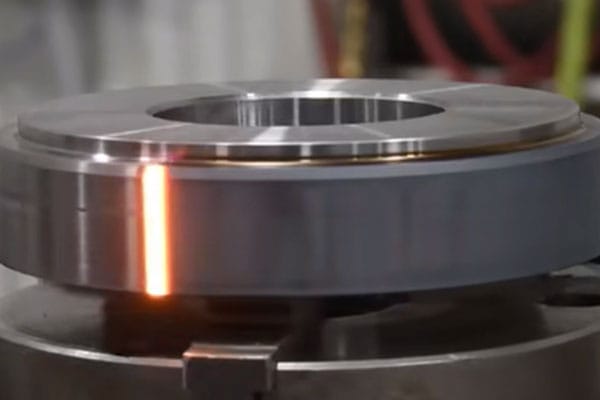
Laser hardening is an advanced surface heat treatment process that uses high-energy laser beams to rapidly heat and self-quench metal surfaces, significantly improving hardness and extending component lifespan.
But is it truly worth your investment? Let’s explore the process, beneficios, industry applications, and how Vivlaser’s technology enhances this modern technique.
How Does Laser Hardening Work?
Laser hardening modifies the surface properties of metals, especially steels, by changing their microstructure through rapid thermal cycles.
The laser rapidly heats the metal surface above its austenitizing temperature (typically above 900°C), followed by self-quenching as heat dissipates into the cooler interior, forming martensitic layers with high hardness.

Key Steps in Laser Hardening:
| Paso | Descripción |
|---|---|
| Heating | Laser beam raises surface temp to the austenite transformation zone |
| Self-Quenching | No need for oil or water; internal conduction cools the surface |
| Microstructure Change | Austenite transforms to martensite, increasing hardness |
Technical Highlights:
-
Localized heating reduces overall thermal distortion
-
Controlled energy input allows high precision
-
Sin contacto operation means no mechanical stress or contamination
-
Repeatable and programmable, ideal for automation
How Does It Compare to Traditional Hardening Methods?
Conventional methods such as induction or flame hardening have limitations.
Laser hardening offers more precision, less deformation, and is environmentally friendly, with no need for quenching fluids or post-processing. In addition, it enables customizable beam shaping, allowing manufacturers to adapt the spot size and energy distribution to fit specific part geometries. This flexibility improves uniformity, reduces the risk of overheating, and enhances compatibility with automated production systems, making it ideal for complex or high-volume applications.

Comparative Analysis:
| Característica | Endurecimiento por láser | Induction/Flame Hardening |
|---|---|---|
| Deformation | Mínimo | Significant |
| Heating Method | Focused laser beam | Electromagnetic coil or flame |
| Environmental Impact | No oils or water required | Often uses water/oil quenching |
| Application Scope | Complex geometries, edges | Best for simpler, symmetrical parts |
| Precisión | Extremely high | Moderado |
| Beam Shaping | Customizable spot shapes | Limited or no control |
Laser hardening enables the treatment of highly complex components with minimal setup, and it integrates seamlessly into robotic systems and CNC platforms. This supports smart manufacturing and enhances process flexibility.
Which Industries Benefit Most from Laser Hardening?
Not every sector needs laser hardening—but those requiring precision, longevity, and efficiency do.
Industries such as automotive, aeroespacial, mold & die manufacturing, and rail transport benefit greatly from laser hardening due to its ability to significantly enhance component durability.
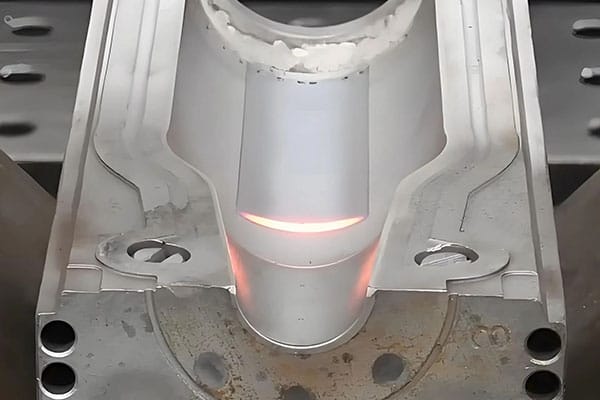
Aplicaciones típicas:
| Industria | Components Treated | Benefits Gained |
|---|---|---|
| Automotor | Gears, camshafts, crankshafts | Improved wear resistance and fatigue strength |
| Mold & Die | Press molds, forging dies | Reduced maintenance, extended tool life |
| Aeroespacial | Palas de turbina, engine parts | High hardness with minimal weight impact |
| Rail Transport | Tracks, wheels | Crack resistance, reduced replacement frequency |
| Heavy Machinery | Rollers, axles, ejes | Lower failure rates in extreme operating conditions |
Future Growth Areas:
With the rising trend in Industria 4.0 and smart factories, laser hardening is aligning well with automation, digital monitoring, and AI-driven process control. These advantages are pushing laser surface treatment into more sectors, such as electronics, defensa, and renewable energy components.
What Makes Laser Hardening So Efficient?
Efficiency in laser hardening isn’t just about speed—it’s about precisión, repeatability, y calidad.
Because of its programmable nature and energy concentration, laser hardening provides uniform results, reduces scrap rates, and shortens production cycles—all critical in high-volume manufacturing environments.
Why High-Power Semiconductor Lasers Matter:
At the core of a laser hardening system lies the laser source. Key attributes for an ideal laser source include:
| Attribute | Importance in Hardening Applications |
|---|---|
| Stable High Power Output | Ensures uniform heating depth and consistent results |
| Top-Hat Beam Profile | Delivers even energy distribution to prevent overheating |
| Adjustable Focus & Spot Size | Allows flexibility for different parts and geometries |
| Gestión Térmica | Enables long-duty cycles without overheating |
| Integration Capabilities | Easy to install with robots or CNC systems |
Vivlaser’s Role in Advancing Laser Hardening
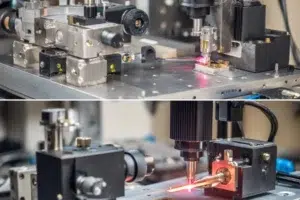
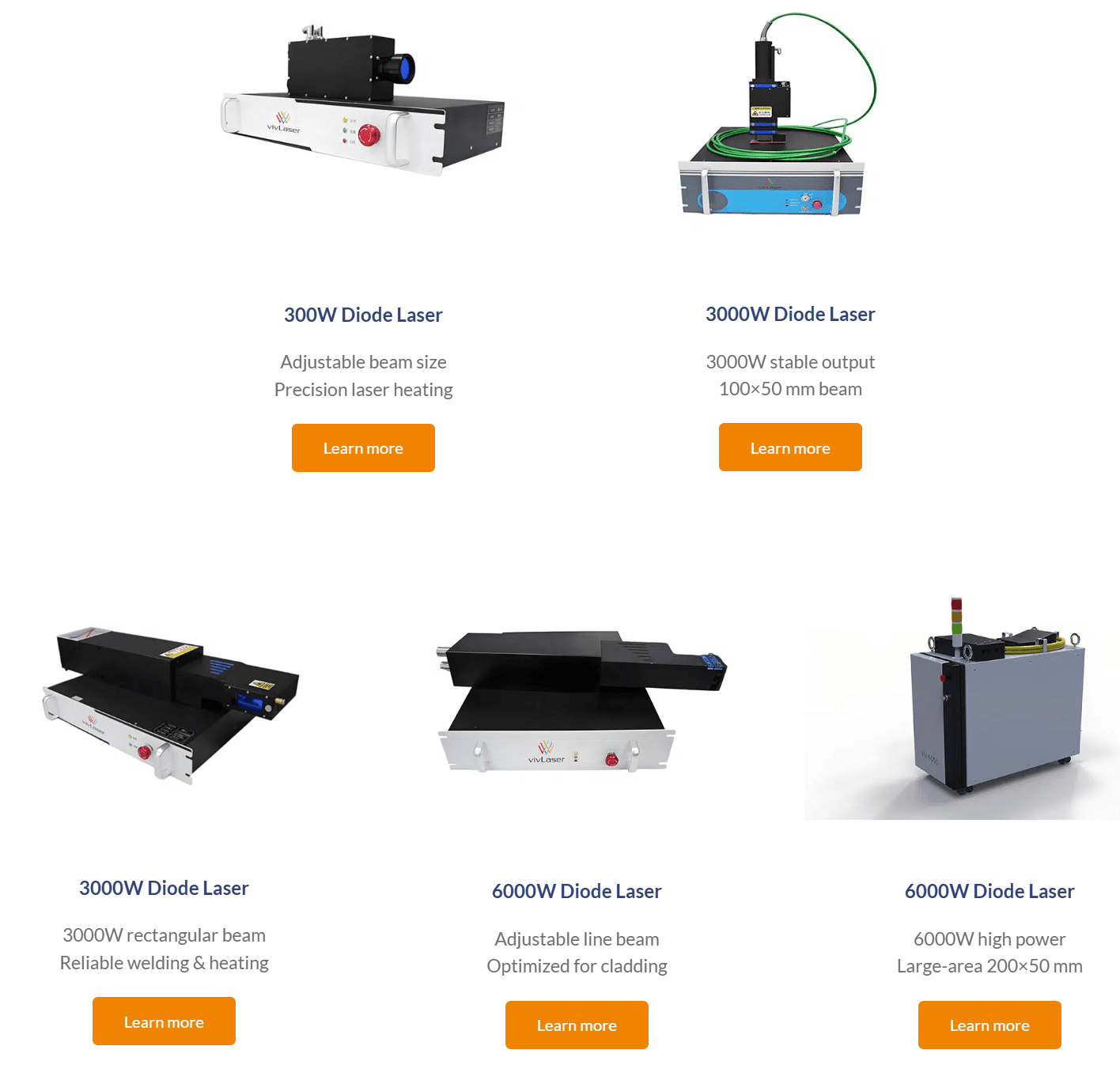
Vivlaser offers a range of kilowatt-level semiconductor lasers that are especially suited for demanding surface treatment tasks like laser hardening. Key advantages include:
-
Output power up to 10KW with excellent beam consistency
-
Compact and robust designs, ideal for industrial environments
-
Advanced thermal management for long-term stable operation
-
Customizable modules to match specific application needs
-
Fast lead times and responsive technical support
Our products support stable, high-efficiency operations essential for processes like:
-
Laser surface transformation hardening
-
Localized microstructure optimization
-
Automated production lines with real-time monitoring
We collaborate with system integrators, research institutions, and OEMs worldwide to push the boundaries of laser manufacturing.
Conclusión
Laser hardening is reshaping surface treatment across industries with its precision, eficiencia, y flexibilidad. For manufacturers aiming for quality and durability, it’s an investment worth serious consideration.