The demand for ultra-precise, micro-scale, and thermally safe processing is growing fast. Traditional nanosecond lasers can no longer meet these needs. Picosecond lasers are now the go-to solution.
Picosecond lasers are not just "faster lasers" — they use a fundamentally different process. Their real value lies in what they can cut, how cleanly they do it, and how little they damage the material.
Why Are Picosecond Lasers Ideal for High-End Processing?
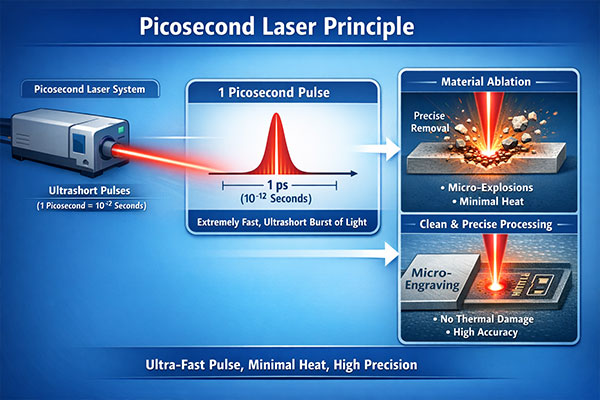
Traditional laser heat damage limits precision. Picosecond lasers1 offer a game-changing solution with ultra-short pulses that avoid thermal diffusion.
Picosecond lasers1 create ultra-clean results with minimal heat-affected zones. This makes them perfect for scenarios where thermal damage must be avoided.
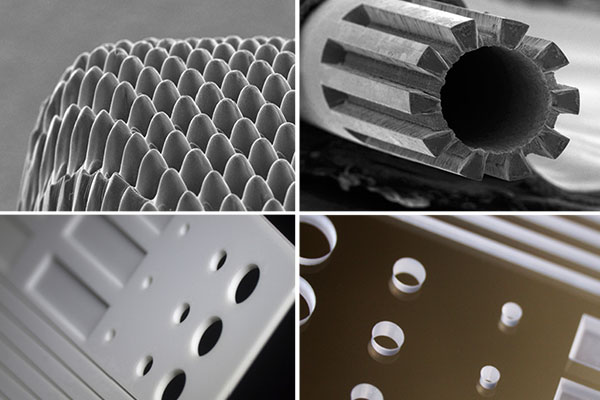
Let’s explore how this cold-processing laser technology is transforming multiple high-value industries.
No Thermal Damage: Cold Ablation with Clean Boundaries
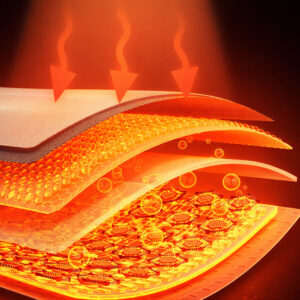
Picosecond lasers1 deliver light pulses at the 10⁻¹² second scale. That’s fast enough to remove material before heat can spread. The result is:
- Cold processing2 (no melt)
- Almost zero heat-affected zone (HAZ)
- Sharp, clean edges
This makes picosecond lasers ideal for sensitive materials and applications that demand extreme precision.
Built for Integration: Powered by Narrow-Linewidth 888nm Pump Sources
Advanced picosecond lasers rely on high-stability pump lasers. Vivlaser’s 888nm semiconductor laser modules are optimized for such use.
| パラメータ | Vivlaser 888nm Module |
|---|---|
| 中心波長 | 888 ± 0.5 nm |
| スペクトル幅 | < 0.5 nm |
| 電力範囲 | 25W–175W |
| Beam Delivery | Fiber-coupled (200/400µm) |
| 信頼性 | 工業用グレード |
This pump source helps picosecond lasers maintain performance even under long-term industrial workloads.
What Are the Core Application Areas of Picosecond Lasers?
From transparent materials to electronics and even medical skincare, picosecond lasers are everywhere. Their main strength? Precision without thermal side effects.
Picosecond lasers dominate wherever “熱損傷3” is unacceptable — from ultra-thin glass4 to semiconductor wafers and skin rejuvenation.
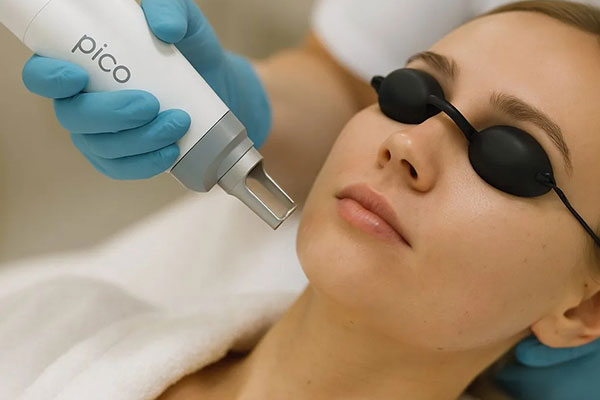
Let’s dive deeper into each domain.
Transparent Materials: The Most Mature Application
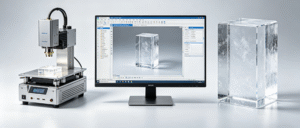
Glass is brittle. Heat leads to cracks. Picosecond lasers solve this by cutting without heating.
Use cases:
- Cutting ultra-thin glass4 (例えば。, smartphone cover glass)
- Drilling and slotting sapphire or quartz
- Display panel and optical lens processing
| 特徴 | Nanosecond Laser | Picosecond Laser |
|---|---|---|
| Edge Chipping | 高い | 非常に低い |
| Microcracks | 頻繁 | レア |
| Post-Processing Needs | 高い | 最小限 |
In consumer electronics and display optics, picosecond lasers deliver cleaner results and lower total cost of ownership.
半導体 & Electronics Manufacturing
In semiconductor processing, heat can ruin everything.
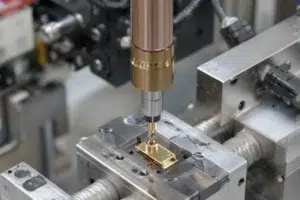
Picosecond lasers allow thermal-free micromachining5, essential for high-end electronics.
Use cases:
- Wafer dicing (especially thin wafers)
- Film removal (ITO, PI, SiN)
- PCB / FPC precision patterning
The key benefit? Improved yield and stability — without damaging the substrate.
In Micro-LED, MEMS, and advanced packaging, picosecond lasers are now a core tool.
Micromachining of Metals & Hard Materials
Picosecond lasers aren’t about high-speed cutting. They’re about ultra-clean, ultra-small features.
Use cases:
- Micro-marking of luxury components
- Micro-hole drilling in medical tools
- Precision etching on molds and tools
Even though metals absorb heat, the ultra-short pulse avoids thermal distortion.
Medical Aesthetic Applications
The skin is sensitive. That’s why “cold lasers” are popular in medical treatments.
Compared to nanosecond lasers, picosecond lasers offer:
- Finer pigment shattering
- Lower risk of burns
- Faster healing times
Compared to femtosecond lasers, they have:
- Lower system cost
- Simpler integration
Common uses:
- Tattoo removal
- Skin resurfacing
- Epidermal micro-treatment
Picosecond lasers strike a balance — effective, gentle, and scalable.
Where Do Picosecond, Nanosecond, and Femtosecond Lasers Fit?
| レーザーの種類 | Pulse Duration | Processing Style | Typical Use |
|---|---|---|---|
| Nanosecond Laser6 | 10⁻⁹ s | Thermal | Marking, general cutting |
| Picosecond Laser7 | 10⁻¹² s | Cold, スケーラブルな | Glass, エレクトロニクス, skin |
| フェムト秒レーザー | 10⁻¹⁵ s | Ultra-precise | R&d, niche applications |
Picosecond lasers hit the sweet spot — clean, スケーラブルな, and industry-ready.
How to Choose the Right Pump Source for Your Picosecond Laser?
Not all pump sources are created equal. For picosecond lasers, the pump source is critical for performance, 安定性, と効率.
Key factors in pump selection:
- Wavelength match8: 888nm or 878.6nm is preferred over traditional 808nm to improve efficiency in Nd:YVO4 gain media.
- Spectral width: Must be <1nm to ensure effective absorption.
- 電力安定性9: Low ripple and noise are vital for consistent output.
- Thermal reliability: Long-life modules are required for industrial uptime.
Vivlaser’s 888nm modules meet all these needs. と <0.5nm spectral width, high power (up to 175W), and proven reliability, they are trusted by leading solid-state laser manufacturers in China and abroad.
| 特徴 | 重要性 | Vivlaser 888nm Performance |
|---|---|---|
| Wavelength Match | Essential | 888nm ±0.5nm |
| スペクトル幅 | Critical | <0.5nm |
| 出力電力 | Application-specific | 25W–175W |
| ファイバーカップリング | Integration-ready | 200µm / 400µm options |
| Thermal Reliability | High-priority | Industrial-grade design |
Choosing the right pump means better laser stability, longer service life, and lower system cost.
結論
Picosecond lasers aren’t just fast — they’re clean, 正確な, そして スケーラブルな. With reliable pump sources like Vivlaser’s 888nm modules, they unlock new standards in precision manufacturing and medical care.
-
Discover how Picosecond lasers enhance precision and efficiency in various industries, making them a game-changer for high-end processing. ↩ ↩ ↩
-
Learn about cold processing techniques and their advantages in minimizing thermal damage, crucial for sensitive materials. ↩
-
Understanding thermal damage is crucial for optimizing laser applications and preventing material failure. ↩
-
Explore advanced techniques for processing ultra-thin glass, essential for modern electronics and displays. ↩ ↩
-
Learn about micromachining to discover its role in precision manufacturing and innovative technologies. ↩
-
Discover the mechanics and advantages of Nanosecond Lasers, which are essential for marking and cutting processes. ↩
-
Explore this link to understand the diverse applications and benefits of Picosecond Lasers in various industries. ↩
-
Understanding wavelength match is crucial for optimizing laser performance and efficiency, making this resource invaluable. ↩
-
Exploring power stability will reveal its impact on laser output consistency, essential for reliable applications. ↩