Surface damage hard to fix? Process unstable? The real problem often lies in your choice of laser.
The success of laser cladding depends 90% on the quality of the laser source. The right laser ensures stable processing, consistent results, and controlled costs. Keep reading to find out how integrators should make the right choice.
What is Laser Cladding and What Are Its Advantages?
Have you heard of laser cladding but aren’t sure how it works or what it’s good for?
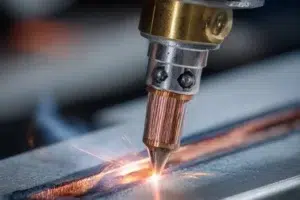
Laser cladding is a high-precision surface enhancement technology that extends the life of parts, improves wear resistance, and reduces repair costs in demanding industrial environments.

Why It Matters in Modern Manufacturing
| Benefit | Description |
|---|---|
| Strong Metallurgical Bond | Fused layer integrates with the base, not just coating it |
| Minimal Heat Impact | Small heat-affected zone means less distortion |
| Versatile Materials | Works on steels, alloys, ceramics, and more |
| Cost-Saving Repairs | Refurbishes high-value parts instead of replacing them |
| Longer Component Life | Resistant to wear, corrosion, and heat for harsh environments |
Laser cladding is widely used in industries like aerospace, automotive, power generation, and heavy equipment. It’s especially valued when reliability, precision, and durability are top priorities.
Why Does Laser Cladding Demand So Much from the Laser Source?
Powder not fully melted, uneven melt pools, layer peeling? These often result from unstable power output or poor beam quality.
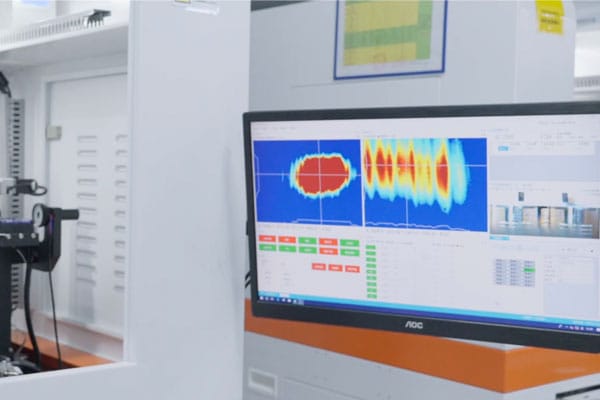
Laser cladding demands highly stable output power, excellent beam quality, and robust thermal management.
Key Laser Requirements for Laser Cladding
| Parameter | Requirement | Reason |
|---|---|---|
| Output Power | Stable, high peak (≥1000W) | Ensures stable melt pool and sufficient depth |
| Beam Quality | High uniformity, near-Gaussian | Prevents hotspots and uneven cladding layers |
| Wavelength | 808nm/880nm/976nm | Optimized absorption for common metals |
| Thermal Management | Efficient cooling and precise control | Prevents thermal drift and module degradation |
| Coupling Method | Fiber-coupled (50μm~600μm) | Easy integration into robotic or cladding heads |
More stable laser performance means denser cladding, better bond strength, and higher customer satisfaction.
How Much Does Output Power Impact Cladding Quality?
Too low, and the melt is shallow and weak. Too high, and you risk burning the base material.
Matching the laser’s power range to your process is crucial for successful cladding.
Three Factors to Consider When Choosing Laser Power
-
Material Type: Different alloys have different melting points, requiring different power levels.
-
Cladding Depth: Deeper melts need more power.
-
Cladding Speed: Faster travel speed demands higher power to maintain energy input.
Vivlaser’s kilowatt-level diode lasers support up to 2000W output, with <1% power fluctuation, perfect for large-scale mold repairs and structural reinforcement.
Does Beam Quality Really Affect Cladding Uniformity?
Yes, significantly. Poor beam distribution causes uneven melting and weak adhesion.
A high-quality beam is essential for consistent, uniform cladding results.
Why Beam Quality Matters
-
Energy concentration determines melt efficiency.
-
Smooth edge transition affects layer fusion.
-
Uniform near- and far-field profiles ensure a stable melt pool shape.
Vivlaser uses beam shaping and VBG feedback technology to deliver a near-Gaussian output, enabling excellent uniformity—ideal for aerospace and rail components requiring precision cladding.
What Are the Pros and Cons of Diode Lasers in Cladding?
Compared to fiber or CO₂ lasers, what makes diode lasers stand out?
Diode lasers offer high efficiency, compact design, and flexible integration—making them a popular choice for cladding systems.

Advantages
-
High conversion efficiency: 50%+, lowering energy costs.
-
Modular design: Flexible wavelength/power configurations.
-
Compact size and lightweight: Easy to integrate into automation systems.
-
Cost-effective: Especially for OEM and large-scale use.
Limitations
-
Larger beam divergence (requires shaping).
-
Slightly lower robustness under extreme conditions vs. fiber lasers (requires good thermal design).
Vivlaser’s VBG-enhanced diode lasers overcome these issues with optimized spectrum compression, wavelength locking, and thermal management.
How to Evaluate Laser Stability for Cladding Projects?
Great lab specs don’t always mean stable field performance. Long-term operation? You need proof of stability.
Laser stability is defined by power drift, lifetime testing, and cooling performance.
Key Stability Indicators
| Metric | Target |
|---|---|
| Power Drift | ±1% max |
| Lifetime Test | ≥10,000 hours without failure |
| Thermal Control | Full-load temp <45°C |
| Spectral Stability | Wavelength shift ≤±1nm |
| Burn-in Test | 72 hours continuous without error |
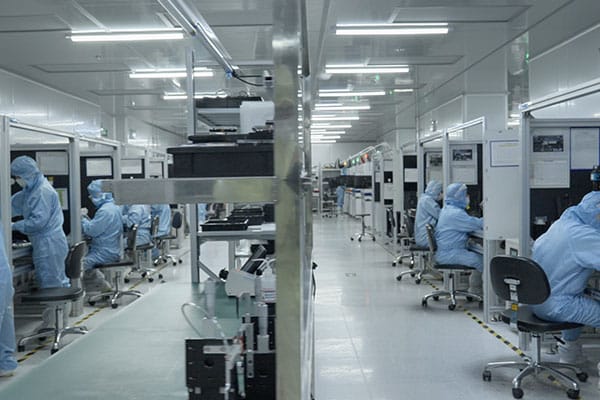
Vivlaser modules pass 1000-hour aging tests under 85°C/85% RH and maintain full performance through -40°C to +85°C thermal shock. Every unit includes detailed test reports.
What Do Integrators Often Overlook When Choosing Lasers?
Choosing based only on power and price? That’s where problems begin.
Ignoring integration compatibility, customization support, and after-sales service leads to inefficiencies, delays, and poor end-user experience.
[Image Placeholder]
Top 3 Overlooked Factors
-
Interface Matching: Laser size, fiber length, and coupling must fit your system.
-
Support Speed: How quickly can the vendor respond to issues or provide replacements?
-
Compliance Needs: CE RoHS certifications are essential for export and safety.
Vivlaser offers prototype support, fast failure replacement, custom interfaces, and global certifications, with English and German-speaking technical teams serving OEMs in Germany, Italy, and Korea.
Conclusion
In laser cladding, the laser is not just a tool—it’s the foundation of your entire process. Choosing a reliable, efficient, and well-matched laser source directly determines the quality of your results, the uptime of your system, and the satisfaction of your end-users. Whether you’re an OEM integrator, equipment supplier, or precision repair provider, investing in the right laser gives you a long-term competitive advantage. Vivlaser is here to help you build that edge.