For makers, small workshops, and DIY enthusiasts, choosing the right laser is the most critical step in building or upgrading a desktop engraving machine. The wrong choice may limit the materials you can process, reduce engraving quality, or shorten the lifetime of your equipment. Many new users focus only on power ratings, but the real decision involves wavelength, material absorption, stability, and integration.
Blue diode lasers, with their strong absorption and compact design, are becoming the preferred option for desktop engraving applications. They give users the flexibility to work with a wide range of materials without requiring bulky or expensive industrial equipment.

Why Does Wavelength Matter in Desktop Engraving?
When people think of lasers, they usually think of “power.” But wavelength is equally important. Wavelength determines how well the laser interacts with different materials. Traditional desktop engravers often use infrared diode lasers or CO₂ lasers. These work well for wood and plastics but struggle on metals and reflective surfaces.
Blue lasers, operating around 450nm, solve this challenge. Metals like aluminum, copper, and stainless steel absorb blue light far more efficiently than infrared or CO₂. This translates into cleaner engraving, less wasted energy, and better surface contrast. For non-metals such as glass or ceramics, blue lasers also perform better because their shorter wavelength allows more precise energy delivery.

For a desktop engraver user, this means fewer limitations. A hobbyist can engrave a glass mug; a small business can mark metal parts; and a workshop can cut plastics without needing multiple machines. Wavelength is the invisible factor that often decides whether your project succeeds or fails.
How Much Power Do You Really Need?
Once you understand wavelength, the next question is power. More power usually means faster cutting or deeper engraving, but it is not always better. A lower-power laser can often achieve finer detail, while a higher-power laser enables efficiency and throughput.
For casual users or those focusing on personalization—engraving names on gifts, customizing phone cases, or marking coated metals—a lower-power module is usually enough. For small workshops working with thicker plastics, wood, or bare metals, higher power becomes necessary.
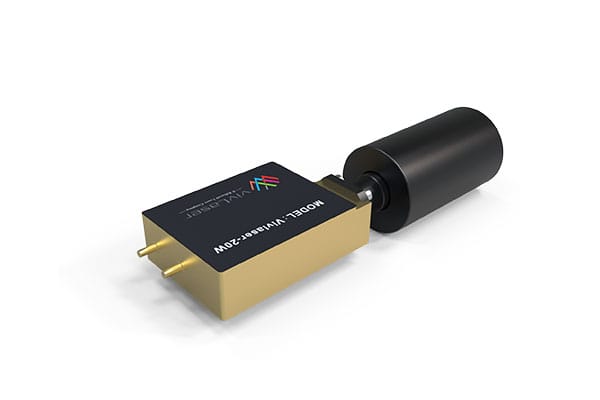
At Vivlaser, we provide 20W and 40W blue laser modules designed specifically for desktop engraving machines. A 20W module is perfect for detailed work and energy-efficient operation. A 40W module delivers the extra strength needed for deeper cuts and higher productivity in a workshop environment. These two power levels cover most of the real-world needs for desktop engraver users.

| Power Range | Typical Applications | Best For |
|---|---|---|
| Low (10–20W) | Fine engraving on plastics, coated metals | Hobbyists, small craft shops |
| Medium-High (30–40W) | Deeper engraving, faster cutting on wood, aluminum, stainless steel | Small workshops, startups |
What Materials Can Desktop Blue Lasers Handle?
A key advantage of blue lasers is their ability to process a wider variety of materials. This flexibility is what makes them so attractive for desktop engraver users who do not want to be limited by what their machine can do.
- Metals: Stainless steel, aluminum, and copper are common in jewelry, electronics, and mechanical parts. With blue lasers, engraving is sharper and less dependent on special coatings.
- Non-Metals: Wood, acrylic, plastics, and leather are standard materials in the DIY and craft world. Blue lasers can cut and mark these quickly without leaving excessive burn marks.
- Special Materials: Glass, ceramics, gemstones, and silicon carbide are traditionally difficult to work with, but shorter wavelengths provide the absorption needed for precision engraving.
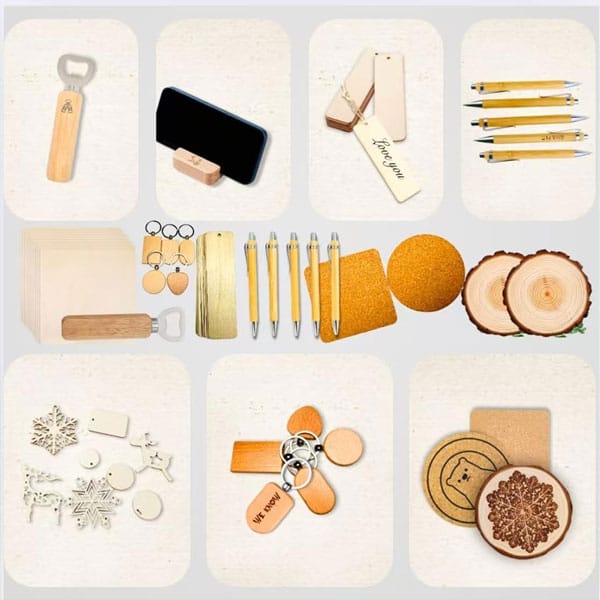
For example, a small gift shop can use a desktop engraver with a blue laser to personalize wooden boxes, engrave names on metal keychains, and even mark designs on glassware—all with the same machine. This level of versatility was much harder to achieve with older CO₂-based systems.
Precision and Beam Quality: Why It Matters More Than Just Power
Power gets attention, but precision and beam quality determine whether the result looks professional. For desktop engravers, this is especially critical because projects often involve fine detail, logos, or artwork where clarity matters.
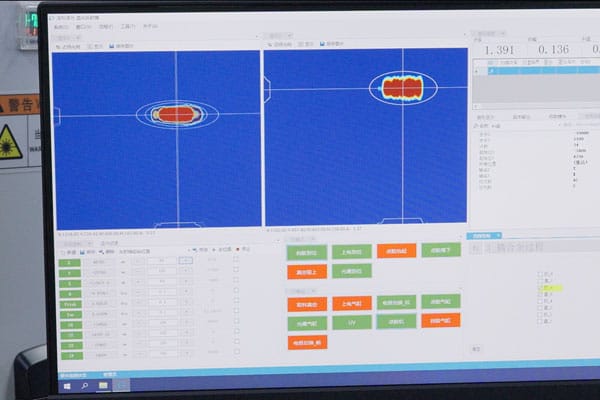 Beam quality affects how evenly energy is distributed across the engraving spot. A uniform, flat-top beam creates consistent lines without over-burning the edges. In contrast, uneven beams can cause blurred edges, inconsistent depth, or even damage to the material.
For example, when engraving jewelry or creating a detailed leather pattern, users want sharp, clean results. A higher-power laser with poor beam quality may deliver fast results, but the detail will look rough. A well-designed blue laser module balances both power and beam quality, allowing even a compact desktop engraver to produce results close to industrial-grade systems.
Practical Considerations When Choosing a Laser Module
Beyond wavelength, power, and beam quality, users must think about practical aspects of using a laser module. Desktop engraving machines are small, so integration and stability matter as much as performance.
- Cooling Method: Air-cooled modules are easier for hobbyists and casual users, while water-cooled modules allow longer continuous operation for workshops.
- Reliability: Modules tested under vibration, temperature cycling, and humidity stress are more likely to last thousands of hours without failure.
- Size and Integration: A compact module makes it easier to design desktop engravers without compromising on space.
- Stability: Consistent power output ensures repeatable engraving results, which is essential for businesses selling customized products.
- Support: Many users underestimate how important after-sales service is. Good technical support helps integrate modules into machines smoothly and reduces downtime when problems arise.
Thinking through these factors before purchase helps avoid frustration and ensures that the laser will serve your needs in the long term.
How Desktop Engraving Benefits from Industrial Laser Technology
One of the biggest trends in the desktop engraver market is the transfer of industrial laser technology to smaller machines. In the past, only large companies could afford reliable, high-quality lasers. Today, makers and small workshops can access modules built with the same design principles as industrial lasers—stable output, long lifespan, and efficient thermal management.
This trickle-down effect is why desktop engraving is booming. A home-based maker can buy a small engraver with technology that was once only available in large factories. For manufacturers of engraving machines, sourcing modules from companies with industrial laser expertise ensures that their products meet higher expectations of durability and quality.
Vivlaser, for example, has years of experience supplying pump sources and high-power diode lasers for industrial applications. The same knowledge has been applied to compact blue laser modules for desktop engravers, ensuring that even small machines benefit from stability and reliability.
A recent case is a desktop marking machine equipped with our 40W blue laser module, which achieved clean and precise metal engraving in continuous operation. You can watch the demonstration here:https://youtube.com/shorts/BZByY25ai3g?si=ME3fAUhCTv59MVWI1
Future Trends in Desktop Engraving Lasers
The desktop engraving market is not standing still. Several trends are shaping the next generation of machines:
- Higher Power in Smaller Packages: Compact modules with 50W or more will open new possibilities for faster cutting and processing harder materials.
- Smarter Control: Integration with software that automatically adjusts power and speed will make engraving easier for beginners while improving results for professionals.
- Modular Heads: Future machines may allow users to swap laser heads for different wavelengths or power levels, adapting to a wider range of projects.
- Global Adoption: From DIY hobbyists in Europe to small workshops in Asia, the demand for compact, reliable engravers is growing, creating more opportunities for innovation.
For users, this means more choices and more affordable access to professional-quality engraving. For suppliers, it means the competition will push quality higher and costs lower.
Conclusion
Choosing the right laser for a desktop engraving machine depends on wavelength, power, materials, precision, and reliability. Blue diode lasers stand out because they offer strong material absorption, compact size, and the ability to deliver fine detail even at moderate power levels.
For users, the key is to match the laser to your actual needs: lower power for detail and personalization, higher power for speed and deeper cuts. With options like Vivlaser’s 20W and 40W blue laser modules, desktop engraver makers and users can find the balance that best suits their goals—whether that means hobby-level projects or small-scale production.
Https://youtube.com/shorts/BZByY25ai3g?si=ME3fAUhCTv59MVWI. ↩