Blue Laser vs Green Laser for Copper Processing: Which Technology Is More Efficient?
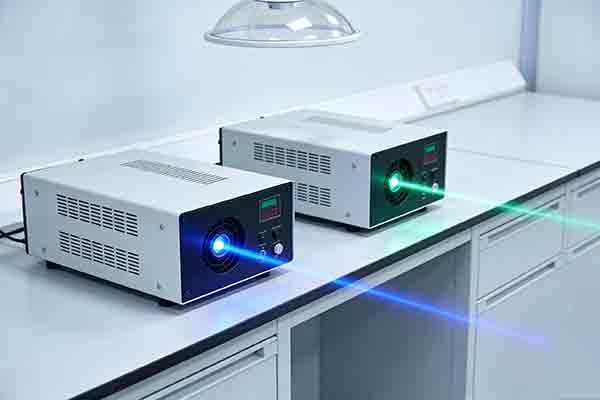
Copper processing often fails when standard lasers waste energy on reflection and unstable heating. That creates scrap, low speed, and weak process control. Short-wavelength lasers solve this. Blue lasers are generally more efficient than green lasers for copper processing at the system level because blue diode lasers1 create light directly, while green lasers usually rely […]
What Is Laser Metal Deposition (LMD) and Why Is It Transforming Modern Manufacturing?
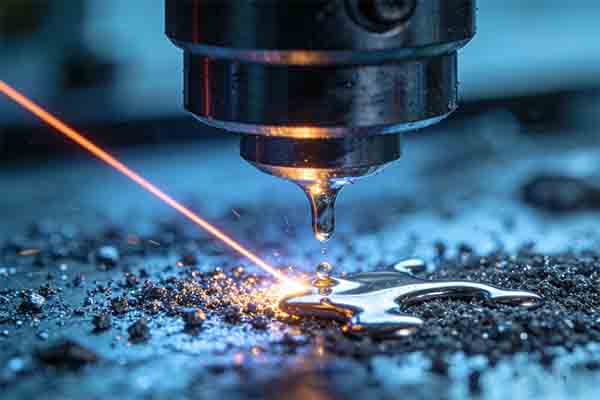
Metal parts fail. Surfaces wear out. Traditional repair methods waste material and time. Manufacturers need faster, more precise solutions to restore high-value components. Laser Metal Deposition (LMD)1 is a laser-based additive manufacturing process that melts metal powder with a focused laser and deposits it layer by layer onto a substrate, forming strong metallurgical bonds for […]
Why Copper Reflects Infrared Lasers?
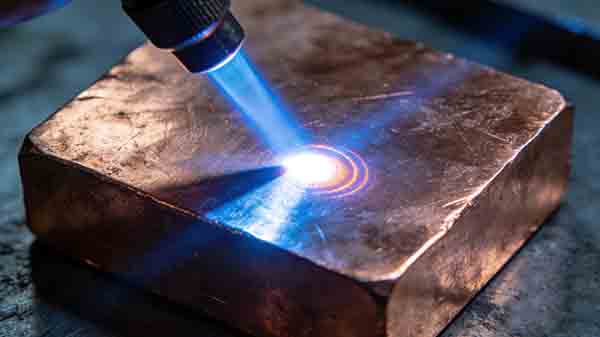
Copper is widely used in electrical systems and electronics. Cependant, its interaction with infrared lasers1 creates major challenges during laser processing and welding. Copper reflects infrared lasers because its free electrons respond strongly to electromagnetic waves and re-emit most of the incoming energy instead of absorbing it as heat. Understanding why copper reflects infrared radiation […]
Compact Diode Laser Modules for Portable Aesthetic Devices

Portable aesthetic devices have become one of the fastest-growing segments in the beauty technology market. From handheld hair removal tools to compact skin treatment devices, manufacturers are increasingly focusing on portable platforms that combine effectiveness with ease of use. Compact diode laser modules make it possible to integrate true laser energy into portable aesthetic devices. […]
Why Is 808 nm Being Replaced by 885 / 888 nm?
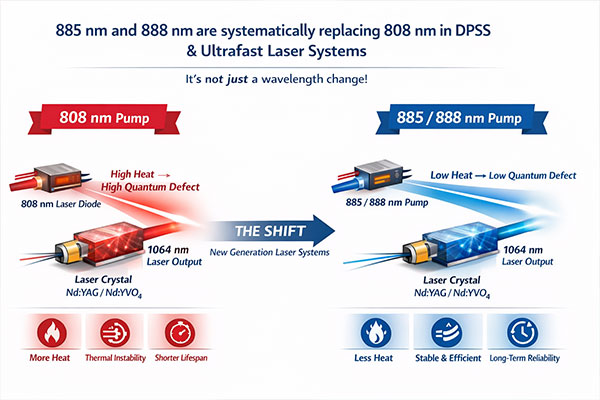
A system upgrade from "can light up" to "can work stably for long time" Pendant des années, 808 nm laser diodes were the default pump source for solid-state lasers. But something has changed. 885 nm and 888 nm are systematically replacing 808 nm in new-generation DPSS and ultrafast laser systems—and it’s not just a wavelength change. […]
Pourquoi 888 nm Is Preferred in Femtosecond Laser Pumping?
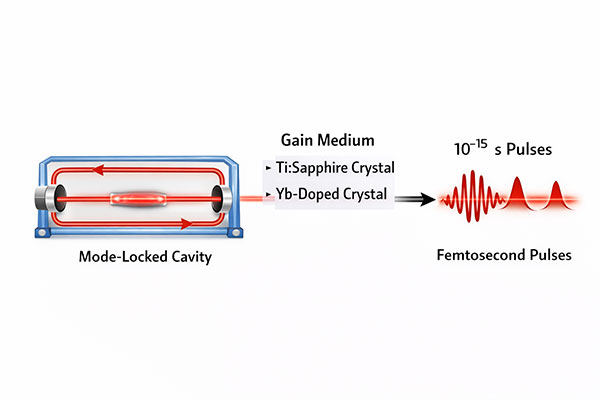
Femtosecond lasers need precise, stable energy input. Without the right pump source, they lose performance. So why is 888 nm the industry favorite? 888 nm is preferred for femtosecond laser pumping because it provides better thermal management, higher beam quality, and improved efficiency compared to earlier options like 808 nm. To understand this better, let’s […]
Laser Welding for Precious Metals: Why 445nm Blue Lasers Excel in Gold and Jewelry Manufacturing

When gold prices hit the skies, every fraction of a gram lost in welding turns into lost profit. Blue lasers offer precision and efficiency that protect your margins. Blue lasers are ideal for welding high-priced gold due to their short wavelength and high absorption rate by gold—over 20 times that of traditional infrared lasers. In […]
Comment les lasers bleus hybrides relèvent les défis du soudage du cuivre?
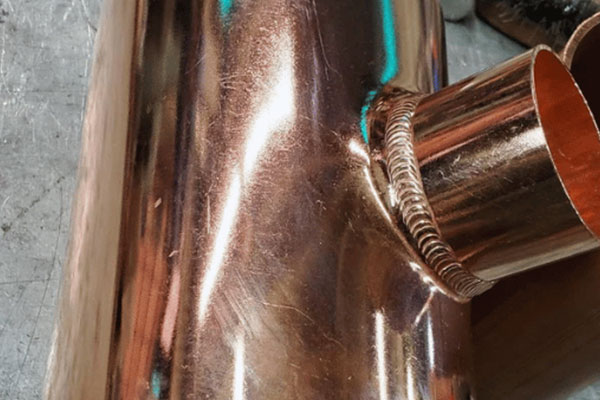
Le cuivre est notoirement difficile à souder en raison de sa conductivité thermique élevée et de sa faible absorption des infrarouges. (Et) longueurs d'onde. La chaleur se dissipe trop rapidement, nécessitant une puissance élevée pour maintenir un bain de fusion stable. Cela conduit souvent à des éclaboussures, pénétration incohérente, et distorsion thermique, particulièrement problématique dans les applications de précision telles que les modules de batterie EV ou la microélectronique.. Lasers bleus hybrides […]
Quelle est la différence entre le laser bleu et rouge?

La technologie laser moderne a ouvert la voie à des applications passionnantes dans l’ensemble de l’industrie, médecine, et la recherche, mais tous les lasers ne sont pas créés égaux. Les lasers rouges et bleus diffèrent fondamentalement, chacun avec des avantages distincts et des cas d'utilisation idéaux. Les lasers rouges et bleus diffèrent par la longueur d'onde et les matériaux semi-conducteurs, conduisant à une optique distincte, thermique, et caractéristiques des applications. Comprendre ces […]
What Is a Blue Laser? A Simple Guide to Its Uses and Benefits

In the world of light, blue lasers are often misunderstood. But in fact, they’re some of the most powerful and precise tools in modern technology. A blue laser is a type of laser that emits light in the blue region of the visible spectrum, typically around 405–450 nanometers. Its short wavelength means it delivers more […]