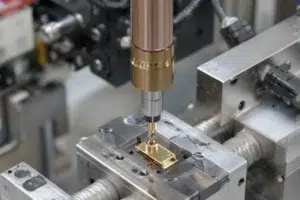
Ultrafast laser systems demand extreme precision. A wrong choice in the pump source can cause beam instability, spectrum shifts, or even premature failure of the entire laser system.
Choosing the right pump source is critical for achieving stable, efficient, and long-lasting performance in ultrafast laser systems, especially those used in precision industrial and scientific applications.
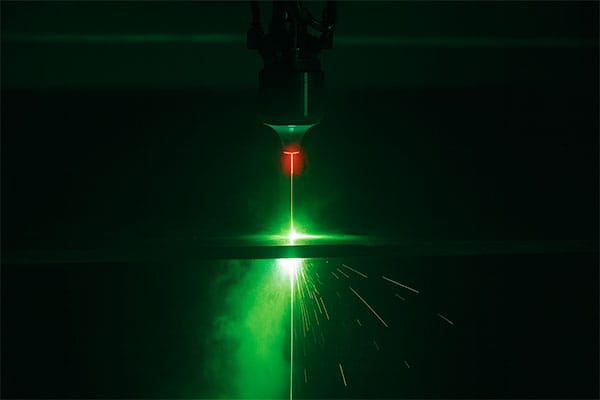
Ultrafast lasers are advancing quickly, and applications are diversifying—from microelectronics to biomedical research. But at the heart of every ultrafast system lies one key component: the pump source. Choosing it right means unlocking the full power of your laser system. Let’s explore what truly matters.
What Is an Ultrafast Laser and How Does It Work?
Ultrafast laser1 technology sounds complex—but it all starts with simple physics. Users must understand the basics to make better technical decisions.
An ultrafast laser emits pulses in the picosecond (10⁻¹²s) or femtosecond (10⁻¹⁵s) range, achieving extremely high peak power while minimizing heat effects.

Ultrafast laser1 fundamentals
Ultrafast laser1s can be:
-
Solid-state (e.g., Ti:Sapphire, Nd:YVO₄ based DPSS lasers)
-
Fiber-based (using doped fibers like Yb or Er)
They rely on mode-locking2 or Q-switching to compress light into extremely short pulses. These pulses offer exceptional temporal resolution, precision, and minimal thermal damage, which is vital in fields like:
| Application Area | Use Case Example |
|---|---|
| Microprocessing | OLED cutting, glass drilling |
| Medical & Aesthetic | Eye surgery, skin resurfacing |
| Scientific Research | Time-resolved spectroscopy, pump-probe studies |
But they don’t work without stable, high-quality pump sources.
Why Is Pump Source Selection Critical for Ultrafast Laser Performance?
Ultrafast lasers are sensitive to fluctuations. The pump source plays a decisive role in maintaining pulse quality, beam profile, and lifetime.
The pump source directly impacts wavelength stability, pulse repetition rate, beam quality, and system efficiency. A mismatch can lead to reduced performance or failure.
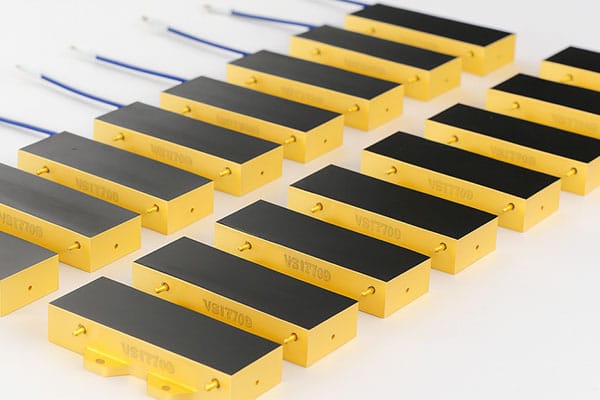
Why it matters
-
Beam stability: Even minor wavelength drift in the pump can shift the gain peak of the laser medium.
-
Thermal effects: Inconsistent pumping causes uneven heating and degradation.
-
Lifetime: Poor-quality pumps reduce component lifespan, leading to costly replacements.
To maintain high precision, engineers must choose pump sources with:
-
Stable output power
-
Narrow linewidth
-
Locked wavelength
-
High electro-optical efficiency
Why Does Wavelength Locking Matter in Ultrafast Laser Pumping?
You can’t build a high-end ultrafast laser without wavelength stability3. This is especially true for Nd:YVO₄ and similar crystals.
Locked-wavelength pump sources (like 878.6nm) ensure alignment with the narrow absorption peaks of the gain medium, minimizing loss and improving efficiency.
Deep dive into wavelength locking
Certain gain media—especially in DPSS lasers—have narrow absorption bands. For example:
- Nd:YVO₄ absorbs strongly at 878.6nm, with a very narrow full width at half maximum (FWHM)
Using a standard 808nm pump may work—but it results in:
-
Higher quantum defect (more heat)
-
Lower conversion efficiency
-
Greater thermal lensing
Locked-wavelength solutions, like those using Volume Bragg Gratings (VBGs)4, align precisely with absorption peaks. This reduces:
-
Heat generation
-
Beam divergence
-
Noise in output pulses
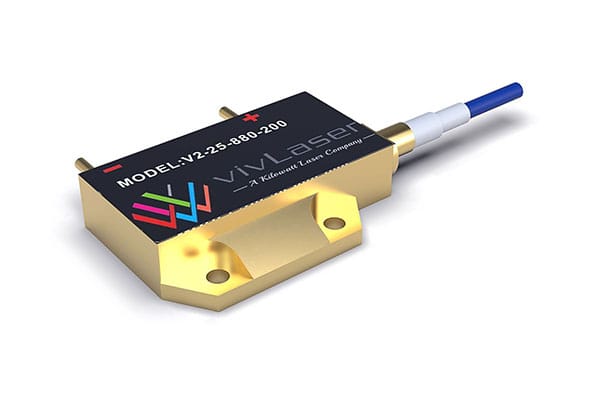
Vivlaser’s 878.6nm modules use external VBG locking, achieving ±0.5nm precision with spectral widths <0.7nm, critical for long-term DPSS ultrafast stability.
How Does Spectral Width Influence Laser Stability and Efficiency?
Narrower is smarter—especially in ultrafast systems where every nanometer matters.
A narrow spectral width improves gain overlap, minimizes thermal effects, and ensures better energy conversion for ultrafast laser performance.

Spectral control isn’t just technical—it directly determines how stable and efficient your laser will operate. Keep reading to understand how.
Why Does Spectral Width Matter?
A broad spectrum might look harmless on spec sheets—but it leads to jitter, heat, and wasted energy.
Narrow linewidths reduce amplified spontaneous emission, improve thermal behavior, and deliver cleaner, more stable laser pulses.
Dive Deeper: Spectral Width and Its Impacts
How Spectral Width Affects Ultrafast Pump Lasers
| Pump Type | Typical Spectral Width | Thermal Impact | Stability |
|---|---|---|---|
| Non-locked 808nm | 3–6 nm | High | Low |
| VBG-locked 878.6nm | <1 nm | Low | High |
A narrower linewidth means better alignment with the gain curve, especially for media like Nd:YVO₄, where spectral acceptance is tight. Vivlaser uses VBG (Volume Bragg Grating) technology to lock wavelengths and compress spectral width—typically under 0.7 nm. This reduces ASE (Amplified Spontaneous Emission), improves thermal efficiency, and allows stable long-pulse or mode-locked operation.
Why it Matters for OEMs and Integrators
- Cleaner pulses → Essential for micromachining and biomedical imaging.
- Better stability → Fewer maintenance calls, longer module life.
- Lower power loss → Higher output for the same input.
Vivlaser’s VBG-locked pumps give integrators the ability to guarantee performance—batch after batch, build after build.
What Mistakes Should Be Avoided When Choosing a Pump for Ultrafast Lasers?
Pump selection is not secondary—it’s foundational.
Choosing the wrong pump source leads to overheating, pulse distortion, and system failure under load.
| Model | Wavelength | Locked? | Power Range | Fiber Core | Application |
|---|---|---|---|---|---|
| VLP-878.6-120W | 878.6nm | Yes | 65–120W | 200µm | Nd:YVO₄ DPSS ultrafast |
| VLP-885-80W | 885nm | Yes | 30–80W | 105µm | Micro-welding lasers |
| VLP-976-300W | 976nm | Yes | 100–300W | 105–200µm | Fiber-based femtosecond |
We also provide OEM/ODM services with rapid prototyping and thermal design consulting.
Conclusion
Choosing the right pump is the foundation of any ultrafast laser system. Vivlaser offers locked-wavelength, narrow-linewidth, high-efficiency solutions designed to maximize performance and reliability.
-
Explore this link to understand the diverse applications of ultrafast lasers in various fields, enhancing your knowledge on their impact. ↩ ↩ ↩
-
Discover the intricacies of mode-locking, a key technique in ultrafast lasers, to grasp its significance in generating short pulses. ↩
-
Understanding wavelength stability is crucial for optimizing laser performance and efficiency in ultrafast applications. ↩
-
Exploring VBGs can reveal their role in enhancing laser precision and efficiency, vital for advanced laser systems. ↩