This article is part of the Vivlaser Laser Diode Pump Source Knowledge Series.
Semiconductor lasers are reshaping the future of photonics. Backed by decades of technological evolution, they are now powering everything from high-speed communication to industrial laser systems. But how do they really work—and why are they so important?
What Is a Semiconductor Laser?
A semiconductor laser is a type of laser where the active gain medium is a semiconductor. Most commonly, it is a diode laser that emits coherent light when a forward current is applied across a p-n junction. The recombination of electrons and holes in this junction generates light through stimulated emission.

How It Works
-
A forward-biased p-n junction injects carriers (electrons and holes) into the active region.
-
These carriers recombine and emit photons.
-
A resonant cavity (usually formed by cleaved crystal facets) provides optical feedback.
-
Under the right conditions, stimulated emission dominates, creating coherent laser output.
Semiconductor lasers are compact, energy-efficient, and can operate at specific wavelengths depending on the bandgap of the semiconductor materials used.
Key Applications of Semiconductor Lasers
Semiconductor lasers serve as essential tools across multiple industries, including:
1. Industrial Laser Systems

-
Laser cutting and welding
-
Solid-state laser pumping
-
Thulium-doped fiber laser excitation
2. Telecommunications

-
Fiber-optic communications (1550 nm, 1310 nm lasers)
-
Data centers and high-speed internet backbone
3. Medical & Aesthetic Treatments
-
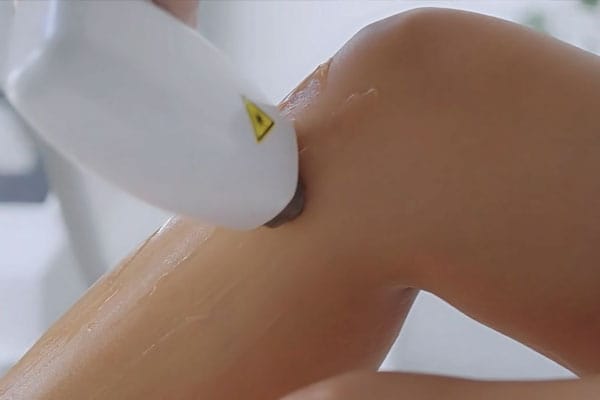
Laser hair removal
-
Tumor targeting via photodynamic therapy
-
Dental and ophthalmological procedures
4. Scientific Research

-
Spectroscopy
-
Optical trapping (optical tweezers)
-
LIDAR for environmental scanning
5. Consumer Electronics
-
Laser pointers
-
Blu-ray and DVD players
-
Projectors and 3D sensing
Advantages of Semiconductor Lasers
| Feature | Benefit |
|---|---|
| Compact size | Easy to integrate into handheld and embedded systems |
| Energy efficiency | Low operating voltage, minimal heat generation |
| Wavelength flexibility | Customizable for UV, visible, and IR regions |
| Modulation speed | High-speed data transmission in fiber optics |
| Cost-effectiveness | Scalable manufacturing and long lifespan |
Recent Innovations in Semiconductor Laser Technology
Wavelength-Locked Lasers
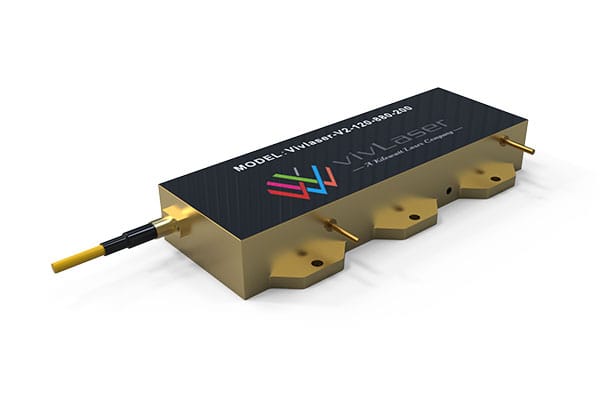
Locked-wavelength diode lasers like Vivlaser’s 878.6 nm pump sources provide ultra-stable performance for solid-state and thulium laser pumping applications. These lasers are critical in medical and industrial setups where wavelength drift must be minimized.
Deep-UV CW Semiconductor Lasers
Recent breakthroughs allow continuous-wave operation at deep-ultraviolet wavelengths under room temperature, expanding applications in nanolithography and sterilization.
High-Power Single-Mode Diode Lasers
New open-Dirac cavity designs now allow scaling of single-mode lasers without losing coherence, enabling more powerful yet stable laser sources for industry and defense.
Limitations and Considerations
Despite many advantages, semiconductor lasers have a few limitations:
-
Thermal management is critical—heat affects wavelength and lifespan.
-
Aging effects over time can lead to reduced efficiency.
-
Sensitivity to static discharge requires protected packaging.
Vivlaser: A Leader in Locked-Wavelength Diode Laser Pump Sources
With over 20 years of experience in laser technology, Vivlaser (Shenzhen Vivlaser Technology Co., Ltd.) has positioned itself as a rising innovator in wavelength-locked diode laser modules. Our pump sources are widely used in:
-
Solid-state laser pumping
-
Thulium fiber lasers
-
Medical aesthetics and precision scientific applications
We provide customizable OEM/ODM solutions for industrial, medical, and research clients worldwide. All products feature:
-
High electro-optical conversion efficiency
-
Precision thermal control
-
Fast lead times and responsive technical support
FAQs About Semiconductor Lasers
Q: What’s the difference between a diode laser and a semiconductor laser?
A: All diode lasers are semiconductor lasers, but not all semiconductor lasers are diodes. The term “semiconductor laser” includes quantum cascade lasers and optically pumped variants.
Q: Why choose locked-wavelength pump sources?
A: Locked-wavelength lasers offer high wavelength stability, which is essential for consistent pumping efficiency in solid-state and fiber lasers.
Q: What’s the typical lifespan of a semiconductor laser?
A: With proper thermal management, high-quality diode lasers can last 10,000–100,000 hours depending on application.
Conclusion
Semiconductor lasers are the backbone of modern photonics. Their versatility, efficiency, and scalability make them indispensable across industries. As new technologies like locked-wavelength lasers continue to emerge, companies like Vivlaser are helping to redefine what’s possible with light.