Green lasers attract attention for their brightness and visibility—but are they really the best fit for high-performance applications?
Green lasers are highly visible and widely known, but their actual industrial usage is more limited than most people think.

While green lasers are visually impressive, there are technical and practical reasons why most industrial, medical, and research systems choose other laser wavelengths. Let’s take a closer look.
What is green laser and how do they work?
Green lasers often appear in consumer gadgets, scientific demonstrations, and optical alignment tools. But what’s behind their vibrant glow?
Green lasers typically emit at 520 nm or 532 nm, using diode or DPSS technology to produce highly visible green light.
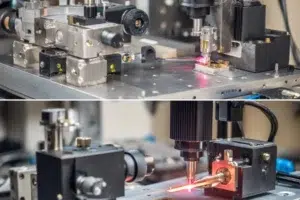
In DPSS systems, the green output is generated through frequency conversion of an infrared pump laser, making pump source stability and wavelength control critical to overall performance. A broader explanation of pump laser architecture can be found in our Laser Diode Pump Source Technology Guide.

Two major types of green lasers:
| Type | Technology | Notes |
|---|---|---|
| Direct Diode Green Laser | Based on InGaN semiconductors | Compact, modern, power-limited |
| DPSS Green Laser | Infrared laser + frequency doubling | Traditional, bulky, higher cost |
Green lasers use either frequency-doubled solid-state sources or direct-emission semiconductor diodes. The DPSS type remains dominant in high-end green laser systems, though it’s being slowly replaced by direct diode models in low-power use cases.
Why are green lasers more visible than red or blue?
Green light isn’t just visually striking—it’s scientifically optimal for visibility.
The human eye is most sensitive to light at 555nm, which makes green lasers around 520–532nm appear brighter than red or blue of the same power.
Visibility by wavelength:
| Wavelength | Perceived Brightness (same power) |
|---|---|
| 532nm (green) | ★★★★★ |
| 635nm (red) | ★★★ |
| 450nm (blue) | ★★ |
This makes green lasers ideal for applications requiring high visibility, such as laser pointers or alignment tools—but not necessarily for high-performance or high-power tasks.
What are the common applications of green lasers?
You’ve likely seen green lasers in everyday gadgets—but industrial adoption is more limited.
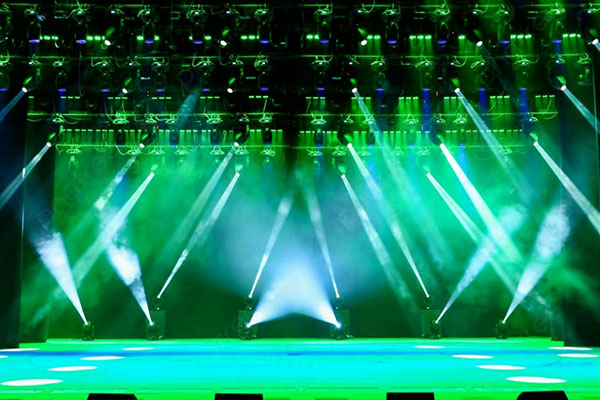
Green lasers are commonly used in alignment, surveying, light shows, optical experiments, and some biomedical applications.
Typical usage scenarios:
-
Laser pointers (especially for astronomy)
-
Stage lighting and visual effects
-
Optical research and interference experiments
-
Non-ablative dermatology (low power)
-
Microscopy and fluorescence excitation
These are often low-power or visually oriented uses, where brightness is prioritized over power or efficiency.
What limits the power of green laser technology?
Despite their visibility, green lasers hit a technical ceiling when it comes to power and stability.
Green diode lasers generally have lower output power, efficiency, and lifespan compared to infrared or blue lasers.
Key technical limitations:
| Limitation | Description |
|---|---|
| Lower Efficiency | Especially in DPSS systems due to frequency conversion losses |
| Thermal Instability | Green diodes are sensitive to temperature fluctuations |
| Complexity | DPSS systems require precise alignment and vibration control |
| Cost & Availability | Green diode chips are more expensive and harder to source |
For high-power industrial or medical systems, these limitations make green lasers a suboptimal choice.
Are green lasers suitable for industrial precision tasks?
Green lasers can be precise—but not always practical.
Most high-precision industrial systems rely on infrared or blue wavelengths due to higher power, better efficiency, and more robust thermal performance.

Industrial comparison:
| Laser Type | Typical Power | Applications |
|---|---|---|
| Green Laser | <5W – 20W | Light alignment, surface marking |
| Blue Laser | 20W – 400W | Welding, cutting, micro-processing |
| IR Laser (808–980nm) | 30W – 1000W | Pumping, engraving, surgical lasers |
Vivlaser, for example, offers high-power blue lasers and multi-wavelength modules that better meet the needs of manufacturers and equipment integrators.
Can green lasers be used in medical or aesthetic devices?
Yes, but only in specific niche applications.
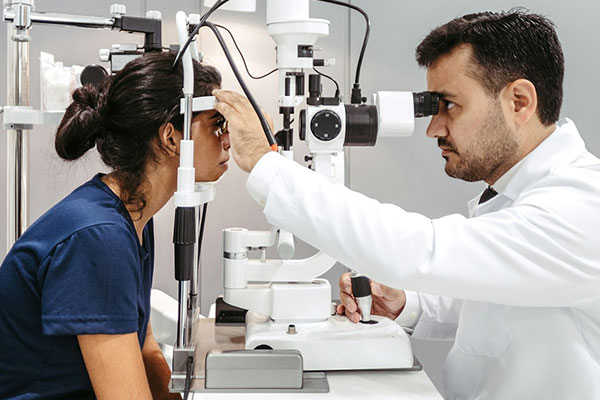
Green lasers are used in ophthalmology and some non-invasive aesthetic treatments, but they are limited by power and thermal safety concerns.
Common medical uses:
-
Retinal photocoagulation (eye surgery)
-
Skin rejuvenation (low-power fractional systems)
-
Laser acupuncture
However, modern aesthetic systems increasingly adopt multi-wavelength solutions that combine red, near-infrared, and blue light to enhance effectiveness and safety.
How do green lasers compare with blue or multi-wavelength lasers?
Green lasers offer brightness, but blue and multi-wavelength lasers offer performance and versatility.
For high-efficiency, high-power, or multi-functional systems, blue and multi-wavelength lasers clearly outperform green lasers.
Comparative analysis:
| Feature | Green Laser | Blue Laser | Multi-Wavelength Laser |
|---|---|---|---|
| Visibility | ★★★★★ | ★★★ | ★★★ |
| Power Capability | ★★ | ★★★★★ | ★★★★ |
| Thermal Stability | ★★ | ★★★★ | ★★★★ |
| Integration Flexibility | ★ | ★★★★ | ★★★★★ |
| Customization | ★ | ★★★★ | ★★★★★ |
Vivlaser specializes in high-power blue lasers (up to 6000W) and custom multi-wavelength modules, designed for industrial, medical, and research needs.
Conclusion
Green lasers are bright—but not always the right tool. For power, performance, and application depth, blue and multi-wavelength lasers offer more value.