Choosing the right semiconductor laser packaging is crucial.
Single emitters excel in stability and integration; bar structures dominate in high-power delivery. Matching packaging to your application avoids overdesign and ensures optimal performance.

Packaging isn’t just about housing chips – it’s the bridge between core technology and real-world performance. As lasers become increasingly important in fields like medical aesthetics, materials processing, and scientific instrumentation, choosing the optimal packaging form can directly affect efficiency, cost, and product lifespan. In this guide, we’ll explore how single emitters and bar formats compare in structure, output, application, and system integration potential.
How is a single emitter packaged? What are its typical applications?
Simple, reliable, compact.
Single emitter packaging1 houses one laser diode2, offering excellent beam quality, easy integration, and precise control.

A single emitter configuration involves encapsulating one laser chip within a protective housing that manages heat dissipation, allows optical alignment, and ensures electrical connections. These packages are often paired with beam shaping optics, fiber couplers, or mounting modules tailored for OEM device integration.
Structure & Benefits
| Feature | Description |
|---|---|
| Output Power | Typically <30W |
| Beam Quality | High, near-Gaussian |
| Applications | Medical, scientific, detection systems |
| Heat Management | Easier due to low thermal load |
Single emitters are commonly used in ophthalmic treatments, dental lasers, and portable analytical devices. Their lower thermal footprint enables passive or simplified active cooling systems, reducing design complexity. The consistent beam quality is also ideal for applications that require high spatial coherence, such as spectroscopy or microscopy.
What is a laser bar, and how does it deliver high power output?
When power matters most.
Laser bars group multiple emitters, enabling powerful, high-density output3 suited for industrial-scale tasks.
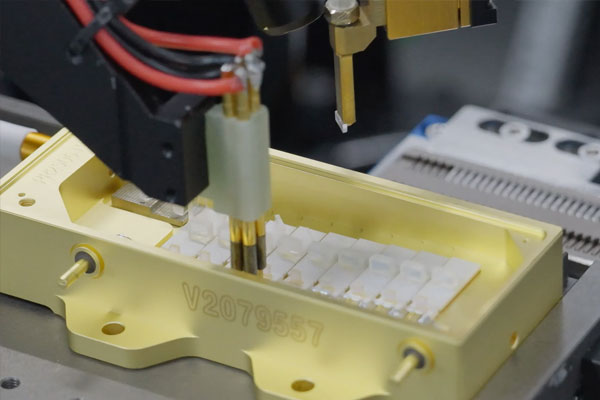
Laser bars are formed by arranging multiple single emitters side by side on the same substrate. This configuration can include 10, 19, 25, or more emitters, depending on the bar length and pitch. These emitters can be driven simultaneously, producing significantly more power than a single emitter.
Bars are typically integrated into pump modules for high-power fiber or solid-state lasers. They are the go-to solution for materials processing industries that demand fast throughput, such as laser welding, cutting, cladding, and additive manufacturing.
Structure & Scaling
| Feature | Description |
|---|---|
| Output Power | Hundreds of watts or more |
| Format | Horizontally arrayed or vertically stacked |
| Cooling | Advanced thermal management required |
| Application | Material processing, pumping, additive manufacturing |
Efficient cooling is critical for bars due to the concentrated heat generation across the array. Most bar packages feature microchannel heat sinks or conductive substrates paired with active water or TEC-based cooling systems to maintain stability.
What are the structural differences between horizontal arrays and vertical stacks?
Design shapes performance.
Horizontal arrays4 are ideal for side-pumping; vertical stacks concentrate beam density for forward delivery.
While horizontal bar arrays spread emitters across a single plane, vertical stacks pile multiple bars on top of each other to increase optical density in the vertical axis. Each approach has trade-offs in terms of optical beam shaping, cooling strategy, and integration footprint.
Comparative View
| Arrangement | Pros | Cons |
|---|---|---|
| Horizontal | Simpler cooling; wide output | Beam divergence; space-consuming |
| Vertical | Compact beam; higher brightness | Complex cooling; alignment challenges |
Horizontal configurations are commonly used in side-pumped DPSS (diode-pumped solid-state) lasers, where large pump volumes are needed. Vertical stacks5 are used in applications where brightness and spatial compactness matter more, such as in laser beam combining systems or compact industrial heads.
How does packaging affect beam quality6 and system integration?
Integration begins at the chip.
Packaging defines how well a diode couples with optics, fibers, and systems – influencing beam quality1, footprint, and reliability.

Packaging is not just a mechanical enclosure. It affects how the laser interfaces with external optical systems, electrical drivers, and thermal control units. Improperly aligned packaging can introduce astigmatism, beam distortion, or inefficient fiber coupling, which ultimately reduces system performance.
Key Packaging Impacts
-
Beam Collimation: Affects how far and cleanly the laser travels
-
Mounting Stability: Prevents misalignment during operation
-
Optical Fiber Coupling: Determines delivery efficiency
-
Thermal Flow Path: Dictates operating lifespan
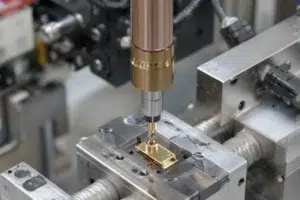
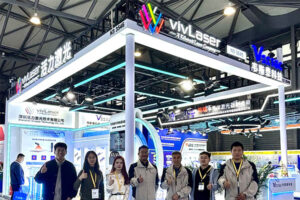
Manufacturers like Vivlaser invest heavily in micro-assembly precision and passive alignment structures to ensure stable long-term operation. In many OEM systems, packaging directly defines whether the laser integrates with minimal modification or requires extensive adaptation.
Which packaging suits industrial, medical, and research use?
Application decides the form.
Industrial settings demand bar-based power; medical and lab uses benefit from single-emitter precision.

Different industries impose unique requirements on the laser source. Medical systems prioritize safety, miniaturization, and reliability. Industrial systems prioritize power, efficiency, and robust operation. Research applications require flexibility, tunability, and documentation.
Use-Case Fit
| Field | Recommended Packaging | Reason |
|---|---|---|
| Industrial | Bar (horizontal/vertical)7 | High energy; mass throughput |
| Medical | Single emitter8 | Small footprint; precise dose control |
| Research | Single emitter8 | Tunable; low thermal drift |
Knowing which form factor matches the need helps engineers select a product that meets goals without over-specifying – saving both space and budget.
Does packaging design affect laser alignment and operation?
Design affects deployment.
From screw holes to heat sinks, packaging defines whether a laser fits seamlessly or needs adaptation.
Well-designed packaging includes standardized mounting features, electrical pinouts, and thermal interfaces. It ensures consistent performance across batches, supports automated assembly, and enables scalable production.
On the other hand, inconsistent packaging formats complicate design workflows. A poorly fitting laser can shift during operation, degrade beam quality, or fail prematurely due to thermal fatigue.
Conclusion
Packaging defines power, precision, and performance. Choose smart to unlock full potential.
-
Explore this link to understand the structure and benefits of single emitter packaging in various applications. ↩ ↩
-
Discover how laser diodes are utilized across different fields, enhancing technology and innovation. ↩
-
Understanding high-density output is crucial for grasping how laser bars enhance performance in industrial applications. ↩
-
Explore how Horizontal arrays enhance laser performance and their ideal applications in various technologies. ↩
-
Learn about the advantages of Vertical stacks for achieving higher brightness and compactness in laser applications. ↩
-
Understanding beam quality is crucial for optimizing laser performance and ensuring effective applications in various industries. ↩
-
Learn about the high energy and mass throughput advantages of bar packaging for industrial use. ↩
-
Explore how single emitter packaging enhances precision and efficiency in medical and research fields. ↩ ↩