Are Home Beauty Devices Using Real Lasers?
The popularity of home-use beauty devices has increased dramatically over the past decade. Hair removal tools, skin rejuvenation instruments, and handheld aesthetic devices are now widely marketed as “laser beauty systems.”
But from a technical standpoint, an important question remains:
Do most home beauty devices actually use real laser sources?
The answer is more complex than marketing terminology suggests.
What Defines a “Real Laser”?
In engineering terms, a laser is not simply a light source.
A true laser system generates light with three defining characteristics:
These properties allow laser energy to be delivered precisely and efficiently into biological tissue.
Semiconductor diode lasers used in professional medical systems typically operate at carefully selected wavelengths designed to interact with specific biological targets such as melanin or water.
This controlled energy delivery fundamentally distinguishes lasers from other consumer light technologies.
The Technologies Behind Most Home Beauty Devices
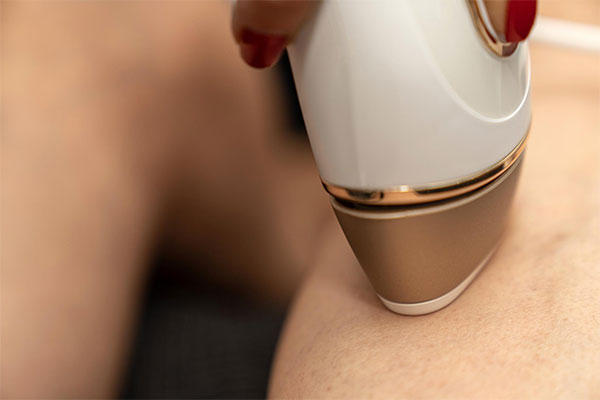
Although many products are marketed as laser-based, most home beauty devices actually rely on alternative light-generation methods4.
LED-Based Devices
LED beauty devices emit incoherent light across relatively broad spectral ranges5.
They are commonly used for low-energy skin care applications such as acne reduction or cosmetic light therapy.
Because energy density is limited, LED systems prioritize safety and daily usability rather than strong photothermal interaction.
IPL (Intense Pulsed Light) Devices
IPL devices dominate the consumer hair-removal market.
Unlike lasers, IPL systems use xenon flash lamps that emit broadband light typically covering hundreds of nanometers in wavelength range. Optical filters select portions of this spectrum intended to interact with skin pigments.
While effective for gradual hair reduction, IPL light lacks wavelength precision and coherence.
From an engineering perspective, IPL systems represent a compromise between performance, safety, and manufacturing cost.
Why True Laser Sources Are Less Common in Home Devices
If lasers provide more precise energy delivery, why are they not universally used in handheld beauty products?
The primary reasons are related to system engineering challenges rather than optical performance.
Thermal Management Constraints
Laser diodes generate high optical power density within extremely small semiconductor junctions.
Maintaining stable operation requires effective heat dissipation. Excess temperature directly impacts:
-
device lifetime
Historically, cooling requirements made laser integration difficult in compact consumer devices.
Integration and Safety Complexity
Unlike LEDs or flash lamps, laser systems require coordinated control of multiple subsystems, including:
-
constant-current drivers
-
temperature monitoring
-
optical alignment
-
energy safety management
These engineering requirements increase development complexity for handheld platforms.
Cost and Manufacturing Considerations
Laser modules traditionally involved higher component and integration costs compared with IPL or LED architectures, slowing adoption in mass-market consumer electronics.
The Industry Is Beginning to Change
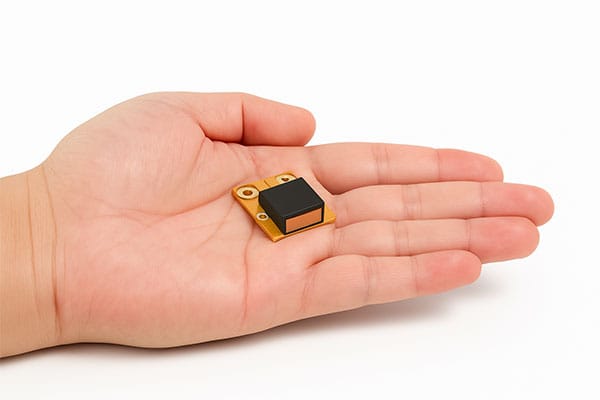
Advances in semiconductor laser efficiency and packaging technologies are gradually overcoming these limitations.
Modern diode laser modules now offer:
-
reduced physical footprint
-
improved electro-optical efficiency
-
enhanced thermal performance
-
longer operational lifetime
These developments are enabling device manufacturers to consider true laser integration even in handheld aesthetic systems.
Companies specializing in compact semiconductor laser technology, such as Vivlaser, contribute to this evolution by providing miniaturized laser modules8 designed for easier system integration.
From Marketing Terminology to Engineering Reality
The term “laser beauty device” is often used broadly in consumer marketing. However, the underlying technologies can differ significantly in how optical energy interacts with skin.
As home aesthetic devices continue evolving, industry development is gradually shifting from generalized light exposure toward precise wavelength-controlled energy delivery.
Understanding whether a device employs LED, IPL, or a true diode laser source is therefore essential for developers, integrators, and system designers working on next-generation handheld platforms.
Insights
Most current home beauty devices do not use true diode laser sources.
But the technological gap is narrowing.
For manufacturers building next-generation aesthetic platforms, the competitive advantage will belong to those who:
-
Understand laser physics beyond marketing terminology
-
Control thermal architecture
-
Optimize electro-optical efficiency
-
Integrate compact, stable semiconductor laser modules
The future of home aesthetics is not about brighter light.
It is about precise, stable, wavelength-controlled energy delivery in compact form factors.
And that transition is fundamentally a semiconductor laser engineering challenge — not a branding decision.
If you are exploring compact diode laser integration for handheld or professional aesthetic systems, Vivlaser provides engineering-ready semiconductor laser modules designed for reliable system integration.
👉 Explore our medical & aesthetic laser solutions:
https://vivlasers.com/medical-aesthetic-lasers/
Or contact our engineering team to discuss wavelength selection, thermal design, and integration support for your next device platform.
-
Explains why single wavelength improves treatment precision ↩
-
Clarifies coherence and clinical energy control ↩
-
Shows why lasers deliver focused energy ↩
-
Understand core technology differences clearly ↩
-
Explains coherence vs non-coherent light ↩
-
Explains thermal wavelength drift ↩
-
Understands temperature impact on output ↩
-
Explore Vivlaser’s miniature laser modules ↩