Struggling to choose a high power diode laser supplier? A wrong choice could mean late deliveries, system failures, and costly downtime.
To evaluate a high-power laser supplier, you need to ask seven key questions that reveal their true capabilities, reliability, and long-term value—not just pricing.

Choosing a high power diode laser supplier isn’t just a technical decision—it’s a strategic one. Here’s how to evaluate potential partners with clarity and confidence.
Do they have real experience with high power diode lasers1?
Experience claims are easy to make—but how many lasers have they actually shipped?
A good supplier should have proven experience in delivering high power diode laser1 in your industry or a similar one, with references, case studies, or volume stats to back it up.

What to check:
-
Total number of high-power units shipped
-
Years in high-power product line
-
Client references or recognizable brand collaborations
| Supplier A | Supplier B | Vivlaser2 |
|---|---|---|
| 500 units | 80 units | 20,000+ units/year production capacity |
| 3 years | 1 year | Since 2020 with full kilowatt series |
Vivlaser2, established in 2017, has grown into one of China’s most capable suppliers of kilowatt-level semiconductor lasers. With a scalable production system and strong supply relationships with leading brands such as Han’s Laser and Inno Laser, which use Vivlaser2’s pump sources in their products, Vivlaser2 has delivered thousands of kilowatt-class units globally.
What makes Vivlaser2’s experience especially credible is its pioneering role in developing 878.6nm narrow-spectrum, wavelength-locked pump lasers3 for Nd:YVO4 DPSS systems—a technology long dominated by US-based Nlight. These systems outperform traditional 808nm-pumped Nd:YAG by reducing quantum defects, minimizing thermal lensing, improving beam quality, and enhancing harmonic generation efficiency.
Internationally, Nlight, Coherent, Lumentum, and IPG Photonics lead this segment. Among them, only Nlight commercializes this pump source externally. Domestically, although several companies like Suzhou Changguang Huaxin, Beijing Caplin, Inspur Huaguang, and others have attempted similar development, Vivlaser2 remains the only Chinese supplier that matches Nlight’s performance and reliability in this niche. Today, many top domestic solid-state laser brands, including Han’s Laser, JPT, and Inno Laser, use Vivlaser2’s pump sources in their systems.
Can they guarantee power stability and spectral control4?
In kilowatt-level systems, tiny fluctuations in power or wavelength can destroy precision.
A qualified supplier should offer verified performance data on power stability, wavelength tolerance5, and beam quality6—with lockable wavelength options when needed.
What to Watch for When Evaluating Suppliers
-
Do they use external cavity feedback for spectral control4, or rely on free-running diodes with wide spectra?
-
Can they demonstrate real test data showing spectral width7 <0.2nm across temperature variations?
-
Do they control beam profile uniformity, or only publish center power measurements?
-
Are wavelength-locking components like gratings actively aligned and stabilized?
-
Is the optical design resilient to thermal shifts and current fluctuations during continuous operation?
Suppliers that avoid specifics about locking technology, or only show performance at room temperature, may not meet the stability demands of industrial or scientific environments. Also, watch out for systems that use passive temperature tuning alone without active spectral feedback.
Vivlaser’s Core Technology for Spectral Control
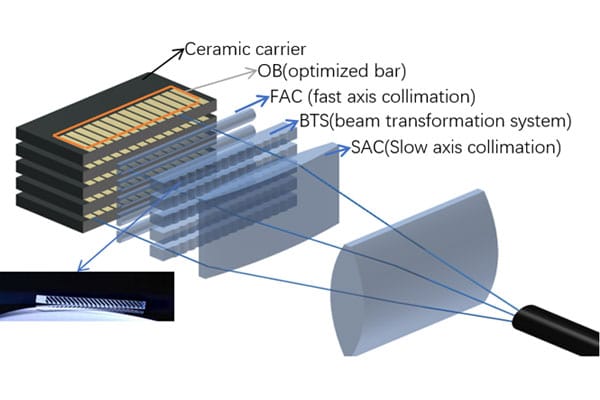
Vivlaser uses a Fabry-Perot cavity laser diode based on GaAs material as the light source. By integrating an external Volume Bragg Grating8 (VBG), a wavelength-locked external cavity laser is formed. The VBG reflects a portion of the output beam back into the FP cavity, effectively locking the central wavelength and compressing the spectral width7.
The beam exiting the FP cavity is collimated and then partially reflected by the VBG. To stabilize the external cavity, Vivlaser performs micron-level displacement adjustment and fixing, as well as milli-radian level angular alignment, ensuring long-term wavelength locking precision.
Key optical structure: laser light exits from a 1–1.5μm aperture of the laser chip, passes through beam collimation, reflects off the VBG at the Bragg-matched wavelength, and re-enters the chip along the original path, forming a laser cavity with the grating as the front mirror. The entire external cavity is built with ultra-precise optical design and ultra-stable mechanics to ensure high reliability and durability.
Engineering Innovations
-
Pump wavelength: 878.6nm replaces traditional 808nm for Nd:YVO4 systems, reducing quantum defect, minimizing thermal lensing, and boosting harmonic generation.
-
Spectral Width: Narrowed down to <0.1nm via VBG locking
-
Slope efficiency optimization: Compensates 10–20% drop after VBG locking by redesigning chip-grating interaction
-
Beam shaping: Multi-emitter laser beams undergo collimation, spectral filtering, beam combining, and fiber coupling
-
Output: Uniform Gaussian beam from small-core fibers (e.g. 100μm, 0.22NA), ideal for fundamental mode pumping
-
Heat dissipation: Thermal design allows long-term high-power use with stable locking under wide temperature ranges
Control and Reliability
Vivlaser established a comprehensive monitoring and feedback system for electrical, optical, and beam distribution parameters. These are embedded in CP and CPK control across design, material selection, process parameters, and final testing. Harmful optical filamentation and cavity disruption are mitigated by high-precision optical alignment9 and beam homogenization design.
This advanced VBG-based external cavity technology ensures Vivlaser modules achieve:
-
Excellent wavelength locking over wide operating temperatures
-
Minimal power loss post-locking
-
Highly stable, reliable operation even in industrial environments
Vivlaser’s proprietary external cavity wavelength locking system, using volume Bragg gratings (VBG), achieves center wavelength locking at 878.6nm with spectral width7 <0.1nm. This enables high absorption efficiency in Nd:YVO4 systems and supports applications in ultrafast lasers, precision cutting, and medical diagnostics. Each module is tested for spectral drift across temperature and current ranges to ensure real-world performance stability.
How strong is their thermal management design?
High-power means high heat. Poor thermal handling leads to fast failures.
Ask about their heat dissipation structures, stress management, and test conditions—especially under continuous high current.

Look for:
-
Active + passive cooling system
-
Module life test data (10,000+ hours preferred)
-
In-house thermal design capabilities
Vivlaser uses precision water-cooling systems integrated with chillers to ensure stable thermal performance under long-term high-current conditions. Laser modules are designed with optimized thermal paths and mechanical structures that minimize thermal stress and deformation. Long-duration reliability testing at 9.5A and 25°C has surpassed 16,000 hours without failure. Finite element simulations are used in-house to refine mechanical and thermal design under power cycling conditions.
Do they offer customized modules and integration support?
Your application isn’t generic—so why should your laser be?
A good supplier should support custom configurations in output power, beam shape, and spot size based on application-specific requirements.
Must-have options:
-
Power scaling options from a few watts to multiple kilowatts
-
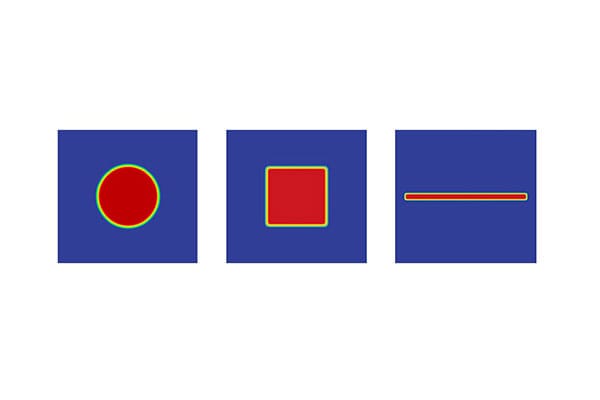
Custom beam profiles (e.g. Gaussian, ring, square, or multi-spot)
-
Tailored spot sizes (small-diameter focused spot or large-area uniform output)
-
Optional optical components for beam shaping or homogenization
-
Fiber coupling options to match different delivery systems
Vivlaser’s customization capabilities are built around three key dimensions: power output, beam geometry, and optical delivery.
Vivlaser provides:
-
Output power customization ranging from <10W to >1000W
-
Spot shape designs including round, square, ring, and multi-dot arrays
-
Spot sizes engineered to match application-specific requirements
-
Optical path design that ensures uniform beam quality across configurations
-
Structural adaptation for integration into fixed, modular, or portable systems
Each configuration is supported by in-house optical design and thermal simulation, ensuring that performance remains stable and efficient. Vivlaser engineers also provide one-on-one technical consulting during the design phase to help customers achieve optimal integration.
How do they handle quality control and reliability testing?
Data sheets look good—but how does the supplier handle defects or testing under real conditions?
Trustworthy suppliers invest in shock, vibration, humidity, and life testing. Their quality process should include traceability and failure diagnostics.
Ask to see:
-
Test standards (e.g. GR-468-CORE)
-
Failure rate metrics
-
Customer RMA procedures and root cause analysis examples
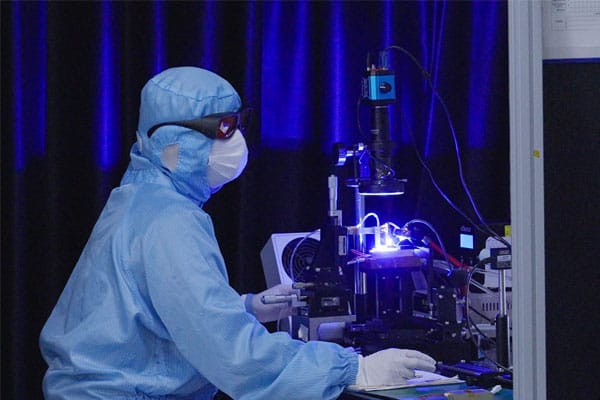
Vivlaser’s quality system meets ISO9001 standards and includes:
-
Class 1,000 cleanroom (3000m²) with full ESD control
-
Mechanical shock (500g), vibration (20g), temp cycling (-25°C to 55°C)
-
Damp heat testing at 85°C/85%RH for 1000+ hours
-
Root cause analysis using 8D method
-
RMA turnaround typically under 5 days for key accounts
How responsive is their technical support?
When something goes wrong, you need help now—not next week.
You should expect 24-hour response times, live support for integration, and help with application alignment or fault diagnosis.

Support indicators:
-
Pre-sales engineering consultation
-
On-site training or setup
-
Emergency stock policy for core products
Vivlaser maintains a dedicated technical service team fluent in English, German, Korean, and Mandarin. They provide:
-
Remote diagnostics with video walk-through
-
Pre-installation consulting and test report interpretation
-
Emergency support via direct engineer hotline
-
For strategic customers: finished-goods stock and failure-first replacement policy
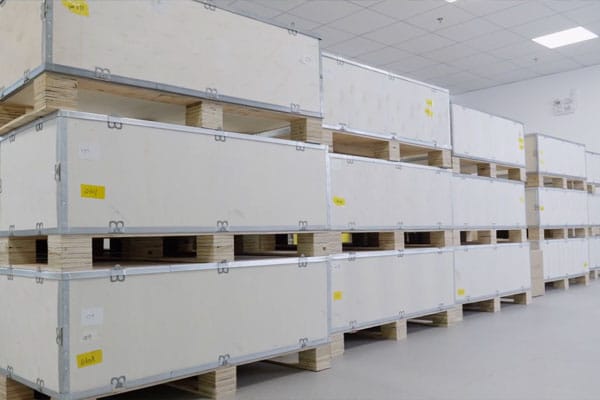
Do they have the capacity and readiness to scale with your needs?
Can they support your growth—or will they become your bottleneck?
Check their production capacity, automation level, cleanroom standards, and logistics system. A good partner grows with you.
Capacity indicators:
-
Annual laser unit production (e.g., 20,000+ lasers/year)
-
Cleanroom grade (Class 1,000 or better)
-
Lead time and stocking strategy
Vivlaser’s smart factory in Shenzhen includes:
-
10000m² production floor
-
10+ automated test and burn-in lines
-
Rapid prototyping cells for small batch trials
-
Typical lead time: 2-4 weeks
-
Safety stock programs for distributors and repeat clients
Their global logistics system supports direct shipments to Europe, North America, South Korea, and Southeast Asia with full export documentation and tracking.
Conclusion
Choosing the right laser supplier isn’t about price—it’s about total value. Ask the right questions before you buy. Vivlaser is ready with answers that deliver results—backed by engineering, production, and service you can count on.
-
Explore this link to understand the significance and applications of kilowatt-level lasers in various industries. ↩ ↩
-
Discover why Vivlaser stands out in the laser industry and how their technology is shaping the future of high-power lasers. ↩ ↩ ↩ ↩ ↩ ↩ ↩
-
Learn about this innovative technology and its advantages over traditional lasers, enhancing your knowledge of laser advancements. ↩
-
Discover how spectral control enhances the performance and reliability of laser systems. ↩ ↩
-
Learn about wavelength tolerance to ensure your laser system meets specific application requirements. ↩
-
Explore the importance of beam quality for achieving optimal results in various laser applications. ↩
-
Explore the concept of spectral width to understand its impact on laser applications and performance. ↩ ↩ ↩
-
Gain insights into VBG technology and its role in improving laser performance and stability. ↩
-
Learn about the significance of optical alignment in achieving precision and stability in laser systems. ↩