A weak pump source can compromise even the most advanced laser system. This is the silent truth behind every high-performing laser.
The pump source isn’t just a part—it’s the foundation that determines a laser system’s efficiency, stability, and lifespan.
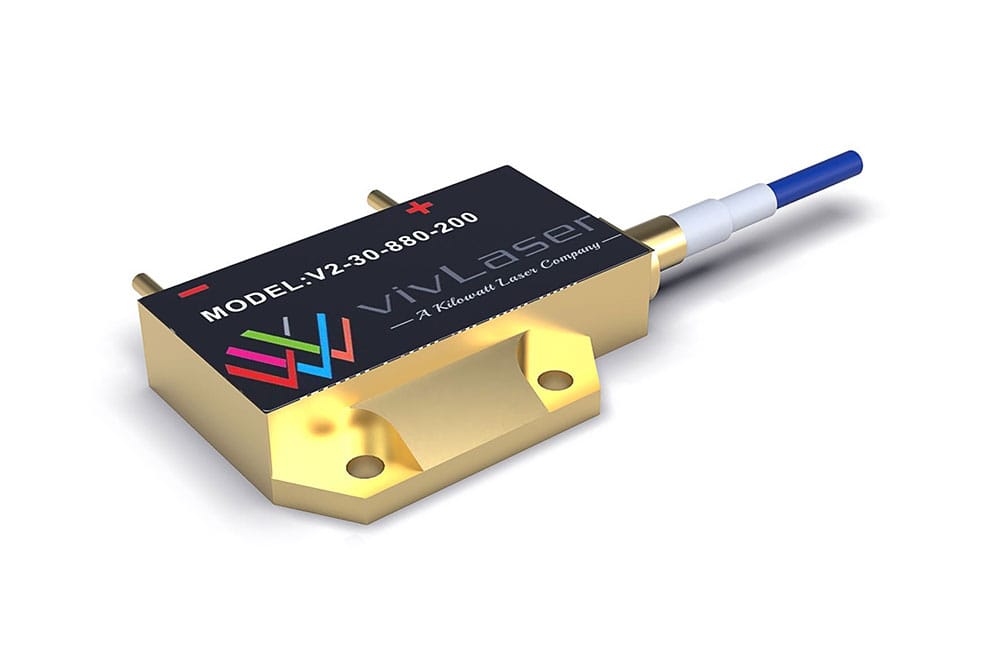
When customers demand stable, powerful, and efficient laser output, they often overlook where it all begins: the pump source. Let’s explore why this component deserves center stage.
What Does a Pump Source Do?
An unreliable pump source1 disrupts system precision and reliability.
The pump source1 supplies the energy needed to excite the gain medium2, directly impacting output stability and laser efficiency.
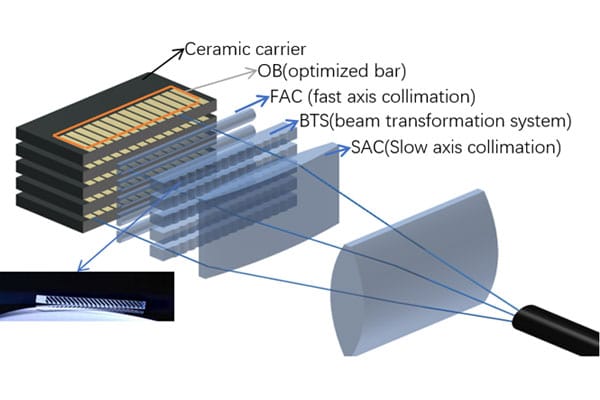
Key Responsibilities:
-
Converts electrical energy into optical energy suitable for lasing
-
Matches the gain medium2’s absorption spectrum (e.g., Nd:YVO4)
-
Directly affects pulse consistency, beam quality, and system noise
Why Precision Matters:
-
Misaligned wavelength reduces gain medium2 efficiency
-
In DPSS or fiber lasers, this leads to power loss, mode instability, or damage
| Function | Description |
|---|---|
| Energy Supply | Excites the laser gain medium2 |
| Spectrum Matching | Aligns with material absorption peak |
| Power Stability | Reduces output fluctuation |
| Longevity Anchor | Defines operational lifespan |
What Are the Differences Between Pump Source Types?
Different laser applications demand different pump source designs3.
Pump sources vary by structure, beam quality, coupling method, and cost—all of which must match system goals.
Common Types:
-
Free-space vs. fiber-coupled4
-
Single-mode vs. multi-mode
-
Low vs. high power
Application-Specific Choices:
-
Free-space: ideal for labs and R&D
-
Fiber-coupled: perfect for compact OEM systems
-
Multi-mode: suitable for high-power marking
-
Single-mode: ideal for precise surgery or spectroscopy
| Type | Feature | Best Application |
|---|---|---|
| Single-mode | High brightness, narrow beam | Medical, spectroscopy |
| Multi-mode | Higher power, lower cost | Welding, engraving |
| Fiber-coupled | Compact, safer integration | OEM modules |
| Free-space | Open, tunable optics | Lab environments |
Why Are Locked-Wavelength Narrow Spectrum Pump Sources Better for Precision?
Narrow-spectrum, locked-wavelength5 sources are vital for accuracy.
These pump sources deliver better absorption matching, less thermal drift, and more stable spectral output.

Benefits for Precision Applications:
-
Increases gain efficiency
-
Lowers heat buildup and wavelength instability
-
Essential for interference-sensitive tasks like semiconductor micromachining
Technology Highlight:
-
Volume Bragg Gratings6 (VBGs) ensure wavelength lock (e.g., 878.6nm)
-
Spectrum width under 1nm
-
Excellent compatibility with Nd:YVO4 or YAG gain media
| Spec | Standard Pump | Locked-Wavelength Pump |
|---|---|---|
| Wavelength Accuracy | ±5nm | ±1nm |
| Spectral Width | <5nm | <1nm |
| Thermal Drift | High | Very low |
| Process Repeatability | Moderate | High |
How Do High-Power Pump Sources Affect Laser System Performance?
More power means more complexity.
High-power pump sources7 introduce thermal, optical, and mechanical stresses that must be precisely managed.
Challenges of Scaling Power:
-
Greater current = higher thermal load
-
Beam shaping is more complex
-
Any instability impacts the full system
What to Look For:
-
Advanced thermal management8 (heat sinks, TECs)
-
Beam alignment with minimal divergence
-
Rigorous long-term testing for reliability
| Factor | Low Power (<50W) | High Power (>100W) |
|---|---|---|
| Cooling Requirements | Basic | Critical |
| Spectrum Shift Risk | Low | High |
| Structural Stress | Manageable | Needs engineering |
| Efficiency Sensitivity | Low | Very high |
How Does the Pump Source Determine Overall System Longevity and Stability?
Laser system downtime often traces back to a failing pump source.
The choice of pump source directly influences the system’s lifespan, maintenance cycle, and operating cost.
Failure Causes:
-
Wavelength instability
-
Poor thermal design
-
Weak optical coupling
Key Reliability Features:
-
Hermetically sealed packaging
-
VBG wavelength stabilization
-
Dual TEC elements for redundancy
| Metric | Low-Quality Source | High-Reliability Source |
|---|---|---|
| MTBF (Hours) | <5,000 | >20,000 |
| Power Drift | Fast | Minimal |
| Maintenance Demand | Frequent | Low |
| Total Cost of Ownership | High | Low |
Are Chinese Pump Sources a Competitive Alternative to Global Brands?
The performance gap is closing fast.
Top Chinese manufacturers like Vivlaser now match international leaders in key specs and deliver local service advantages.

What Has Improved:
-
Chip-level design and reliability
-
Narrow-spectrum control
-
Sealed, compact, and thermally stable packaging
Strategic Advantages:
-
Shorter delivery times
-
Better customization support
-
Cost-effective and responsive service
| Aspect | Imported Brands | Vivlaser (China) |
|---|---|---|
| Lead Time | 6–12 weeks | Under 3 weeks |
| Cost per Watt | High | Competitive |
| Customization | Limited | Flexible |
| Local Support | Minimal or none | Strong |
Conclusion
The pump source defines a laser system’s potential from the very beginning. Invest in it wisely.
-
Understanding pump sources is crucial for optimizing laser performance and efficiency. ↩ ↩
-
Exploring gain mediums helps in grasping their role in laser efficiency and output quality. ↩ ↩ ↩ ↩
-
Understanding pump source designs is crucial for optimizing laser applications and achieving desired performance. ↩
-
Exploring fiber-coupled systems can reveal their benefits in compactness and safety, essential for modern laser applications. ↩
-
Explore this link to understand how locked-wavelength sources enhance precision in laser applications. ↩
-
Learn about Volume Bragg Gratings and their role in achieving wavelength stability and precision. ↩
-
Understanding the impact of high-power pump sources is crucial for optimizing laser systems and ensuring reliability. ↩
-
Effective thermal management is key to maintaining performance and longevity in high-power laser systems. ↩