Laser pump sources are more than just power suppliers—they are the core engines behind laser system stability, wavelength precision, and long-term reliability.
The core technologies of pump sources determine the stability, power consistency, and system performance of any high-end laser device.
When industrial-grade laser systems demand uninterrupted operation, it’s the pump source that ensures long life, minimal drift, and efficient energy conversion. Let’s explore what makes a laser pump source truly high-performance.
Why Is the Pump Source Called the "Heart" of a Laser System?
Because all energy in a laser originates from the pump source1. If the resonator is the brain, the pump source1 is the heart—providing the continuous energy flow. Its stability, heat management, and response directly shape system wavelength stability, power uniformity, and operational lifespan.
The pump source1 supplies all energy to the laser and determines thermal control2, wavelength accuracy, and operating reliability.

In applications requiring 24/7 high-power output, a weak pump source1 leads to unstable beams, thermal damage, and premature failure. Industrial, medical, and scientific users rely on a "strong heart" for long-term performance.
Chip and Cavity Design: The Key to Pump Source Performance?
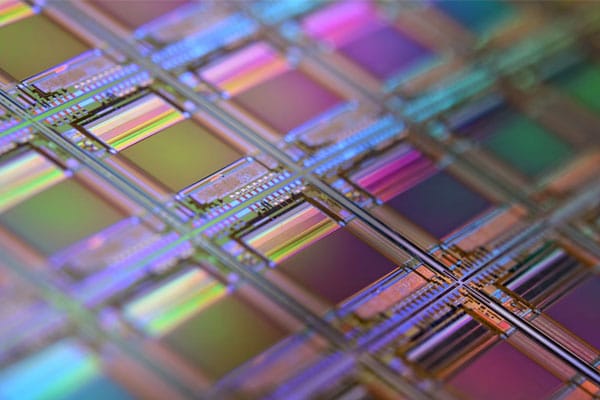
The laser diode chip defines the intrinsic efficiency, conversion rate, and thermal properties of a pump source1. But it’s the external cavity—especially with VBG (Volume Bragg Grating)3 feedback—that locks the wavelength, narrows spectral width, and enhances beam quality.
The chip defines efficiency and lifespan; the cavity design ensures beam quality, thermal control, and wavelength precision.
Why Chip & Cavity Design Matters
| Key Element | Function | Vivlaser Approach |
|---|---|---|
| Chip Structure | Power efficiency and thermal resistance | Selects advanced GaAs FP chips with optimized coatings |
| VBG External Cavity | Locks wavelength, narrows spectrum | Custom-designed for <±0.5 nm drift, <1 nm FWHM |
| Heat Path Design | Maintains operating stability | Multi-layer ceramic substrates with optimized copper paths |
Combining chip and cavity engineering enables Vivlaser to deliver high-power pump source1s with long-term spectral stability—even in variable environments.
How Difficult is Beam Shaping and Fiber Coupling?
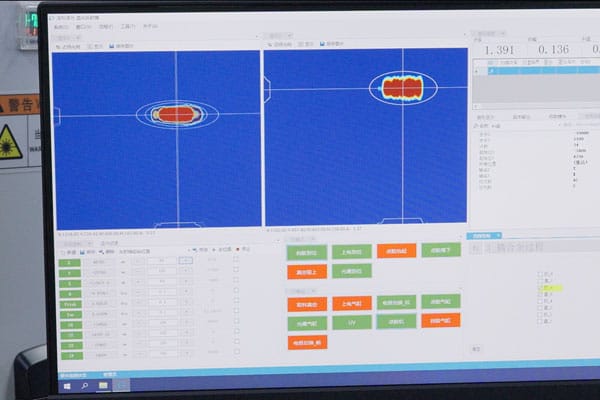
Coupling laser output into a 50μm or 62.5μm fiber core with 0.22 NA at high power levels requires micron-level optical alignment. Without excellent beam shaping, coupling efficiency plummets and thermal stress increases.
Beam shaping4 and fiber coupling5 are the most precision-demanding stages of pump source assembly.
What Makes Fiber Coupling Complex?
-
Multi-mode beam correction: As diode beams are inherently asymmetric, correction optics must reshape beam profiles.
-
Micro-lens arrays & alignment: Sub-micron alignment accuracy is required to maintain uniform beam profile.
-
Active alignment systems: Vivlaser uses active feedback to fine-tune coupling for maximum efficiency.
Poor coupling means overheating, back reflections, and unstable output. Our active alignment platforms and robust mechanical stability ensure coupling remains efficient even under thermal cycles and long use.
Why Is Pump Source Packaging More Critical Than You Think?
Laser diodes are sensitive to temperature shifts, mechanical shock, and environmental contaminants. Packaging is not just protection—it’s a heat management, stress-relief, and interface engineering challenge.
Pump source packaging6 must deliver thermal stability, mechanical precision, and long-term environmental isolation.

Vivlaser’s Packaging Strategies
| Packaging Factor | Importance | Vivlaser Implementation |
|---|---|---|
| Thermal Interface | Removes heat from chip | Direct-bond copper with multilayer ceramic substrates |
| Structural Stability | Prevents alignment drift | Precision welding + stress-relief housing design |
| Environmental Seal | Ensures long-term reliability | Hermetic sealing and epoxy-free optical paths |
Without proper packaging, even the best diode chips will degrade rapidly. Vivlaser uses aerospace-grade thermal interface materials and custom housing designs for maximum reliability.
How Is Wavelength Locked? Learn About TEC and VBG Feedback
In solid-state laser systems, even ±1 nm of drift in the pump wavelength can cause huge losses in output power or complete system failure.
Wavelength locking7 is achieved through VBG external cavity feedback combined with precision TEC thermal control.

Core Techniques for Stable Wavelength
-
VBG (Volume Bragg Grating): Acts as a wavelength filter, feeding only a narrow band back into the cavity.
-
TEC (Thermoelectric Cooler)8: Maintains chip temperature within ±0.1°C to prevent wavelength drift.
-
Closed-loop control: Vivlaser’s integrated systems achieve <±0.5nm wavelength variation across full operating range.
For Yb- or Nd-doped crystals with narrow absorption bands, this level of precision ensures consistent energy transfer and reduced thermal load.
How Many Verifications Does a High-Reliability Pump Source Go Through?
Industrial applications demand lasers that run non-stop. Vivlaser’s pump sources undergo extreme testing to ensure <0.2% failure rate over 10,000+ hours of use.
A qualified pump source must pass high-temp, vibration, shock, aging, and optical stability tests.
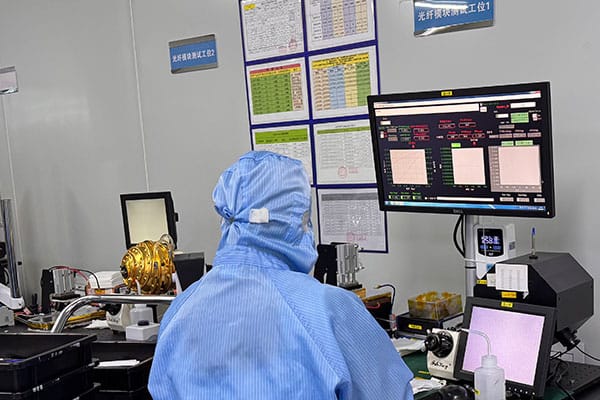
Key Tests for Industrial Qualification
-
Thermal cycling: -25°C to +55°C, 100 cycles
-
High humidity: 85°C / 85% RH for 1000 hours
-
Vibration & shock: >20g dynamic testing
-
Lifetime testing: >10,000 hours continuous operation
Vivlaser products meet or exceed GR-468-CORE reliability standards and include detailed failure analysis (RMA) and 8D problem tracking systems.
How to Tell If a Pump Source is Truly "Industrial Grade"?
Not all high-power pump sources are industrial-grade. What matters is long-term consistency—not just the spec sheet.
Look for metrics like <3% power drop over 10,000 hours, <1 nm drift, and <0.2% annual failure rate.
Core Industrial Metrics
| Metric | Benchmark | Vivlaser Result |
|---|---|---|
| Power Stability | <3% degradation in 10k hours | <2% typical |
| Wavelength Drift | <1 nm | <0.5 nm typical |
| Fiber Coupling Stability | <±5% output shift | <±3% |
| Annual Failure Rate | <0.2% | <0.1% verified |
Vivlaser pump sources are designed from the ground up for industrial deployment, with thermal redundancy, fault diagnostics, and production-level traceability.
What Advantages Do Vivlaser Pump Sources Offer in Global Competition?
Vivlaser focuses on the core: chip sourcing, optical design, thermal architecture, and industrial testing. This ensures we meet the same reliability as US/EU brands—but at better value.
Vivlaser delivers high-end reliability, better pricing, and fast support—ideal for integrators seeking long-term partnerships.
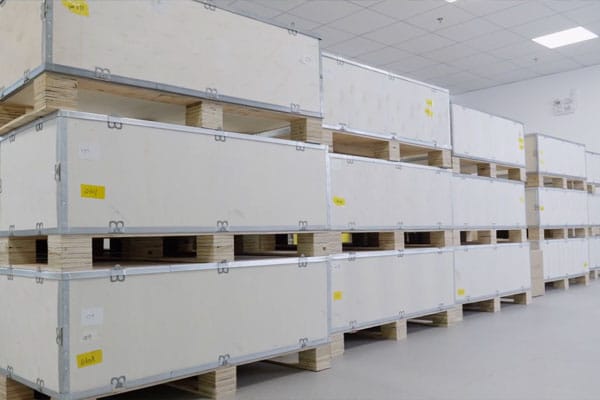
Why Global Clients Choose Vivlaser
-
In-house VBG and TEC engineering: Better control over wavelength precision
-
Customizable optics and packaging: Meet unique integration challenges
-
Fast lead time + responsive support: Direct access to technical teams
Compared to Western brands, we offer equal performance at better cost. Compared to low-end competitors, we ensure full validation, documentation, and consistency.
Conclusion
Pump source technology defines the stability, reliability, and lifespan of any laser system. It’s where innovation meets integration.
If you’re looking for industrial-grade, high-reliability pump sources with customizable options and responsive technical support, contact Vivlaser today to explore how we can support your integration goals.
To better understand pump source selection principles, you may also refer to our complete Laser Diode Pump Source overview.
-
Understanding the pump source’s role is crucial for optimizing laser performance and longevity. ↩ ↩ ↩ ↩ ↩ ↩
-
Exploring thermal control can reveal insights into maintaining laser efficiency and preventing damage. ↩
-
Exploring VBG technology can provide insights into improving laser efficiency and beam quality. ↩
-
Understanding beam shaping is crucial for optimizing laser performance and efficiency in various applications. ↩
-
Exploring fiber coupling techniques can enhance your knowledge of laser integration and improve system reliability. ↩
-
Understanding pump source packaging is crucial for ensuring the reliability and performance of laser diodes. ↩
-
Understanding wavelength locking is crucial for optimizing laser performance and preventing system failures. ↩
-
Exploring TEC technology can enhance your knowledge of thermal management in lasers, ensuring stability and efficiency. ↩