In glass processing, stress and microcracks often lead to yield loss. With rising precision demands, traditional thermal methods fall short.
High-power semiconductor lasers deliver localized, precise, and stable heating ideal for annealing and preheating glass, improving quality and reducing defects.

Glass products are evolving—thinner, more durable, and multi-functional. To stay competitive, manufacturers must adopt smarter heating solutions. High-power lasers are a future-ready tool that can make a tangible difference.
Why Use Semiconductor Lasers for Glass Annealing and Preheating?
Stress and microfractures in glass arise during cutting or forming. These hidden faults threaten structural integrity.
Laser-based preheating and localized annealing1 help relieve stress, prevent cracking, and enhance overall product reliability.
Understanding the Role of Laser Heating
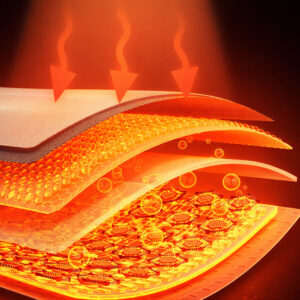
Laser energy converts into heat precisely at the target zone. This targeted thermal input raises the temperature in a controlled manner, allowing the internal stress of the glass to release gradually. Unlike furnace-based methods, laser heating eliminates the need to heat the entire substrate.
| Feature | Laser Annealing | Traditional Furnace |
|---|---|---|
| Heating Scope | Localized, precise | Entire component |
| Energy Efficiency | High | Low |
| Thermal Damage Risk | Low | High |
| Cycle Time | Short | Long |
| Automation Integration | Easy | Complex |
Localized laser heating2 is especially suitable for precision applications like display panels, optical components, and thin glass substrates.
What Makes Laser-Based Annealing Better Than Traditional Heating Methods?
In conventional thermal treatment, heat is often transferred inefficiently. Overshoot and uneven temperature gradients are common issues.
Laser heating ensures uniform, contactless, and instantly controllable energy delivery.3

Advantages of Semiconductor Laser Heating
1. Precision Control
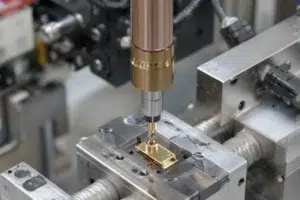
Semiconductor lasers can focus heat within microns, avoiding unintended thermal effects on surrounding areas.
2. Rapid Thermal Cycling4
High-power output allows fast ramp-up and cool-down, improving throughput.
3. Reduced Residual Stress
Gradual, focused heating minimizes thermal shock, which is crucial for delicate or high-value glass products.
4. Seamless Automation
Laser modules are compact and easy to integrate into robotic or inline systems.
With modern production lines demanding flexibility and repeatability, lasers offer unmatched advantages.
What Types of Glass Applications Benefit Most from Laser Annealing?
Not all glass is created equal. Different compositions and applications require specific treatment approaches.
Laser annealing5 is ideal for precision glass products where edge integrity and surface quality are critical.

Common Use Cases
| Application Area | Benefit from Laser Annealing |
|---|---|
| Smartphone Glass | Reduces edge cracks post-cutting |
| Display Panels | Stabilizes thin substrates |
| Optical Lenses | Improves clarity and eliminates distortions |
| Automotive Glass | Enhances resistance to mechanical stress |
| Photovoltaic Glass | Boosts durability in harsh environments |
High-power lasers bring stability to otherwise fragile components. This directly translates to longer service life and reduced production scrap.
How Do Laser Parameters Influence Glass Processing Results?
The effectiveness of laser annealing depends heavily on the tuning of key parameters.
Factors like power density, wavelength, beam profile, and spot size all affect the heat distribution and annealing quality.
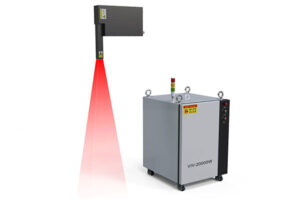
Key Parameters to Monitor
1. Power Output
More power enables faster heating but must be matched to material tolerance.
2. Wavelength Selection
Vivlaser offers 808nm, 880nm, 885nm, and 976nm options. Each wavelength interacts differently with various glass types.
3. Beam Shape and Homogeneity
Uniform energy delivery ensures stress is relieved evenly, avoiding hotspots.
4. Scanning or Spot Heating
Static or dynamic beam control can be applied depending on part geometry.
Choosing the right configuration is vital for process stability and repeatability.
How Does Vivlaser’s High-Power Laser Solution Improve Efficiency and Yield?
Vivlaser’s laser modules are designed for industrial-grade reliability and customization.
With features like wavelength locking, high optical conversion efficiency, and compact packaging, our lasers optimize your glass processing line.

Technology Highlights
- Stable Output: Long-term power consistency below 1% failure rate
- Thermal Management: Advanced heat dissipation ensures longevity
- Fiber-Coupled Delivery: Enables flexible and remote beam delivery
- Compact Footprint: Easy to integrate in limited factory spaces
- Customization: Tailored wavelength and packaging options for unique workflows
Customers also benefit from fast lead times and responsive technical support—two critical factors in fast-paced production environments.
What Do Industrial Clients Say About Using Vivlaser for Glass Annealing?
Feedback from global partners confirms Vivlaser’s performance in demanding environments.
Clients report improved edge quality, reduced defect rates, and higher yield stability after switching to Vivlaser modules.
Success Stories
| Client Type | Benefit Achieved |
|---|---|
| Display Manufacturer | 40% reduction in edge defect rate |
| Smartphone Glass Processor | 25% yield improvement post-laser retrofit |
| Automotive Glass Supplier | Reduced rework by 30% |
Our ability to deliver both high-performance and reliable supply makes us the preferred partner for high-precision glass manufacturing worldwide.
Conclusion
Vivlaser’s high-power semiconductor lasers offer a smarter, more precise way to heat and anneal glass—delivering better products, faster.
- Explore this link to understand how laser techniques enhance glass processing, ensuring better quality and durability. ↩
- Discover the advantages of localized laser heating in glass annealing, leading to more efficient and precise manufacturing. ↩
- Discover how laser heating enhances efficiency and precision in manufacturing processes, making it a game-changer. ↩
- Learn about the advantages of rapid thermal cycling and how it boosts production speed and quality. ↩
- Explore this link to understand how laser annealing enhances glass quality and durability, crucial for various applications. ↩