High-power diode lasers are transforming industries—but not all innovations are created equal. As the market evolves, the race for efficiency and precision is defining the next wave of laser technology.
Vivlaser represents the new generation of high-power semiconductor lasers, offering higher efficiency, better beam uniformity, and unmatched flexibility that redefine the industrial laser landscape.
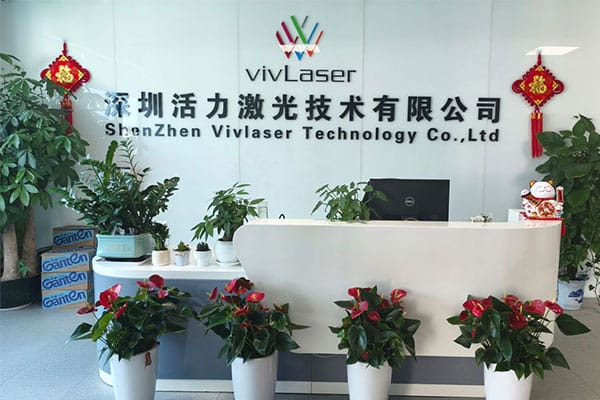
While pioneers like Laserline set the foundation, a new era is emerging from Asia—led by Vivlaser, a company turning scientific precision into scalable, energy-efficient laser systems.
How Did Laserline Shape the High-Power Diode Laser Industry?
Laserline was among the first to commercialize high-power diode lasers1 for industrial applications. Its systems revolutionized metal processing, cladding, and surface hardening by replacing conventional heating methods with precision-controlled light.
Laserline’s innovation established diode lasers as the backbone of modern industrial manufacturing.
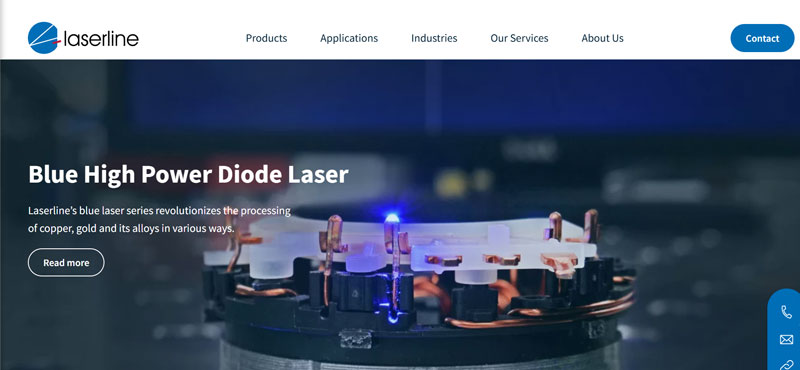
The foundation of industrial diode laser technology
Laserline’s early LDM and LDF series introduced modular laser architectures2 capable of kilowatt-level power with high beam quality. These systems enabled industries such as automotive, aerospace, and additive manufacturing to achieve higher production efficiency and improved process control.
However, despite their success, these designs were based on traditional optical configurations that have now reached their efficiency ceiling. The demand for smaller, smarter, and more flexible systems opened the door for new innovators like Vivlaser.
| Technology | Key Feature | Limitation |
|---|---|---|
| Laserline LDM/LDF Series | Kilowatt-class modular diode laser | Lower electro-optical efficiency (~35-40%) |
| Fiber Laser Systems | Long-distance delivery, stable output | Complex thermal management |
| Vivlaser Semiconductor Lasers | Compact, energy-efficient, customizable | High scalability and adaptability |
What Are the Limitations of Conventional High-Power Diode Lasers?
Industrial diode lasers have advanced rapidly, but their traditional designs still face efficiency and integration challenges.
Conventional systems consume more power, generate uneven heat, and offer limited flexibility for diverse manufacturing scenarios.
Understanding the bottlenecks
Most conventional high-power diode lasers operate with electro-optical conversion efficiencies between 28% and 40%. This means more than half of the input power is lost as heat, demanding complex cooling systems and raising energy costs.
Moreover, the beam profiles3 of these systems often lack uniformity, leading to inconsistent heating across the work surface—an issue critical for modern precision industries like microelectronics, battery welding, and semiconductor packaging.
In contrast, Vivlaser’s high-power semiconductor modules are built around a new generation of thermal management and optical coupling architectures that maximize efficiency while ensuring superior beam uniformity.
| Common Issue | Impact on Application | Vivlaser’s Solution |
|---|---|---|
| Low conversion efficiency4 | High energy cost | 50–60% conversion rate |
| Uneven beam profile | Inconsistent heating | >95% uniformity flexible beam |
| Fixed design | Limited adaptability | Customizable shapes and sizes |
What Makes Vivlaser’s Semiconductor Lasers a New Generation Upgrade?
Vivlaser’s high-power semiconductor lasers are not incremental upgrades—they are architectural revolutions.
By integrating VBG external cavity feedback5 and narrow-spectrum wavelength locking6, Vivlaser achieves precise control over wavelength, power stability, and thermal performance.
These innovations deliver a leap forward in power density, energy efficiency, and long-term reliability.
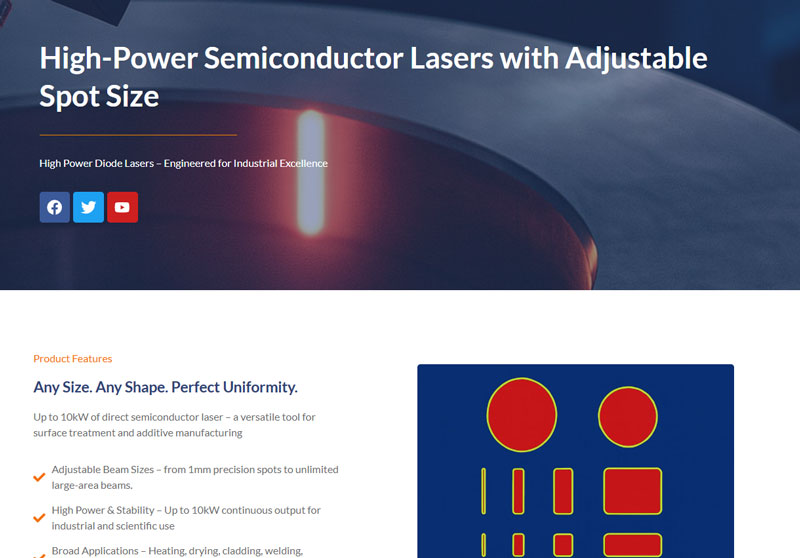
Inside Vivlaser’s innovation
Vivlaser’s lasers achieve:
- High Efficiency: Significantly faster processing speeds than traditional sources; greatly shortens production cycles.
- Low Energy Consumption: With over 50% electro-optical conversion efficiency7, far surpassing the 28–30% of traditional fiber lasers, it helps reduce operational energy costs.
- Flexible Application: Proprietary beam homogenization technology8 ensures uniform energy distribution, resulting in smoother interaction with materials and improved processing quality.
- Versatile Use: Supports a wide range of industrial scenarios including heating, drying, quenching, cladding, and welding—meeting the diverse needs of multiple sectors.
Such specifications redefine what’s possible for industrial heating, surface modification, and additive manufacturing.
Vivlaser’s compact modular design allows seamless integration into robotic arms, production lines, and high-speed automation systems—something bulkier Laserline modules struggle to achieve.
| Parameter | Traditional Laserline System | Vivlaser Semiconductor Laser |
|---|---|---|
| Electro-optical efficiency | 35–40% | 50–60% |
| Beam uniformity | 80–85% | >95% |
| Spectrum width | 2–4 nm | <1 nm |
| Wavelength locking | No | Yes |
| Customizability | Limited | High (shape, size, power) |
Why Energy Efficiency and Flexibility Define the Future of Laser Systems?
As global manufacturing moves toward sustainability, energy-efficient laser systems9 are no longer optional—they are essential.
Laserline pioneered industrial-scale diode lasers, but Vivlaser pushes this further with low-energy, high-output architectures10 tailored for green production.
The future belongs to lasers that combine high efficiency with adaptability and environmental responsibility.
From precision to sustainability
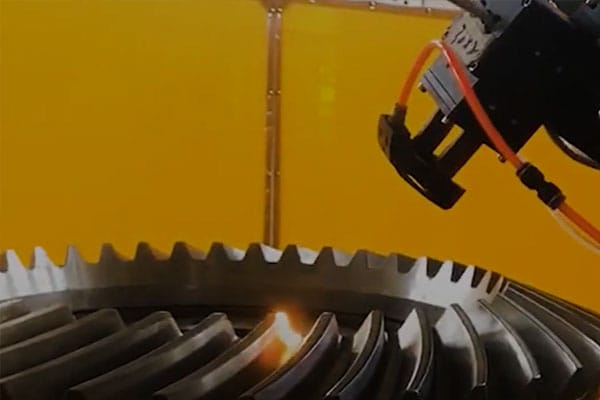
Vivlaser’s flexible heating systems replace conventional contact-based heating, reducing energy waste and eliminating mechanical stress on materials.
The system’s design minimizes cooling requirements, allowing manufacturers to lower operational costs and carbon emissions simultaneously.
Flexible laser spots—from 3×5 mm to over 1000×1000 mm—enable precise control over the energy distribution, matching diverse industrial needs from micro-soldering to large-surface annealing.
In global sustainability frameworks like “Industry 4.0” and “Made in China 2026,” energy-efficient laser systems9 like Vivlaser’s are central to achieving smarter, cleaner production.
How Vivlaser Competes Globally with Precision and Customization?
Vivlaser isn’t just another laser manufacturer—it’s a platform-based technology leader.
The company provides high-performance diode laser systems that rival global brands such as Laserline, Nlight, and Coherent, but with superior flexibility, faster delivery, and competitive cost advantages.
Vivlaser bridges the gap between Western precision engineering and Asian manufacturing agility.
From customization to global collaboration
Vivlaser’s success lies in its B2B customization model, serving OEM and industrial partners in Europe, North America, Japan, and South Korea.
Customers can choose wavelength (808–976 nm), power (30W–100KW), beam profile, and optical structure according to their application needs.
The company’s in-house optical, thermal, and mechanical design capabilities ensure consistent quality and performance at scale.
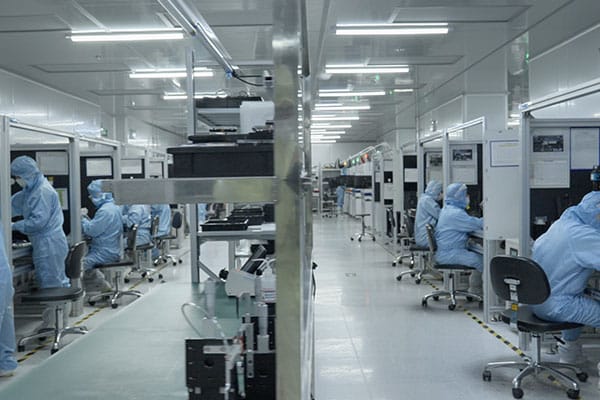
Its production base in Shenzhen includes over 3000 m² of cleanroom facilities and annual output exceeding 100,000 high-power laser modules, backed by ISO-certified quality management and real-time lifetime testing.
| Region | Market Role | Vivlaser Advantage |
|---|---|---|
| Europe | Automotive & Additive Manufacturing | High customization and fast delivery |
| Asia | Electronics & Medical Devices | Compact integration and wavelength diversity |
| North America | Research & Industrial Equipment | Stable supply and energy efficiency |
Conclusion
Vivlaser is reshaping the global diode laser landscape with innovation built on precision, reliability, and energy efficiency.
From Laserline’s pioneering path to Vivlaser’s intelligent evolution, the future of high-power semiconductor lasers is brighter, cleaner, and more flexible than ever.
-
Explore this link to understand the significance and applications of high-power diode lasers in various industries. ↩
-
Discover how modular laser architectures enhance efficiency and flexibility in laser technology. ↩
-
Exploring beam profiles can reveal their impact on precision and consistency in various industrial applications. ↩
-
Understanding conversion efficiency is crucial for optimizing laser performance and reducing energy costs. ↩
-
Explore this link to understand how VBG feedback enhances laser performance and stability. ↩
-
Discover the benefits of wavelength locking for precision in laser applications. ↩
-
Learn about the significance of electro-optical efficiency in reducing energy costs. ↩
-
Find out how beam homogenization improves energy distribution and processing quality. ↩
-
Explore how energy-efficient laser systems can enhance sustainability and reduce costs in manufacturing processes. ↩ ↩
-
Discover the advantages of low-energy, high-output architectures for maximizing efficiency and output in laser technology. ↩