Agricultural wear parts face extreme abrasion every day. Blades, discs, and soil-engaging components continuously contact sand, gravel, and hard minerals, causing rapid wear and frequent replacement.
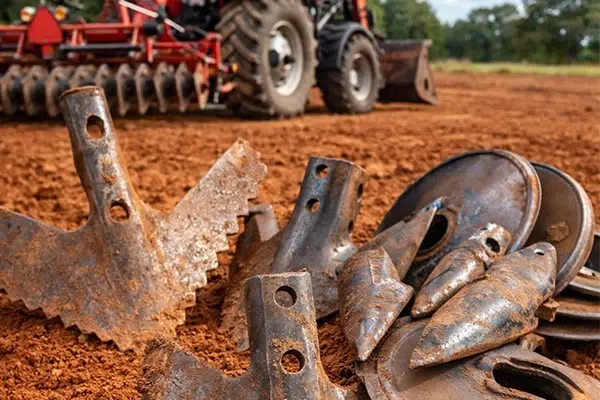
Laser cladding provides a proven way to dramatically extend the service life of agricultural wear parts—while minimizing distortion and post-machining. With advanced laser cladding equipment from Vivlaser, manufacturers and refurbishers can improve durability, productivity, and total ownership cost at the same time.
Why Agricultural Wear Parts Wear Out So Fast
Soil is one of the most aggressive wear environments in industry. High quartz content, moisture, and impact loads lead to:
-
Severe abrasive wear on cutting edges
-
Loss of geometry and cutting efficiency
-
Frequent part replacement during peak farming seasons
Traditional hardfacing methods can increase hardness, but they often introduce excessive heat input. This causes warping, cracking, and high rework costs—especially on thin blades and large discs.
What Is Laser Cladding and Why Is It Better?
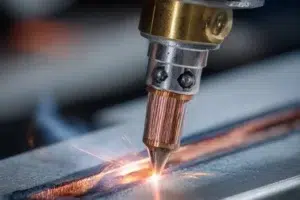
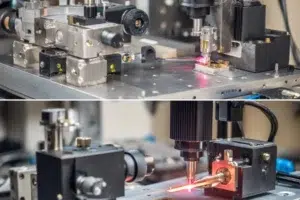
Laser cladding is a surface engineering process in which a controlled laser beam melts a thin surface layer while simultaneously depositing wear-resistant alloy powder.
Unlike conventional welding, laser cladding produces a dense, metallurgically bonded layer with extremely low dilution and minimal heat input.
Key Benefits for Agricultural Wear Parts
Longer service life in abrasive soil
Carbide-reinforced or iron-based alloys significantly improve resistance to sand and mineral wear, keeping tools sharp for longer operation.
Minimal thermal deformation
Precise energy control creates a narrow heat-affected zone (HAZ), preserving flatness and geometry—critical for discs and thin blades.
Lower total cost of ownership
Extended lifetime, reduced downtime, and minimal post-machining lower overall maintenance and replacement costs.
Typical Agricultural Components for Laser Cladding
Laser cladding is ideal for localized reinforcement of high-wear zones, including:
-
Plowshares and cultivator points
-
Harrow and tillage discs
-
Rotary tiller blades
-
Subsoiler tips and cutting edges
Only the wear-critical areas are treated, avoiding unnecessary material use and weight increase.
Why Choose Vivlaser Laser Cladding Equipment?
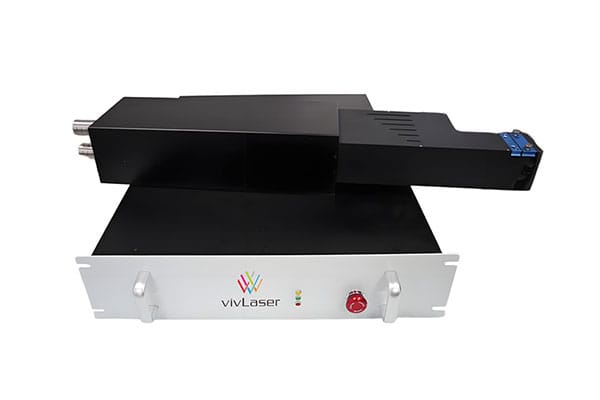
VivLaser laser cladding systems are designed for industrial-scale surface engineering with precision and reliability.
Technical Advantages
-
Uniform energy distribution (>95%)
Ensures a stable melt pool and consistent clad thickness along long edges and curved surfaces. -
Flexible beam geometries
Rectangular, linear, or customized beam shapes match real agricultural tool profiles. -
Low dilution, high bonding strength
Metallurgical bonding prevents peeling or spalling under impact and cyclic loads. -
Scalable power platforms
Suitable for both precision reinforcement and high-throughput agricultural production lines.
Repair, Remanufacturing, and Sustainability
Laser cladding is not limited to new parts. Worn agricultural tools can be rebuilt to near-original dimensions, extending usable life and reducing waste.
This enables:
-
Lower spare-part inventory
-
Faster turnaround during busy seasons
-
More sustainable manufacturing compared to full replacement
Conclusion
Laser cladding is an ideal solution for agricultural wear parts operating in abrasive soil environments. It delivers longer service life, minimal distortion, and lower total ownership cost.
With Vivlaser laser cladding equipment, manufacturers gain precise process control, consistent quality, and production-ready reliability—helping agricultural tools last longer and perform better in the field.
Frequently Asked Questions (FAQ)
What agricultural parts are best suited for laser cladding?
High-wear components such as plowshares, tillage discs, cultivator points, and rotary tiller blades benefit the most, especially at cutting edges and contact zones.
Is laser cladding better than traditional hardfacing?
Yes. Laser cladding offers lower heat input, minimal distortion, stronger metallurgical bonding, and less post-machining compared to conventional welding or hardfacing.
Does laser cladding increase tool weight?
No. The process deposits only a thin, localized wear layer, reinforcing critical areas without adding unnecessary mass.
Can worn agricultural tools be repaired with laser cladding?
Yes. Laser cladding is widely used for remanufacturing, rebuilding worn edges and extending the service life of used tools.
What alloys are typically used for agricultural wear parts?
Common choices include iron-based wear alloys and carbide-reinforced powders, selected based on soil abrasiveness and impact requirements.