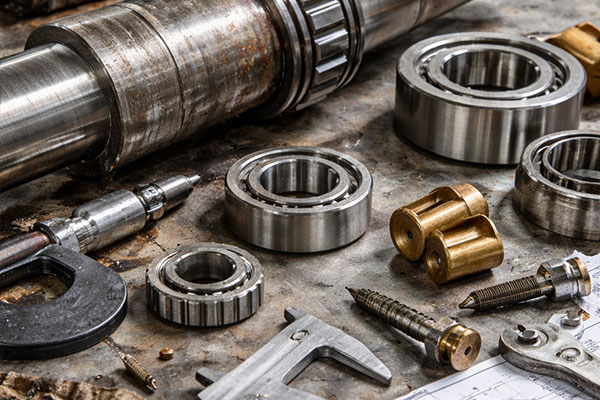
Bearings, shafts, and molds are among the most expensive and performance-critical components in industrial equipment. When wear, corrosion, or localized damage occurs, scrapping these parts is costly and often unnecessary.
Precision laser cladding enables accurate surface restoration with minimal heat input and negligible dimensional change—making it an ideal solution for high-value component repair and life extension. With advanced systems from VivLaser, manufacturers can turn damaged parts into reusable assets instead of losses.
Why Traditional Repair Methods Fall Short
Conventional repair approaches such as arc welding, thermal spraying, or full part replacement introduce several problems:
- Excessive heat input causing distortion or loss of concentricity
- Weak bonding or porosity leading to early failure
- Significant post-machining to restore tolerances
- Long downtime while waiting for replacement parts
For precision components like bearing journals, transmission shafts, and mold surfaces, these risks are often unacceptable.
How Precision Laser Cladding Changes the Repair Process
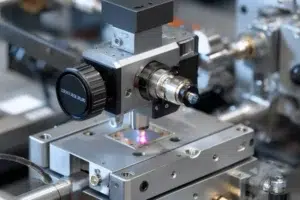
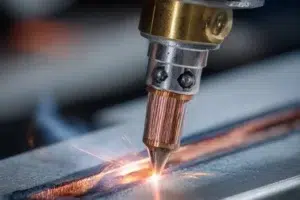
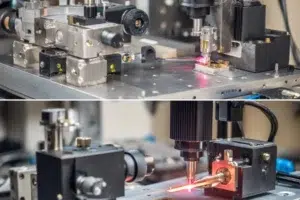
Laser cladding uses a highly focused laser beam to deposit a controlled amount of material only where damage exists. The process creates a metallurgically bonded layer with excellent density and adhesion.
Because heat input is tightly controlled, the base material remains largely unaffected—preserving mechanical properties and dimensional accuracy.
Key Benefits for Bearings, Shafts, and Molds
Accurate Dimensional Recovery
Laser cladding allows material to be rebuilt in micrometer-level layers. This makes it possible to restore worn journals, seal surfaces, and mold cavities to near-original dimensions with minimal finishing.
Reduced Scrap and Downtime
Instead of waiting weeks for new parts, damaged components can often be repaired and returned to service in days. This dramatically reduces unplanned downtime and spare-part inventory.
Ideal for Repair and Life Extension
High-value components can be repaired multiple times, extending their usable life and maximizing return on investment—especially for custom or large-format parts.
Typical Applications
Laser cladding is widely used for localized repair and reinforcement of:
- Bearings and bearing seats Restoration of worn journals, raceways, and contact surfaces.
- Rotating and transmission shafts Repair of seal areas, keyways, and load-bearing zones without bending or warping.
- Injection and die-casting molds Precise rebuilding of worn edges, cavities, and parting lines while maintaining mold accuracy.
Only the damaged area is treated, avoiding unnecessary thermal stress on the entire component.
Why VivLaser Equipment Is Suited for Precision Repair
VivLaser laser cladding systems are engineered for fine control and industrial reliability—key requirements for component repair applications.
Repair-Focused Capabilities
- Stable, low-heat input process Minimizes residual stress and preserves base-material properties.
- Highly controllable clad geometry Enables accurate buildup on narrow journals, edges, and complex mold surfaces.
- Excellent bonding and low dilution Ensures repaired zones perform reliably under cyclic load and fatigue.
- Easy automation and integration Compatible with CNC machines, rotary axes, and robotic systems for repeatable repairs.
From Emergency Fix to Strategic Maintenance Tool
Laser cladding is no longer just an emergency repair method. Many manufacturers now integrate it into planned maintenance and remanufacturing strategies to:
- Extend component lifecycle
- Reduce dependence on spare parts
- Improve sustainability by minimizing waste
For molds and rotating components in continuous production, this approach delivers both economic and operational advantages.
Conclusion
Precision laser cladding offers a reliable, low-risk way to repair bearings, shafts, and molds without compromising accuracy or performance. By restoring dimensions, reducing scrap, and minimizing downtime, it transforms repair from a cost burden into a strategic advantage.
With VivLaser laser cladding equipment, manufacturers gain the control and consistency needed to restore high-value components—and keep critical systems running longer and more efficiently.
Frequently Asked Questions (FAQ)
What types of bearings can be repaired with laser cladding?
Laser cladding is suitable for repairing bearing journals, bearing seats, and housing interfaces that suffer from wear, fretting, or corrosion. The process restores surface dimensions while maintaining concentricity and mechanical integrity.
Can laser cladding restore shaft dimensions accurately?
Yes. Precision laser cladding allows controlled material buildup in thin layers, enabling accurate dimensional recovery of worn shafts. Final tolerances are typically achieved with light post-machining or grinding.
Is laser cladding safe for high-precision molds?
Laser cladding is ideal for mold repair because of its low heat input and narrow heat-affected zone. Mold cavities, edges, and parting lines can be rebuilt without warping or altering surrounding dimensions.
How does laser cladding reduce downtime compared to part replacement?
Instead of waiting weeks for new bearings, shafts, or molds, laser cladding repairs can often be completed within days. This significantly reduces production downtime and dependence on spare-part inventory.
Does laser cladding affect the base material properties?
No. When properly controlled, laser cladding preserves the base material’s mechanical properties. The metallurgical bond is strong, while thermal impact on the substrate remains minimal.
Is laser cladding suitable for repeated repairs?
Yes. Many high-value components can be laser-cladded multiple times, making it an effective solution for long-term life extension and remanufacturing strategies.
Why use VivLaser laser cladding equipment for repair applications?
VivLaser laser cladding systems offer precise energy control, stable melt pools, and flexible beam configurations—critical for dimensional accuracy in bearing, shaft, and mold repair.