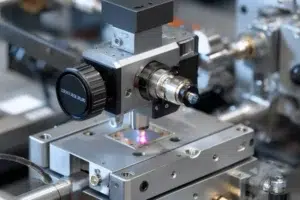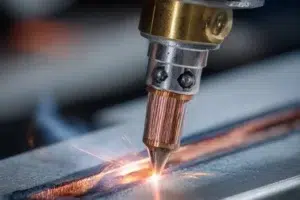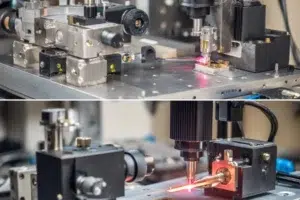
Solid-state lasers are entering a new stage, where industries demand higher power, better efficiency, and stronger reliability.
Solid-state lasers1 and their pump sources are evolving toward diversification, higher precision, and global competitiveness, driven by industrial, medical, and scientific applications.
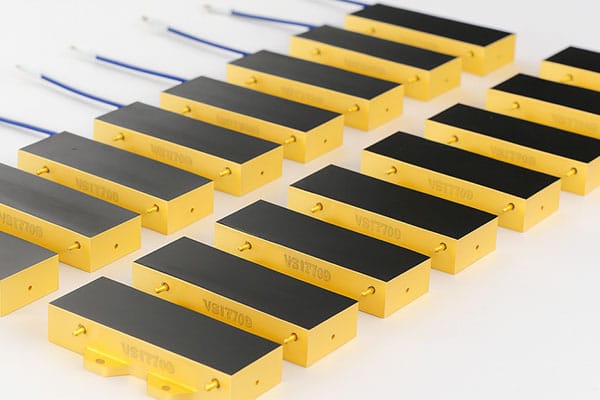
Today, industries are not only asking for more powerful lasers but also more flexible and reliable ones. This article explores the five main trends shaping Solid-state lasers1 and pump sources.
Are Solid-State Lasers Moving Toward Diversification and Industrialization?
The demand for solid-state lasers is no longer limited to a few applications. Industries want compact, modular, and intelligent solutions.
Solid-state lasers1 are becoming more diverse, smarter, and more industrialized, especially in small and medium power ranges.
![**[Solid-state lasers][^1]](https://vivlasers.com/wp-content/uploads/2025/08/solid-state-laser.jpg)
Why Diversification Matters
Diversification means solid-state lasers can adapt to a wide range of applications: industrial machining, precision measurement, biomedical instruments, and consumer devices. Small and medium-power lasers are particularly important because they can be integrated into compact devices while maintaining stability.
Smart and Modular Development
With the rise of Industry 4.02, smart lasers with built-in diagnostics and modular pump sources are becoming standard. Modular designs reduce downtime, improve serviceability, and enable manufacturers to scale production faster.
Industrialization as a Core Trend
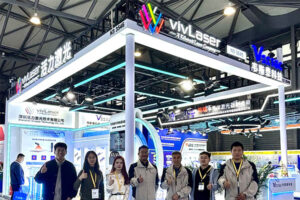
Industrialization is not only about mass production. It also means cost reduction, supply chain stability, and international certification readiness. For example, Shenzhen-based Vivlaser and other leading Chinese manufacturers are investing in cleanroom production and strict quality control to support large-scale industrialization.
| Trend | Impact |
|---|---|
| Diversification | More industries adopt lasers |
| Smart Features | Better monitoring and automation |
| Industrialization | Cost-effective and scalable solutions |
Can Solid-State Lasers Handle More Materials?
One of the strongest drivers for new lasers is material diversity. Industries are pushing lasers to work with metals, alloys, and non-metallics.
Shorter wavelengths and higher pulse energy allow lasers to process more materials, including glass, ceramics, gemstones, and silicon carbide.

Expanding Beyond Metals
Traditional lasers excel at steel and aluminum. Now, companies need lasers to cut and modify advanced materials. Glass, ceramics, and composites are increasingly used in electronics, aerospace, and biomedical devices.
Precision as a Requirement
Material diversity also means higher precision. For example, jewel cutting and ceramic drilling require not just higher power but also very fine control of spot size and beam uniformity.
The Role of Pump Sources
Pump sources play a key role in enabling this diversity. Semiconductor laser pump sources3 with stable wavelengths (such as 878.6 nm) allow solid-state lasers1 to operate efficiently in these challenging applications.
| Material | Processing Requirement |
|---|---|
| Glass | Crack-free cutting |
| Ceramics | High-precision drilling |
| Gemstones | Ultra-fine ablation |
| Silicon Carbide | Hard surface modification |
Why Do Shorter Wavelengths and Better Beam Quality Matter?
Advancements in laser materials and pump methods are unlocking new levels of performance.
The industry is moving toward shorter wavelengths4, shorter pulses, higher energy, and more uniform beams.
DPSS Upgrades
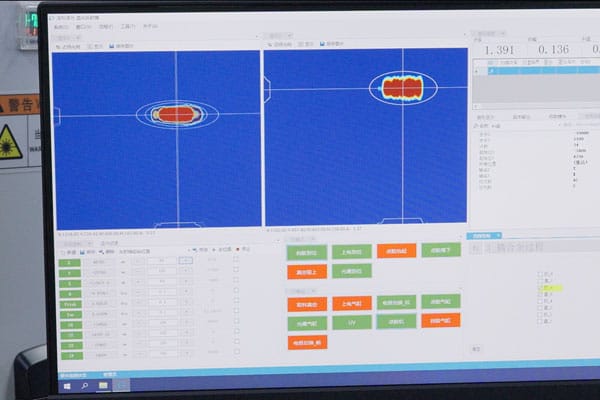
Modern DPSS (Diode-Pumped Solid-State) systems are now using 878.6 nm pump sources for Nd:YVO4, replacing the older 808 nm Nd:YAG approach. This shift reduces quantum losses, minimizes thermal lensing, and significantly improves beam quality5.
Impact on Efficiency
Higher conversion efficiency means less wasted energy and smaller cooling systems. For industries like semiconductor processing or micromachining, this translates directly into cost savings and higher throughput.
Consistency of Beam Profile
Beam quality is not only about power. Consistent, uniform beams are essential in precision tasks, such as laser lithography or medical surgery, where uneven power distribution can cause defects or damage.
| Parameter | Older System (808nm Nd:YAG) | Newer System (878.6nm Nd:YVO4) |
|---|---|---|
| Quantum Loss | Higher | Lower |
| Thermal Lens Effect | Strong | Reduced |
| Beam Quality | Medium | High |
| Harmonic Efficiency | Limited | Improved |
Is Reliability and Risk Mitigation Becoming the Top Priority?
In industries like aerospace and automotive, stability is more valuable than raw power.
Users demand solid-state lasers with high reliability, long lifespan, and consistent performance under 24/7 operation.
Industrial Demands
When a laser system goes down, the entire production line may stop. This is why reliability tests — shock, vibration, thermal cycling — are now a standard part of quality assurance.
Long-Term Operation
Manufacturers now expect solid-state lasers to run continuously for thousands of hours without significant performance loss. Pump sources with locked wavelengths and narrow spectra are critical for this reliability.
Cost and Lifecycle Benefits
A reliable system reduces not only downtime but also maintenance costs. For many companies, long-term stability is as important as upfront cost.
| Reliability Factor | Benefit |
|---|---|
| Shock/Vibration Testing | Operation in harsh environments |
| Narrow-Spectrum Pumping | Stable wavelength output |
| Long Lifespan | Reduced replacement costs |
| Low Failure Rate | Consistent production quality |
How Does Global Competition Shape Solid-State Laser Development?
Solid-state laser development is no longer local — it is shaped by global competition and supply chain needs.
**China, Europe, and the U.S. are competing for leadership in high-power, high-precision laser technologies
Global Market Dynamics
U.S. companies like Nlight, Coherent, Lumentum, and IPG Photonics dominate the pump source market. Coherent and Lumentum mostly use their technology internally, while Nlight has kept a strong grip on external supply.
China’s Breakthroughs
Domestic players like Shenzhen Vivlaser, Inno Laser, Han’s Laser, and others are rapidly catching up. Shenzhen Vivlaser is one of the earliest to develop 878.6 nm locked-wavelength semiconductor lasers6, achieving stability on par with Nlight. Many Chinese laser manufacturers rely on Vivlaser’s pump sources, including JPT, HYMSON, RFH LASER, SUNINE LASER, GRACE LASER, YSL LASER, and HANS LASER.
To highlight the progress, the following table compares the 120W 878.6nm locked-wavelength modules7 from different suppliers:
Technical Comparison: 120W 878.6nm Locked-Wavelength Modules7**
| Parameter | Vivlaser | Everbright | Nlight |
|---|---|---|---|
| Output Power (W) | 120 | 120 | 120 |
| Center Wavelength (nm) | 878.6 ± 0.5 | 878.6 ± 0.5 | 878.6 ± 1 |
| Spectral Width (nm) | ≤ 0.5 | ≤ 1 | ≤ 1 |
| Operating Current (A) | ≤ 11.5 | ≤ 14 | ≤ 14.5 |
| Operating Voltage (V) | ≤ 24 | ≤ 20 | ≤ 21.5 |
| Locking Current Range (A) | Full current locking | 8 – 14 | 9 – 16 |
| Fiber Core Diameter (µm) | 200 / 400 optional | 200 / 400 optional | 200 |
| Numerical Aperture (NA) | 0.22 | 0.22 | 0.22 |
| Operating Temperature (°C) | 20 – 30 | 0 – 35 | 20 – 30 |
📌 Key Takeaway: Vivlaser stands out with narrower spectral width (≤0.5nm) and full-current locking capability, ensuring higher stability and flexibility. It also offers multiple fiber core options (200/400µm), providing more adaptability compared to Nlight’s single-spec configuration.
The Path Forward
With global demand rising, Chinese manufacturers are focusing on international certifications, larger production capacity, and collaboration with global OEMs. This shift will help break monopolies and create a more balanced market.
| Region | Key Players | Status |
|---|---|---|
| USA | Nlight, IPG, Coherent, Lumentum | Technology leaders, export limits |
| China | Vivlaser, Han’s Laser, Inno Laser | Fast-growing, closing the gap |
| Europe | Trumpf, Jenoptik | Strong in industrial lasers |
Conclusion
Solid-state lasers and their pump sources are advancing toward diversification, higher efficiency, broader material use, stronger reliability, and global competitiveness.
References
- Explore this link to understand the cutting-edge developments in solid-state lasers and their applications across various industries. ↩ ↩ ↩ ↩
- Discover how Industry 4.0 is revolutionizing laser technology, enhancing efficiency and innovation in manufacturing. ↩
- Learn about pump sources and their crucial role in enhancing laser performance and material processing capabilities. ↩
- Understanding the significance of shorter wavelengths can enhance your knowledge of laser performance and applications. ↩
- Exploring beam quality will provide insights into its critical role in precision applications and overall laser efficiency. ↩
- Explore the benefits of 878.6 nm lasers, including their stability and applications in various industries. ↩
- Discover detailed comparisons of 120W modules to understand performance differences and make informed choices. ↩ ↩