The welding industry is evolving fast. Choosing the right handheld laser welding solution can save cost, improve quality, and boost productivity.
Fiber laser handheld welding offers deeper penetration and lower cost, while diode laser welding delivers smoother, splash-free seams ideal for thin materials.
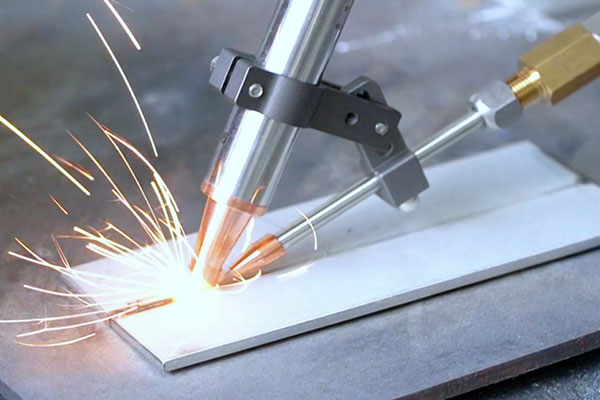
The handheld laser welding market is booming. From metal cabinets to precision electronics, manufacturers are switching from traditional MIG/TIG welding to laser-based tools. Fast processing, low deformation, and easy operation make handheld laser welding the hottest trend in metal fabrication.
While both technologies are valuable, understanding their differences helps manufacturers select the right solution for their specific application.
Which One Offers Better Welding Quality and Depth?
Laser welding is all about control—depth, consistency, and smoothness. But not all laser types perform equally.
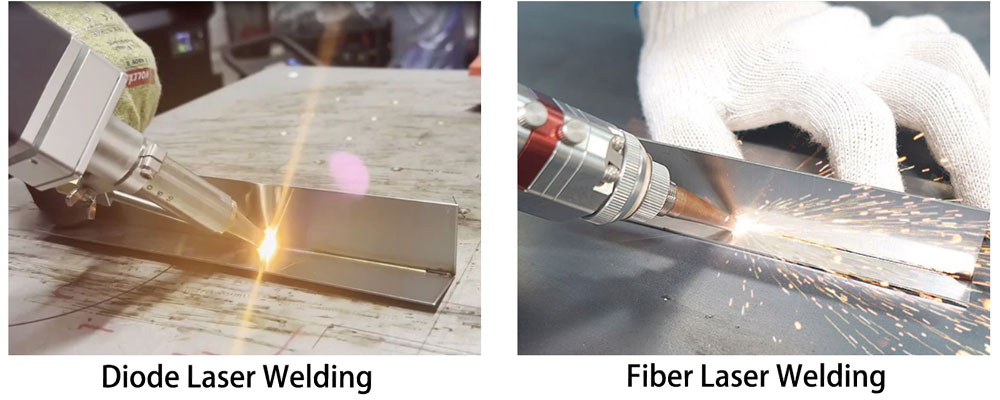
Fiber lasers offer higher energy density and better penetration depth, while diode lasers produce cleaner, smoother welds with almost zero spatter.
Penetration Depth vs Surface Finish
Fiber laser handheld welders can penetrate materials 3mm or thicker. Their high beam quality and energy density allow deep welds in metals like stainless steel and carbon steel.
Diode laser welders, on the other hand, are more surface-oriented. Their penetration depth is typically limited to under 2mm. But they shine in creating ultra-smooth, highly aesthetic weld seams without spatter.
| Feature | Fiber Laser | Diode Laser |
|---|---|---|
| Penetration Depth | Up to 3mm or more | <2mm |
| Weld Seam Appearance | May need post-processing | No spatter, clean finish |
| Heat Affected Zone | Moderate | Very Low |
Application Examples
- Fiber laser: Structural parts, thick plates, automotive components
- Diode laser: Thin sheet metal, medical enclosures, home appliances
What About Operation Safety and User Experience?
Beyond welding performance, usability and safety also matter. Different systems mean different operator experiences.
Fiber laser systems are typically more established and come with mature safety features, while diode systems are lighter and produce less reflected light.
Safety & Ergonomics
Fiber laser welders can reach high power levels (1000W+), which means stricter safety protocols, including laser goggles and enclosed work areas.
Diode laser welders, with lower power and smaller spot size, reduce reflected laser risks and often feel safer for novice users. They are also more compact and lighter.
| Aspect | Fiber Laser | Diode Laser |
|---|---|---|
| System Size | Larger | More Compact |
| Safety Measures | High (Class 4 laser) | Moderate |
| Ease of Use | Established Interfaces | Simpler UI |
Operator Feedback
Users in light manufacturing or electronics sectors often prefer the diode laser’s quiet operation and lighter feel. Fabricators handling thicker materials lean toward fiber laser systems.
How Do the Costs Compare in Real-World Applications?
Initial impressions may suggest diode lasers are cheaper, but mass production has changed the picture.
Today, fiber laser handheld welders are often lower in cost due to economies of scale, while diode laser systems provide value in specific thin-welding use cases.
Historical Cost Shift
Diode laser systems were initially seen as cost-effective. However, fiber laser welding systems rapidly gained market share, triggering massive volume production, which lowered component and integration costs.
| Cost Factor | Fiber Laser | Diode Laser |
|---|---|---|
| Initial Equipment | Lower (mass production) | Slightly Higher |
| Maintenance | Low | Very Low |
| Total Ownership | Competitive | Competitive |
ROI by Application
- Fiber laser: Better ROI for multi-purpose, medium-to-heavy-duty fabrication shops.
- Diode laser: Strong ROI for niche sectors requiring fine detail, aesthetics, or low heat input.
Which One Is More Scalable for Industrial Production?
Scalability is crucial when considering technology for long-term investment.
Fiber laser welding has been widely adopted in heavy industries, while diode laser welding holds unique advantages in precision manufacturing.
Volume and Automation
Fiber laser systems can be integrated into robotic arms and CNC systems. They are commonly seen in auto manufacturing, steel processing, and heavy machinery welding lines.
Diode laser systems, due to lower power and precise control, are better suited to compact automation systems or manual stations where operator finesse is required.
| Industrial Fit | Fiber Laser | Diode Laser |
|---|---|---|
| Automation Readiness | High | Medium |
| Integration Options | Wide Range | Niche Systems |
| Maintenance Requirements | Moderate | Very Low |
Conclusion
Fiber lasers go deeper; diode lasers go smoother. The best choice depends on your thickness needs, aesthetic demands, and production setup.