Design once followed form. Now, it’s chasing function—with lasers leading the way.
The 3D-printed cold plate by PUNTO ZERO for Milan Polytechnic’s Formula SAE team proves it: performance-first design reshapes the rules, and lasers are behind it all.
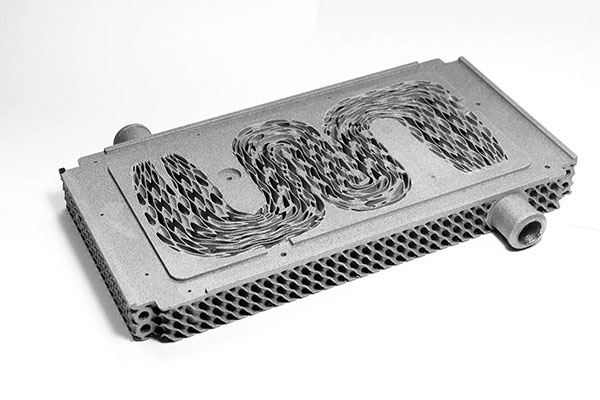
This is not just a student project. It’s a live demonstration of how next-gen cooling, 3D printing, and high-performance design converge—powered by laser-based additive manufacturing.
What Makes This 3D-Printed Cold Plate So Revolutionary?
Traditional cooling systems are bulky, inefficient, and limited by machining tools.
This 3D-printed aluminum plate1 used dual lattice structures—biomimetic for fluid control and geometric for structural strength—cutting weight and tripling the cooling surface area.

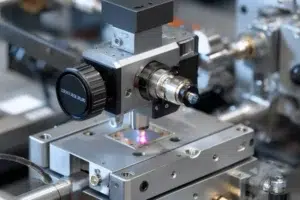
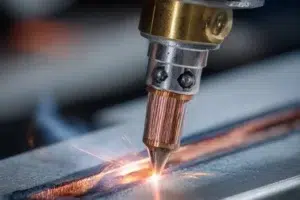
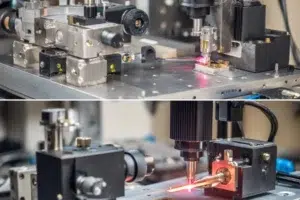
What unlocked these complex internal geometries? Laser Powder Bed Fusion2 (LPBF)—a metal 3D printing technique that relies on high-power, precision-controlled lasers to melt aluminum layer by layer with micron-level accuracy.
How Lasers Made This Design Possible
| Feature | Traditional Machining | Laser Additive Manufacturing |
|---|---|---|
| Internal Channels | Limited to drilling/milling | Fully 3D customizable |
| Surface Area Control | Minimal | Maximized via lattice geometry |
| Cooling Optimization | Passive | Flow-guided, simulation-driven |
| Weight Reduction | Subtractive compromise | Structural integration |
| Prototyping Speed | Weeks | Days |
This project is a glimpse of the future. And that future depends on reliable high-power laser systems—the kind Vivlaser specializes in.
Why High-Power Lasers Are Key to Metal 3D Printing?
Laser-based additive manufacturing is only as good as its laser source.
Processes like laser cladding3, direct energy deposition (DED), and LPBF demand stable, powerful, and tunable laser beams to achieve material integrity, precision, and repeatability.
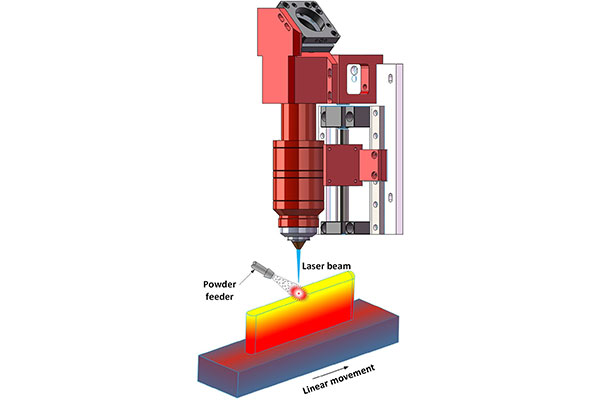
At Vivlaser, we design high-power semiconductor laser systems4 specifically for industrial applications like these. Our fiber-coupled diode lasers and pump sources deliver:
- Power up to 3000W with excellent beam quality
- Precise wavelength control (e.g., 878.6nm for solid-state laser pumping)
- Consistent optical output over long operating cycles
- Compact integration for additive manufacturing platforms
Laser Specs That Enable Functional Manufacturing
| Parameter | Vivlaser High-Power Lasers |
|---|---|
| Output Power | 600W–3000W |
| Wavelength Options | 8XXnm / 9XXnm / Custom |
| Fiber Core Diameter | 105µm / 200µm / 400µm |
| Numerical Aperture (NA) | 0.22 |
| Cooling Solutions | Custom cold plates & active systems |
| Integration Support | OEM-ready modules, simulation assistance |
Whether it’s melting titanium powder or fusing pure aluminum into lattices, our lasers provide the thermal precision that engineers need to break traditional design limits.
Why Function-Driven Design Demands Function-Driven Lasers
In the past, design started with what machines could build. Now, it begins with what performance demands—and asks machines to catch up.
With lasers, geometry is no longer constrained. Engineers can embed function into form—like fluid control, thermal gradients, or weight distribution—at the microscopic level.
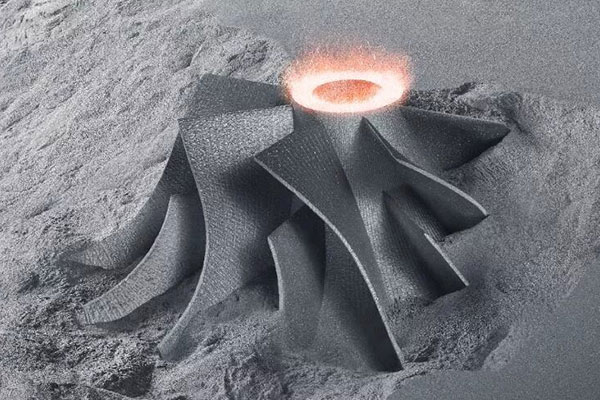
This shift isn’t limited to racing teams or universities. Across aerospace, medical, energy, and electronics sectors, companies are rethinking parts not as objects, but as systems—with shape, flow, and strength designed in from the start.
That’s why we build lasers that empower:
- Complex heat exchangers with internal channels
- Lightweight structural frames with variable-density cores
- Wear-resistant cladding on custom parts
- Precision joints and hybrid assemblies
Every watt from our lasers enables someone to print not just a part—but a performance solution.
Conclusion
From student racecars to global industries, design is being redefined by function—and function is powered by lasers.
-
Explore how 3D-printed aluminum plates can revolutionize cooling systems with their efficiency and design flexibility. ↩
-
Learn about the innovative process of Laser Powder Bed Fusion and its impact on manufacturing precision and design. ↩
-
Discover the benefits of laser cladding in additive manufacturing and how it improves material properties. ↩
-
Explore this link to understand how high-power semiconductor lasers enhance precision and efficiency in 3D printing. ↩