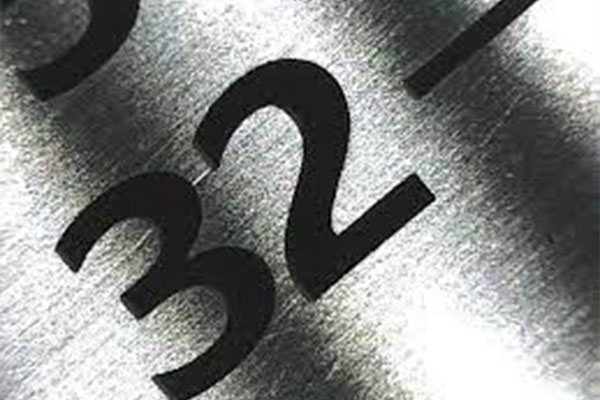
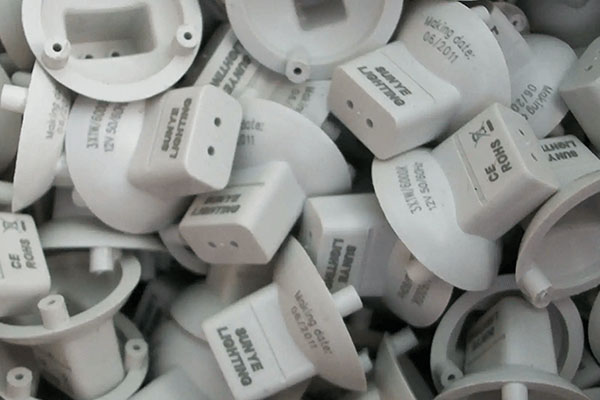
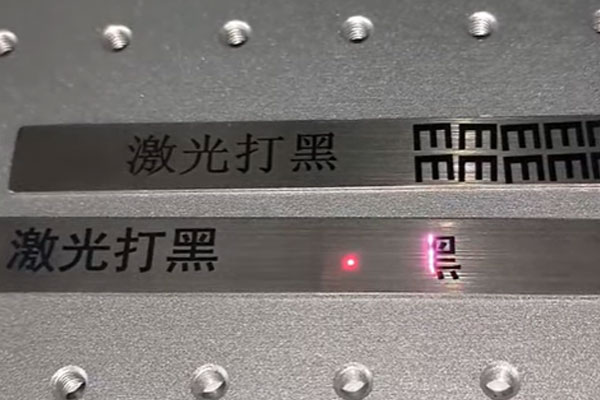
<p>Many manufacturers struggle to achieve high-contrast, permanent marks on delicate materials.</p> <p><strong>Laser black marking creates deep black marks without damaging surfaces. It’s clean, durable, and ideal for high-precision applications.</strong></p> <p><img src="https://vivlasers.com/wp-content/uploads/2025/10/laser-black-marking.jpg" alt="laser black marking" /></p> <p>Laser black marking has become the go-to method in industries needing fine, high-contrast, and permanent markings. But how exactly does it work? And which materials and lasers perform best for it? Read on to discover how you can master this advanced marking technique.</p> <h2>What Exactly Is Laser Black Marking?</h2> <p>Many traditional marking techniques fade over time or require harsh chemicals.</p> <p><strong><a href="https://vivlasers.com/desktop-engraving-laser-guide/">Laser black marking</a><sup id="fnref1:1"><a href="#fn:1" class="footnote-ref">1</a></sup> is a process that creates deep, high-contrast black marks using precise laser-induced oxidation or nanostructuring on material surfaces.</strong></p> <h3>How the Black Appears</h3> <p>There are two major scientific effects behind black marking:</p> <table> <thead> <tr> <th>Mechanism</th> <th>Description</th> </tr> </thead> <tbody> <tr> <td><a href="https://en.wikipedia.org/wiki/Nd:YAG_laser">Surface Oxidation</a><sup id="fnref1:2"><a href="#fn:2" class="footnote-ref">2</a></sup></td> <td>Controlled heating forms an oxide layer that absorbs light, appearing black</td> </tr> <tr> <td>Nanostructures</td> <td>Fine structures scatter light, making the surface look pitch black</td> </tr> <tr> <td>Interference</td> <td>Precise layer thickness causes destructive interference of reflected light</td> </tr> </tbody> </table> <p>Unlike ablative engraving, black marking doesn’t remove material. Instead, it alters the surface’s optical properties, producing visually striking results with no physical damage.</p> <h2>How Does Laser Black Marking Work on Different Materials?</h2> <p>Different materials react differently to laser energy, requiring tailored techniques.</p> <p><strong>On metals, <a href="https://vivlasers.com/desktop-engraving-laser-guide/">black marking</a><sup id="fnref1:3"><a href="#fn:3" class="footnote-ref">3</a></sup> is driven by oxide formation or interference layers. On plastics, it involves <a href="https://en.wikipedia.org/wiki/Graphite">carbonization</a><sup id="fnref1:4"><a href="#fn:4" class="footnote-ref">4</a></sup> or interaction with additives.</strong></p> <p><img src="https://vivlasers.com/wp-content/uploads/2025/11/laser-black-marking-1.jpg" alt="laser black marking[^3] on plastic" /></p> <h3>Material-Specific Mechanisms</h3> <h4>🟦 Metals</h4> <p>On stainless steel and titanium, <a href="https://vivlasers.com/desktop-engraving-laser-guide/">black marking</a><sup id="fnref2:3"><a href="#fn:3" class="footnote-ref">3</a></sup> often uses:</p> <ul> <li><strong>Localized oxidation</strong> to build thin oxide layers</li> <li><strong>Nanostructuring</strong> for light-trapping effects</li> <li><strong>Interference effects</strong> from fine oxide thickness control</li> </ul> <p>This requires precise pulse control to prevent overheating or damaging the surface.</p> <h4>🟨 Plastics</h4> <p>Plastic marking typically uses:</p> <ul> <li><strong>Carbonization</strong>: high heat decomposes polymer chains into carbon</li> <li><strong>Laser-reactive additives</strong>: these absorb laser energy and darken on reaction</li> </ul> <p>Laser type and parameters must match the polymer’s optical absorption window.</p> <h2>Which Types of Lasers Are Used for Black Marking?</h2> <p>Not all lasers are created equal when it comes to precise black marks.</p> <p><strong><a href="https://www.lasitlaser.com/mopa-laser-vs-fibra/">MOPA fiber lasers</a><sup id="fnref1:5"><a href="#fn:5" class="footnote-ref">5</a></sup> dominate for black marking due to fine control. Picosecond and femtosecond lasers offer higher precision. Diode lasers are entry-level options.</strong></p> <h3>Laser Type Comparison</h3> <table> <thead> <tr> <th>Laser Type</th> <th>Pros</th> <th>Cons</th> </tr> </thead> <tbody> <tr> <td>MOPA Fiber Laser</td> <td>Best for contrast control, flexible pulse tuning</td> <td>Higher cost than basic lasers</td> </tr> <tr> <td>Picosecond/Femtosecond</td> <td>Ultra-high precision, minimal heat damage</td> <td>Expensive, complex to operate</td> </tr> <tr> <td>Diode Laser</td> <td>Cost-effective, compact</td> <td>Limited precision, less contrast</td> </tr> </tbody> </table> <p>For most industrial marking, <a href="https://www.lasitlaser.com/mopa-laser-vs-fibra/">MOPA fiber lasers</a><sup id="fnref2:5"><a href="#fn:5" class="footnote-ref">5</a></sup> strike the best balance between cost, control, and quality.</p> <h2>Key Advantages of Laser Black Marking</h2> <p>Chemical inks or engraving often come with hidden costs.</p> <p><strong><a href="https://en.wikipedia.org/wiki/Laser_engraving">Laser black marking</a><sup id="fnref1:6"><a href="#fn:6" class="footnote-ref">6</a></sup> offers durable, high-contrast, and eco-friendly markings—with no consumables or pollution.</strong></p> <p><img src="https://vivlasers.com/wp-content/uploads/2025/10/laser-dark-marking.jpg" alt="laser dark marking" /></p> <h3>Why Choose Laser Black Marking?</h3> <table> <thead> <tr> <th>Feature</th> <th>Benefit</th> </tr> </thead> <tbody> <tr> <td>No Consumables</td> <td>Reduces operating cost and maintenance</td> </tr> <tr> <td>Wear & Corrosion Proof</td> <td>Ideal for harsh environments</td> </tr> <tr> <td>High Readability</td> <td>Perfect for machine vision and scanning</td> </tr> <tr> <td>Environmentally Friendly</td> <td>No chemicals, fumes, or waste</td> </tr> </tbody> </table> <p>The process is not only efficient but also aligns with green manufacturing trends.</p> <h2>Common Applications Across Industries</h2> <p>Marking requirements vary across industries—but black marking fits many.</p> <p><strong>Laser black marking is used for medical devices, electronics logos, automotive interiors, and more.</strong></p> <h3>Industry Examples</h3> <h4>🏥 Medical</h4> <ul> <li>Deep black QR codes on surgical tools</li> <li>UDI (Unique Device Identification) on implants</li> </ul> <h4>📱 Consumer Electronics</h4> <ul> <li>Brand logos on aluminum or stainless casings</li> <li>Serial numbers on internal components</li> </ul> <h4>🏭 Industrial Parts</h4> <ul> <li>Nameplates and part numbers</li> <li>Corrosion-resistant tags for outdoor use</li> </ul> <h4>🚗 Automotive</h4> <ul> <li>Plastic button icons</li> <li>Decorative trims with permanent labels</li> </ul> <p>These industries benefit from the high durability and traceability of black marks.</p> <h2>How to Optimize Your Process for Perfect Black Marks</h2> <p>Even the best laser won’t perform without correct settings.</p> <p><strong>To get flawless black marks, fine-tune pulse width, frequency, power, scan speed, focus, and atmosphere.</strong></p> <h3>Parameter Tuning Guide</h3> <table> <thead> <tr> <th>Parameter</th> <th>Role in Marking</th> <th>Optimization Tip</th> </tr> </thead> <tbody> <tr> <td>Pulse Width</td> <td>Controls heat duration</td> <td>Use short pulses for surface-only effects</td> </tr> <tr> <td>Frequency</td> <td>Impacts energy deposition rate</td> <td>Higher frequency smooths mark uniformity</td> </tr> <tr> <td>Power</td> <td>Affects oxide layer thickness</td> <td>Moderate power prevents burn-through</td> </tr> <tr> <td>Scan Speed</td> <td>Controls exposure time</td> <td>Too fast: light marks, Too slow: thermal damage</td> </tr> <tr> <td>Focus Distance</td> <td>Impacts energy density</td> <td>Focused beams yield sharper details</td> </tr> <tr> <td>Shield Gas</td> <td>Prevents oxidation or enhances it</td> <td>Nitrogen for oxide-free, air for oxide-rich marks</td> </tr> </tbody> </table> <p>Experimental tuning is key. A slight change can mean perfect results—or irreversible surface damage.</p> <h2>Conclusion: The Future of High-Contrast Laser Marking</h2> <p>Laser black marking is moving toward ultra-precision, color interference marking, and programmable surface textures—pushing visual identity to the next level.</p> <hr /> <div class="footnotes"> <hr /> <ol> <li id="fn:1"> <p>Explore this link to understand the innovative process of laser black marking and its advantages over traditional methods. <a href="#fnref1:1" rev="footnote" class="footnote-backref">↩</a></p> </li> <li id="fn:2"> <p>Learn about surface oxidation to grasp how it contributes to the effectiveness of laser black marking. <a href="#fnref1:2" rev="footnote" class="footnote-backref">↩</a></p> </li> <li id="fn:3"> <p>Explore this link to understand the principles and applications of laser black marking, enhancing your knowledge on this innovative technology. <a href="#fnref1:3" rev="footnote" class="footnote-backref">↩</a> <a href="#fnref2:3" rev="footnote" class="footnote-backref">↩</a></p> </li> <li id="fn:4"> <p>Discover the process of carbonization in laser marking, which is crucial for achieving high-quality results on plastic materials. <a href="#fnref1:4" rev="footnote" class="footnote-backref">↩</a></p> </li> <li id="fn:5"> <p>Explore the advantages of MOPA fiber lasers, which offer superior control and quality for black marking applications. <a href="#fnref1:5" rev="footnote" class="footnote-backref">↩</a> <a href="#fnref2:5" rev="footnote" class="footnote-backref">↩</a></p> </li> <li id="fn:6"> <p>Discover why laser black marking is eco-friendly and cost-effective, making it a superior choice for industrial applications. <a href="#fnref1:6" rev="footnote" class="footnote-backref">↩</a></p> </li> </ol> </div>