Laser-based hair removal systems have become one of the most widely adopted technologies in aesthetic medicine and consumer beauty electronics. Professional dermatology platforms and an increasing number of advanced home-use devices rely on semiconductor diode lasers as their primary energy source.
Among the various wavelengths used in aesthetic laser systems, 808 nm diode lasers have emerged as the dominant choice for hair removal devices.
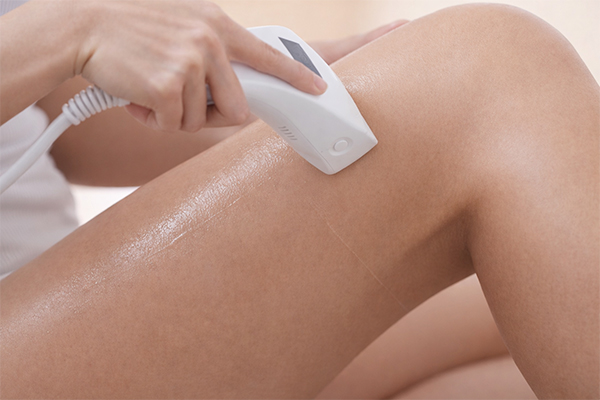
But why has this particular wavelength become the industry standard?
The answer lies in a combination of tissue absorption physics, penetration depth, and system engineering considerations.
The Role of Melanin in Laser Hair Removal
Laser hair removal works through a mechanism known as selective photothermal interaction1.
The goal of the treatment is to selectively heat the hair follicle without damaging surrounding tissue. This is achieved by targeting melanin, the pigment responsible for hair color.
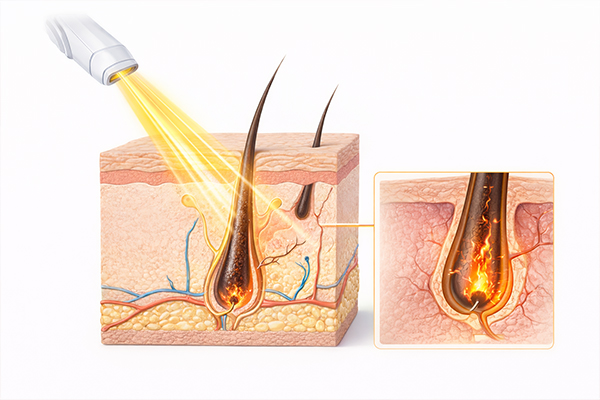
When light energy reaches the follicle:
-
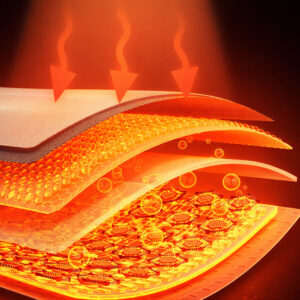
Heat accumulates within follicular structures
-
Thermal damage disrupts the hair growth cycle
For effective follicle destruction, temperatures typically need to reach approximately 60–70°C.
Achieving this requires selecting a wavelength that balances melanin absorption and skin penetration.
Wavelength Selection in Hair Removal Systems
Several wavelengths have historically been used for hair removal devices.
| Wavelength | Laser Type | Characteristics |
|---|---|---|
| 755 nm | Alexandrite3 | Strong melanin absorption |
| 808 nm4 | Diode laser | Balanced absorption & penetration |
| 1064 nm | Nd:YAG | Deeper penetration, lower melanin absorption |
Each wavelength interacts differently with skin tissue.
Shorter wavelengths are absorbed more strongly by melanin but penetrate less deeply, while longer wavelengths penetrate deeper but transfer less energy to pigment structures.
The 808 nm region provides an optimal compromise between these two factors.
Why 808nm Offers a Balanced Optical Profile
Melanin absorption gradually decreases as wavelength increases. However, longer wavelengths also experience reduced scattering in skin tissue, enabling deeper penetration.
At approximately 808 nm, several favorable conditions occur simultaneously:
-
Sufficient melanin absorption for effective follicle heating
-
Adequate penetration depth to reach follicles located several millimeters beneath the skin surface
-
Reduced epidermal overheating compared with shorter wavelengths
This balance makes 808 nm particularly suitable for hair removal across a wide range of skin types.
Thermal Efficiency and Energy Delivery
Another advantage of 808 nm diode lasers4 lies in energy delivery efficiency.
Unlike IPL systems5 that distribute energy across a wide spectral range, diode lasers emit light at a single, precisely controlled wavelength.
This concentrated energy allows:
-
higher optical efficiency
-
more predictable thermal interaction
-
improved energy utilization within the target structure
As a result, diode laser systems often achieve stronger follicle heating with lower total energy compared with broadband light sources.
Engineering Advantages of Diode Laser Architectures
From a system design perspective, semiconductor diode lasers6 offer several advantages over alternative technologies.
Compact System Integration
Diode laser modules can be integrated into relatively compact platforms compared with traditional solid-state laser systems.
This makes them suitable for:
-
dermatology equipment
-
portable aesthetic platforms
-
advanced handheld devices
High Electrical-to-Optical Efficiency
Semiconductor lasers convert electrical power into optical output with relatively high efficiency.
Higher efficiency reduces thermal load and improves system stability.
Scalable Output Power
Diode laser architectures allow flexible power scaling through multi-emitter configurations or fiber-coupled modules.
This flexibility enables manufacturers to design systems ranging from compact consumer devices to high-power clinical platforms.
The Role of Semiconductor Laser Technology
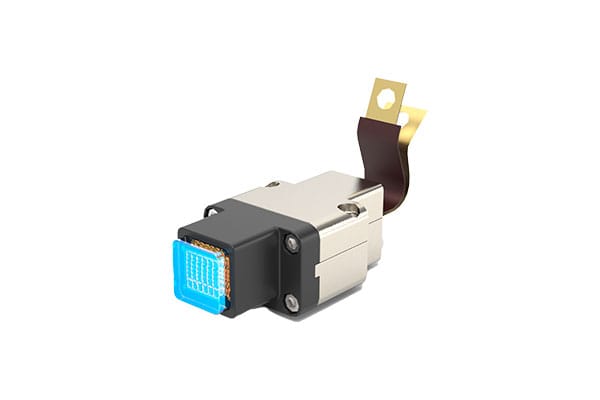
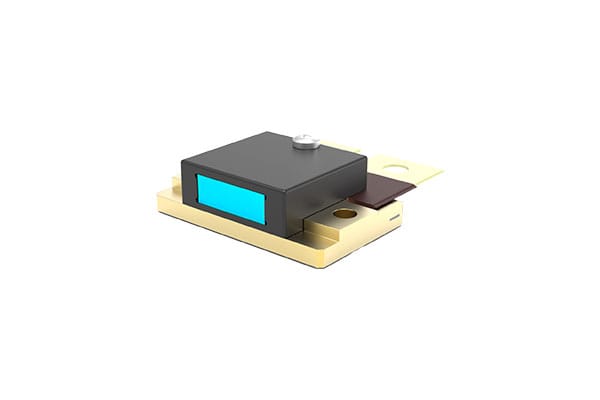
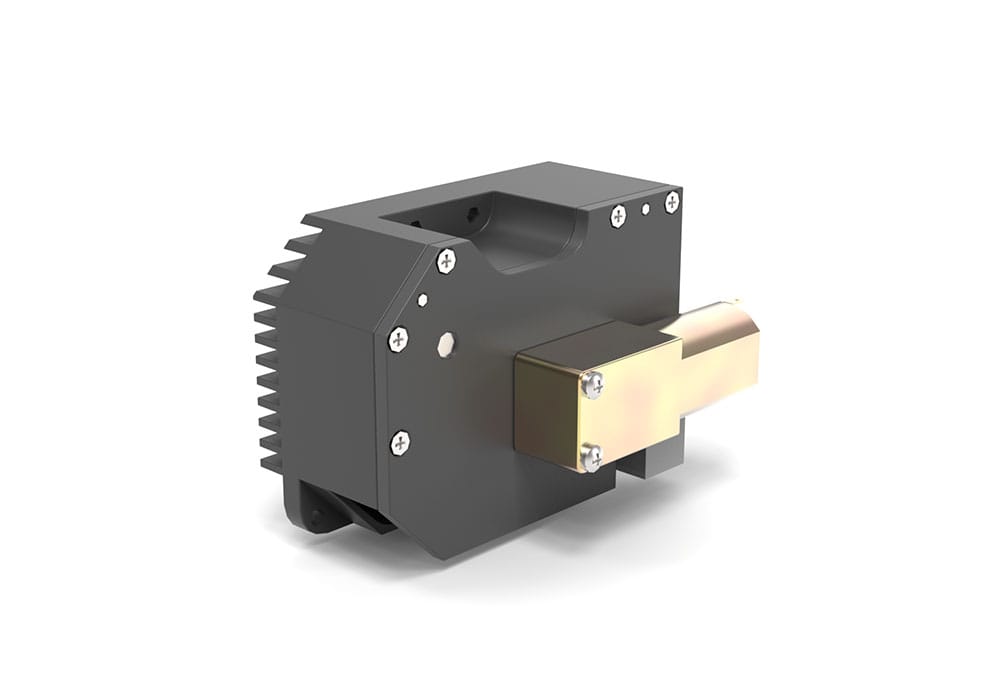
Advances in semiconductor laser packaging and thermal management have further strengthened the position of diode lasers in aesthetic systems.
Modern laser modules offer:
-
improved thermal stability
-
higher output efficiency
-
reduced footprint
-
longer operational lifetime
These developments make it increasingly feasible to integrate true diode laser sources into compact hair removal devices1.
Companies specializing in semiconductor laser technologies, such as Vivlaser, contribute to this ecosystem by providing compact diode laser modules designed for integration into modern aesthetic platforms.
My insight
In the hair removal industry, the real challenge is not choosing a wavelength—it’s achieving safe, stable, and efficient energy delivery across different skin types.
808 nm became dominant because it offers the most practical balance: strong enough melanin absorption to effectively damage follicles, while penetrating deep enough to reduce epidermal overheating risks.
But experienced manufacturers know the bigger issue lies elsewhere: laser source reliability. Many devices fail due to power decay, poor thermal management, or unstable diode arrays.
That’s why in modern hair removal systems, the quality of the 808 nm diode laser module—not just the wavelength—ultimately determines device performance and lifespan.
-
Understand the scientific principle behind laser targeting ↩ ↩
-
Learn how pigment determines laser response ↩
-
Learn why 755 nm suits lighter skin types ↩
-
Discover the technical specifications of Vivlaser’s 808nm laser modules ↩ ↩
-
Compare broadband light and laser technology ↩
-
Understand core laser engineering principles ↩