Portable aesthetic devices have become one of the fastest-growing segments in the beauty technology market. From handheld hair removal tools to compact skin treatment devices, manufacturers are increasingly focusing on portable platforms that combine effectiveness with ease of use.
Compact diode laser modules make it possible to integrate true laser energy into portable aesthetic devices. Their small size, lightweight structure, and stable optical output allow handheld systems to deliver professional-grade treatments while maintaining compact device designs.

Portable beauty technology is evolving quickly. Devices such as handheld hair removal tools and compact skin rejuvenation systems are gaining popularity in both professional and home-use markets.
One important driver behind this trend is the progress in semiconductor laser technology. Modern diode laser modules can now deliver stable output power while maintaining compact packaging, making them suitable for portable aesthetic device architectures.
Why Compact Laser Modules Matter
Handheld aesthetic devices operate under strict design constraints. Unlike large clinical systems, portable devices must accommodate all system components within a limited enclosure.
Compact laser modules are essential because they allow manufacturers to integrate high-performance laser sources into small handheld devices1 without requiring bulky optics or large cooling systems.
Portable aesthetic devices typically integrate several critical components.
| System Component | Role in the Device |
|---|---|
| Laser source | Generates treatment energy |
| Optical system | Shapes and distributes the beam |
| Cooling system | Maintains stable operating temperature |
| Driver electronics | Controls laser operation |
| Power supply | Supports portable operation |
Traditional laser platforms were often designed for large medical equipment. These systems relied on large optical assemblies and heavy cooling structures.
Such designs are difficult to integrate into compact consumer or handheld devices.
Miniaturized semiconductor laser modules2 solve this limitation by reducing the footprint of the laser source while maintaining stable optical performance.
Compact modules often integrate optics, packaging, and thermal structures into a single unit. This simplifies engineering work and shortens device development cycles.
For companies developing aesthetic devices, faster product development and simpler integration are major advantages.
Advantages of Semiconductor Diode Laser Architecture
Semiconductor diode lasers provide several advantages that make them well suited for portable aesthetic systems.
Their compact packaging, high electrical efficiency, and flexible power configuration make diode lasers ideal for handheld medical and beauty devices3.
Compact Form Factor
Semiconductor diode lasers are naturally small devices. The laser chip itself occupies very little space compared with traditional laser technologies.
Modern packaging technologies allow diode chips to be integrated into compact laser modules that include optical lenses, beam shaping elements, and electrical interfaces.
This compact structure allows device manufacturers to design smaller aesthetic systems while maintaining effective treatment performance.
High Electrical-to-Optical Efficiency
Efficiency is particularly important for portable devices4.
Handheld aesthetic systems often rely on battery power. If the laser source consumes excessive electrical energy, device operating time becomes limited.
Semiconductor diode lasers convert electrical energy into optical energy with relatively high efficiency.
| Laser Type | Relative Efficiency |
|---|---|
| Lamp-pumped lasers | Low |
| Solid-state lasers | Moderate |
| Semiconductor diode lasers | High |
Higher efficiency reduces heat generation and improves overall device reliability.
Scalable Output Power
Diode laser modules can be configured in different ways depending on application requirements.
Manufacturers can combine multiple emitters or adjust optical coupling methods 5to scale output power.
| Application | Typical Requirement |
|---|---|
| Home-use hair removal devices | Moderate power |
| Professional dermatology systems | Higher power |
| Skin rejuvenation devices | Controlled fractional energy |
This modular flexibility allows manufacturers to design multiple device models based on similar laser technology platforms.
Thermal Performance in Compact Devices
Thermal management remains one of the most important considerations when integrating laser sources6 into handheld platforms.
Compact diode laser modules include optimized thermal pathways 7that help maintain stable performance even in small device structures.
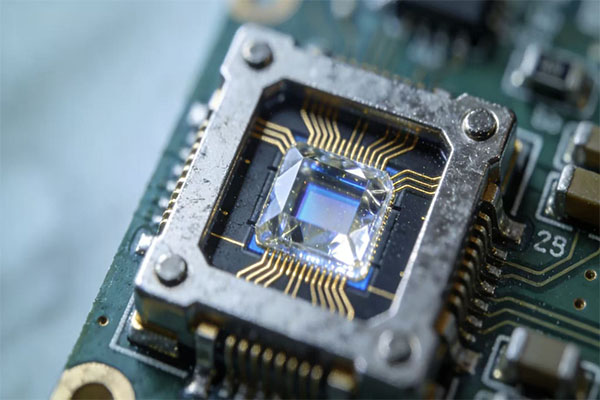
Laser diodes generate heat during operation. If heat is not properly managed, performance can degrade.
| Thermal Issue | Impact |
|---|---|
| Junction temperature rise | Reduced optical output |
| Thermal drift | Wavelength instability |
| Excess heat | Reduced device lifespan |
Portable aesthetic devices cannot rely on large cooling assemblies.
Modern diode laser modules therefore incorporate optimized thermal structures such as high-conductivity substrates and efficient heat transfer pathways.
Stable thermal management helps maintain consistent output power and improves device reliability during long-term operation.
Optical Integration Considerations
In addition to size and thermal performance, optical compatibility is an important factor when selecting a laser module for portable aesthetic devices.
Engineers evaluate beam characteristics and energy distribution to ensure effective delivery of optical energy to the treatment area.
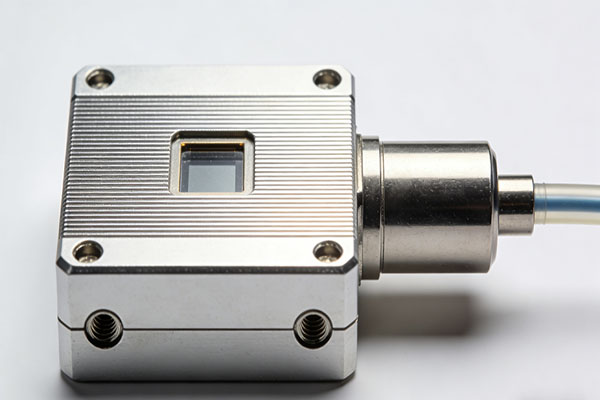
Key optical parameters include:
| Optical Parameter | Importance |
|---|---|
| Beam divergence | Determines beam spread |
| Coupling efficiency | Influences energy transmission |
| Beam shaping compatibility | Enables uniform treatment areas |
| Energy distribution | Ensures consistent skin exposure |
Additional optical elements such as lenses, diffusers, or scanning systems may be integrated into the device.
Proper optical design ensures uniform energy delivery across the treatment surface and improves treatment consistency.
Compact Diode Laser Modules from Vivlaser
Compact semiconductor laser modules designed for aesthetic applications help device manufacturers simplify system integration while maintaining reliable laser performance.
Vivlaser provides several compact diode laser modules optimized for portable aesthetic platforms. These modules feature small footprints, lightweight structures, and integrated optics, making them suitable for handheld beauty devices.
SQ-6-6-1470 Diode Laser Matrix Module
The SQ-6-6-1470 diode laser module is designed for aesthetic treatments such as laser hair removal and wrinkle reduction.
The module operates around a 1470 nm wavelength and generates a 6 × 6 laser spot matrix, enabling distributed energy delivery across the treatment area.
According to the product specification, the module provides 6 W peak output power and operates at a typical current of 24 A.
Optical Specifications
| Parameter | Specification |
|---|---|
| Center wavelength | 1460–1480 nm |
| Output peak power | 6 W |
| Spot matrix | 6 × 6 |
| Spectral width | 8–10 nm |
| Operating current | 24 A |
Mechanical & Integration Characteristics
| Feature | Description |
|---|---|
| Module footprint | Approx. 35 mm compact structure |
| Optical configuration | Integrated 6×6 matrix output |
| Electrical interface | Simple two-terminal connection |
| Integration | Suitable for handheld treatment heads |
The compact structure shown in the module drawing allows the laser source to be integrated directly into portable aesthetic device handpieces.
Key advantages include:
- compact module size
- lightweight structure
- uniform matrix energy distribution
- simplified integration for handheld devices
1460 nm Single-Point Scanning Fractional Laser Module
The 1460 nm single-point scanning fractional laser module is designed for wrinkle removal and skin rejuvenation treatments.
This module generates fractional laser patterns through a single-point scanning 8mechanism, producing a 1 × 12 micro-spot configuration across the treatment area.
The module provides an average output power of approximately 2.5 W, with a spot size of about 200 × 200 μm and a 500 ms scanning cycle.
Optical Specifications
| Parameter | Specification |
|---|---|
| Center wavelength | 1440–1480 nm |
| Average output power | 2.5 W |
| Spot configuration | 1 × 12 scanning |
| Spot size | 200 × 200 μm |
| Scanning cycle | 500 ms |
Mechanical & Integration Characteristics
| Feature | Description |
|---|---|
| Module footprint | Approx. 49 mm compact module |
| Integrated optics | Built-in scanning optical system |
| Thermal design | Integrated heat dissipation structure |
| Application | Portable fractional laser devices |
Because the module integrates the laser source, scanning optics, and cooling structures into one compact unit, it simplifies the design of handheld dermatology equipment.
Compact Fractional Laser Array Modules
Compact fractional laser array modules9 are another solution commonly used in aesthetic devices.
These modules generate multiple micro-beams that create fractional treatment patterns on the skin surface.
Compared with large dermatology platforms, compact array modules provide several advantages.
| Feature | Benefit |
|---|---|
| Compact optical assembly | Enables smaller treatment heads |
| Lightweight structure | Improves handheld ergonomics |
| Integrated laser source | Simplifies device architecture |
| Stable optical output | Ensures consistent treatment results |
Reducing module size and weight allows manufacturers to design lighter handheld devices, improved cooling structures, and more compact aesthetic systems.
Supporting the Evolution of Portable Laser Devices
Advances in semiconductor laser engineering have significantly reduced the size and power requirements of diode laser modules.
As a result, device manufacturers can integrate laser-based energy delivery into compact aesthetic systems that were previously limited to broadband light technologies.
Companies specializing in semiconductor laser development, such as Vivlaser, contribute to this evolution by providing compact diode laser modules optimized for integration into portable aesthetic platforms.
Insight
From our experience working with several well-known aesthetic device manufacturers, one consistent lesson stands out: the success of portable aesthetic devices depends heavily on how well the laser module is engineered for integration, not just on its raw output power. Many device developers initially focus on power specifications, but during real product development they quickly realize that thermal stability, optical uniformity, and module reliability in compact housings are the true challenges.
In collaborations with leading brands, we have seen that compact diode laser modules significantly simplify the development process when they are designed as integration-ready components. Modules that already incorporate beam shaping optics, stable thermal pathways, and simplified electrical interfaces allow device engineers to avoid complex optical alignment and reduce system-level risks. This becomes especially important for portable platforms where space for cooling, optics, and electronics is extremely limited.
Another key insight from these collaborations is that manufacturers increasingly prefer modular laser platforms that can support multiple device models. A well-designed compact diode laser module can often be adapted across different products—such as hair removal, skin rejuvenation, or fractional treatments—by adjusting optics or control parameters. For device brands competing in the fast-moving aesthetic market, this modular approach helps accelerate product iteration while maintaining consistent performance and quality across their product lines.
-
Understand the types of lasers used in aesthetic treatments. ↩
-
Learn how semiconductor laser modules support miniaturization. ↩
-
Learn why diode lasers are widely used in portable beauty devices. ↩
-
Explain how efficiently diode lasers convert electricity into light. ↩
-
Learn how optical coupling affects laser power output. ↩
-
Understand the laser technologies used in portable beauty devices. ↩
-
Learn how diode laser modules control heat in small devices. ↩
-
Learn how scanning lasers create fractional treatment patterns ↩
-
Understand how fractional lasers create micro treatment zones. ↩