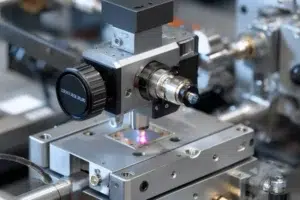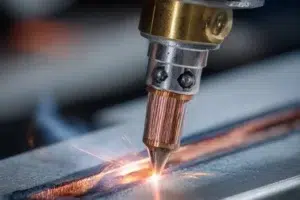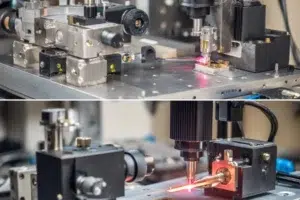
2D photos are converted into 3D point cloud data for internal engraving Each pixel is mapped into a micro-point inside the crystal Image quality depends on point density, contrast processing, and laser stability Depth mapping and layering create realistic 3D effects System precision and pump source stability ensure consistent engraving results
A flat photo cannot directly become a 3D object. This limits personalization quality. Many products look blurry or unrealistic.
Laser engraving11 converts photos into 3D crystal images12 by transforming image data into layered micro-points inside the material, creating depth and structure.
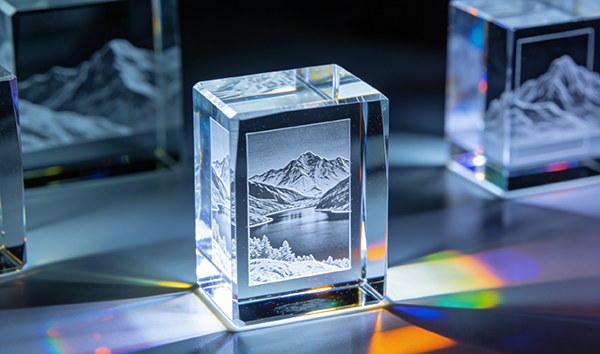
To understand this transformation, you need to follow the full pipeline from image processing to laser execution.
How Is a 2D Photo Converted into 3D Data?
A photo is only a flat image. It has no depth information. This makes direct engraving impossible.
The system converts a 2D photo into a 3D point23 cloud by analyzing brightness, edges, and depth cues34.

Deep Explanation
Image Preprocessing
The process starts with:
- Background removal
- Noise reduction
- Contrast enhancement
This ensures clean input data.
Depth Mapping
Since photos lack depth, software estimates it using:
- Brightness gradients
- Edge detection
- AI-based reconstruction (in advanced systems)
Brighter areas are often mapped as closer points.
Point Cloud Generation
The processed image is converted into:
- Thousands to millions of 3D coordinates
- Each coordinate represents a micro-point
| Step | Function |
|---|---|
| Input image | 2D data |
| Processing | Feature extraction |
| Output | 3D point cloud |
Resolution Control
Point density determines:
- Image clarity
- Smoothness
- Detail level
Higher density increases quality but also processing time.
Engineering Insight
This stage defines final quality. Poor image processing cannot be fixed later by the laser system.
Practical Implication
High-quality input images produce significantly better engraving results.
Engineering Check
“A 2D image must be converted into a 3D point cloud before laser engraving.”
The laser system requires spatial coordinates for each micro-point.
“A laser can directly engrave a 2D photo into a 3D crystal without data processing.”
Image processing is required to generate depth and structure.
How Are Micro-Points Generated Inside the Crystal?
Once 3D data is ready, the laser must convert it into physical structures. This is where many systems fail.
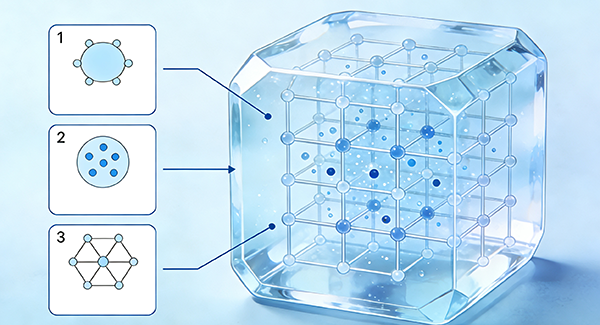
The laser creates micro-points45 by focusing pulsed energy at precise coordinates inside the crystal, inducing optical breakdown.
Deep Explanation
Laser Execution Process
For each coordinate:
- The system positions the focal point
- A laser pulse is emitted
- Optical breakdown occurs
- A micro-point forms
This repeats millions of times.
Micro-Point Characteristics
| Parameter | Impact |
|---|---|
| Pulse energy | Controls size |
| Pulse duration | Affects precision |
| Focus accuracy | Determines position |
Synchronization Requirements
The system must coordinate:
- Laser pulses
- Motion system
- Data processing
Any mismatch causes distortion.
Role of Laser Stability
Stable output ensures:
- Uniform micro-point size
- Consistent brightness
- High repeatability
In diode-pumped solid-state systems56, pump source stability directly affects engraving consistency and lifetime.
Practical Insight
The laser does not “draw lines.” It creates discrete micro-points that form the image.
Engineering Check
“Each micro-point is created by a single laser pulse at a precise location.”
The engraving process is point-by-point, not continuous.
“The laser engraves continuous lines inside the crystal.”
The image is formed by discrete micro-points.
How Does Layering Create a 3D Effect?
Without layering, the image remains flat. Depth perception requires spatial distribution.
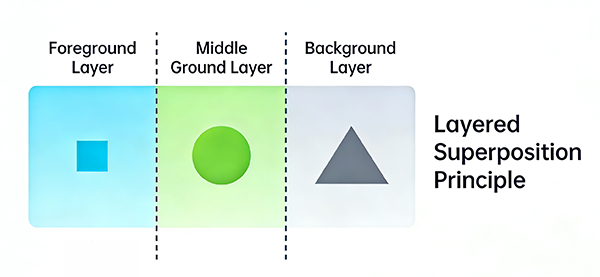
3D effect67 is created by stacking multiple layers of micro-points at different depths inside the crystal.
Deep Explanation
Layer-by-Layer Engraving
The system divides the model into layers:
- Each layer corresponds to a depth
- Micro-points are placed accordingly
Depth Perception Mechanism
Human eyes perceive depth based on:
- Relative position of points
- Density variation
- Light scattering
Layer Control
| Parameter | Role |
|---|---|
| Layer spacing | Controls depth resolution |
| Point density | Affects detail |
| Energy consistency | Ensures uniform visibility |
Optical Effect
Micro-points scatter light, making them visible from different angles. This creates:
- Floating effect
- 3D visualization
- Depth realism
Engineering Trade-off
- Smaller layer spacing → better depth but slower processing
- Larger spacing → faster but lower quality
Practical Insight
3D quality depends on both data processing and laser execution accuracy.
Engineering Check
“3D images are formed by stacking micro-points at different depths.”
Layered positioning creates volumetric structures.
“Depth in crystal engraving is created by changing laser color.”
Depth is achieved through spatial positioning, not color.
What Determines Final Image Quality?
Many users blame the laser for poor results. In reality, multiple factors influence quality.
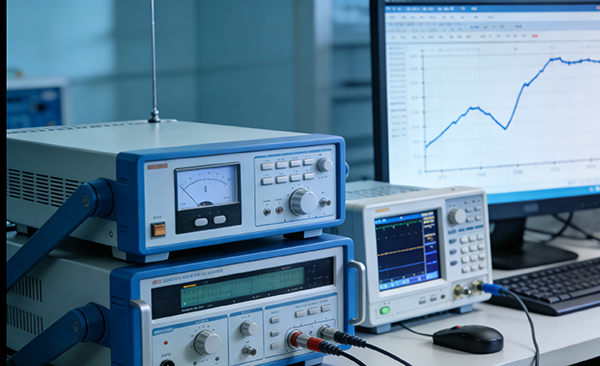
Final image quality depends on image processing, micro-point control, laser stability, and system precision.
Deep Explanation
Key Quality Factors
| Factor | Impact |
|---|---|
| Image resolution78 | Input quality |
| Point density | Detail level |
| Laser stability89 | Consistency |
| Focus accuracy | Sharpness |
Common Quality Issues
| Issue | Cause |
|---|---|
| Blurry image | Poor focus |
| Uneven brightness | Power instability |
| Missing details | Low point density |
Role of Pump Source
In solid-state systems, diode pump sources affect:
- Energy consistency
- Thermal stability910
- Output reliability
Strong thermal management ensures stable performance, which is critical for uniform engraving.
System Integration Importance
- Optical alignment
- Motion precision
- Software accuracy
All must work together.
Practical Insight
Quality is a system-level result. Improving only one parameter is not enough.
Engineering Check
“Consistent micro-point size and accurate positioning are critical for image quality.”
Uniformity ensures clear and realistic images.
“Image quality depends only on laser power.”
Multiple factors influence the final result.
Conclusion
Photo-to-crystal engraving converts images into layered micro-points using precise laser control, enabling realistic 3D structures through coordinated data processing and laser execution.
My insight
Photo-to-crystal engraving111 is not limited by the laser—it is fundamentally a data-to-physics conversion process1012. The biggest quality gap in the market comes from how well software-generated point clouds align with stable, repeatable laser output. In production, even a perfect 3D model will fail if pulse energy fluctuates, which is why pump source stability ultimately defines whether digital detail can be translated into consistent physical results.
This resource explains the process of converting 2D images into 3D point clouds, which is essential for laser engraving applications. ↩
This resource explains the process of converting 2D images into 3D point clouds, which is essential for laser engraving applications. ↩
Understanding depth cues is essential for grasping how 2D images are transformed into 3D point clouds, which directly impacts the accuracy of laser engraving. ↩
This resource provides a detailed explanation of the laser process that generates micro-points, which is essential for understanding the technology behind crystal engraving. ↩
This resource provides critical insights into how diode-pumped solid-state systems influence the consistency and longevity of laser engraving processes, making it essential for understanding the technology behind micro-point creation. ↩
3D effect is achieved through micro-point stacking at different depths. This knowledge improves visualization quality and depth realism in laser engraving. ↩
Understanding how image resolution affects quality can help users optimize their input files for better results. ↩
Laser stability is crucial for consistent and high-quality outputs, making it a key factor to explore for improvement. ↩
Discover how thermal stability impacts laser performance, energy consistency, and engraving uniformity. Learn why proper thermal management is critical for professional results. ↩
Data-to-physics conversion process. ↩