Choosing the best laser wavelength is not just about picking a number. It’s about matching laser physics to the real-world material you’re cutting.
There’s no one-size-fits-all wavelength. The ideal wavelength depends on your material, precision needs, cutting mechanism, and production goals.

In industrial laser cutting, wavelength determines how light interacts with material. It affects absorption, efficiency, heat spread, and final edge quality — making it a core design decision, not a secondary spec.
Why Does Laser Wavelength Matter?
Wavelength affects how efficiently a material absorbs laser energy and turns it into useful cutting force.
The right wavelength improves cutting speed1, reduces thermal damage2, and lowers power requirements.
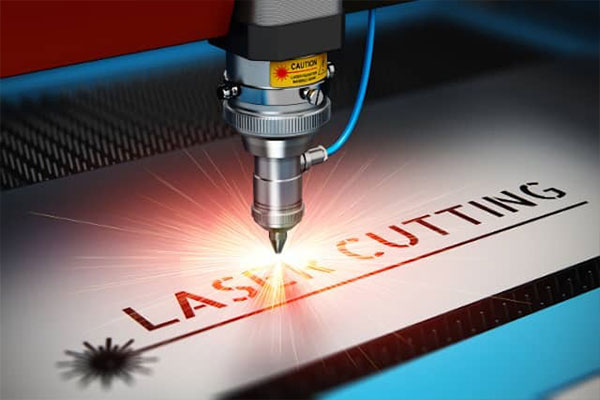
Here’s why wavelength selection is critical:
- Material absorption varies dramatically by wavelength
- Reflection loss changes based on wavelength and surface type
- Thermal effects like HAZ depend on how light deposits energy
- Spot size and focusability depend on wavelength
Two lasers with identical power but different wavelengths can yield totally different cutting results.
How Laser Wavelength Affects Different Materials
Each material has a unique optical absorption profile3. For optimal cutting:
- Metals require IR wavelengths with high thermal conductivity4
- Plastics and organics often cut better with mid-IR or UV
- Transparent materials (like glass) need visible or short-pulsed IR
- Semiconductors may require sub-micron precision and narrow HAZ
Selecting a wavelength that aligns with peak absorption of the material dramatically increases efficiency.
Best Laser Wavelengths for Cutting Metals
Near-Infrared (~1064 nm)5
This is the industry standard for metal cutting, particularly steel and aluminum alloys. It offers:
- High absorption in molten metal
- Mature fiber laser ecosystem
- Cost-effective, scalable hardware
However, metals like copper and brass reflect this wavelength significantly when cold.
Strategies for Reflective Metals6
For high-reflectivity materials, manufacturers turn to:
- Green (532 nm) or blue (450 nm) lasers
- Short pulse durations for cold ablation
- High peak power to surpass reflection barriers
These options offer better initial absorption and are increasingly adopted in fine cutting and microfabrication.
Best Laser Wavelengths for Cutting Non-Metals
CO₂ Lasers (~10.6 µm)7
Still popular for organic and polymer materials:
- Wood
- Leather
- Acrylic
- Rubber
- Textiles
These materials absorb mid-IR wavelengths well, allowing clean and efficient thermal cuts.
UV & Visible Wavelengths8
When edge quality and microfeatures matter, shorter wavelengths win.
- Thin plastics
- Ceramics
- PCB substrates
- Coatings and films
They reduce the heat-affected zone and produce clean edges, making them ideal for electronics and precision parts.
Ultrafast Lasers and Wavelength: A Special Case
Picosecond and femtosecond lasers use a different mechanism — cold ablation. Here, wavelength is still important, but pulse duration defines the interaction.
Why cold ablation works:
- Removes material before heat can spread
- No melt zone, no cracks, minimal debris
- Excellent for transparent or brittle materials
Common ultrafast laser use cases:
- Glass and sapphire cutting
- OLED and display panel shaping
- Wafer dicing (Si, GaN, etc.)
- Micro-drilling of ceramics and metals
Why 878.6nm9 Is the Smart Choice for Solid-State Ultrafast Lasers
Modern DPSS (diode-pumped solid-state) ultrafast lasers often use Nd:YVO₄10 crystals. These crystals absorb light most efficiently at around 878.6nm9, not the older standard of 808nm.
Benefits of 878.6nm9 over 808nm pumping:
| Feature | 808nm Pump | 878.6nm9 Pump (Vivlaser) |
|---|---|---|
| Absorption Efficiency | Medium | Higher |
| Thermal Load | Higher | Lower (less heat waste) |
| Beam Quality | Standard | Improved |
| System Lifetime | Shorter | Longer |
Vivlaser’s 878.6nm9 narrow-spectrum laser modules are designed specifically for this application. With locked wavelength, <1nm spectral width, and output powers from 25W to 175W, they are the ideal pump source for high-performance picosecond and femtosecond lasers.

Key specifications of Vivlaser’s 878.6nm9 modules:
- Locked center wavelength: 878.6 ± 0.5nm
- Spectral width < 0.5nm
- Power options: 30W / 65W / 120W / 175W
- Fiber coupling: 200µm, 0.22NA
- Lifetime: >10,000 hours under industrial use
These pump sources are already used by leading Chinese ultrafast laser manufacturers for cutting glass, sapphire, semiconductors, and precision components.
Is There a Universal “Best” Wavelength?
No.
The best wavelength is the one that matches your material, quality needs, and system architecture.
| Material Type | Recommended Wavelength |
|---|---|
| Mild Steel | 1064nm |
| Copper / Brass | 532nm / 450nm |
| Glass / Quartz | 515nm / 878.6nm DPSS + ultrafast |
| Wood / Acrylic | 10.6µm (CO₂) |
| Plastic Films | UV / Visible (355nm / 532nm) |
| Semiconductors | Ultrafast + short IR |
How to Choose the Right Laser Wavelength?
Use a practical selection framework:
- Know your material
- Define your cutting quality and speed goals
- Consider heat sensitivity and edge requirements
- Evaluate your laser system’s gain medium
- Choose a pump source that matches your wavelength strategy
For ultrafast systems, pairing Nd:YVO₄ crystals with Vivlaser’s 878.6nm narrow-linewidth diode modules is a proven strategy for high absorption, long lifespan, and stable output.
Conclusion
There’s no single “best” laser wavelength — only the best match for your job. Whether you cut metals, glass, or polymers, wavelength matters. And when it comes to ultrafast lasers, choosing a stable, high-absorption pump source like Vivlaser’s 878.6nm modules can elevate your entire system’s performance.
-
Understanding cutting speed is crucial for optimizing laser performance and achieving better results in various materials. ↩
-
Exploring the relationship between laser wavelength and thermal damage can help in selecting the right laser for specific applications. ↩
-
Understanding optical absorption profiles is crucial for selecting the right laser wavelength for efficient cutting. ↩
-
Exploring thermal conductivity’s role can enhance your knowledge of laser cutting efficiency in metals. ↩
-
Explore this link to understand why Near-Infrared lasers are the go-to choice for efficient metal cutting. ↩
-
Discover effective strategies for cutting reflective metals, ensuring optimal results in your projects. ↩
-
Explore the benefits of CO₂ lasers for cutting various non-metal materials efficiently. ↩
-
Learn how UV and visible wavelengths enhance edge quality and precision in cutting non-metal materials. ↩
-
Explore this link to understand why 878.6nm is preferred for ultrafast lasers, enhancing efficiency and performance. ↩ ↩ ↩ ↩ ↩ ↩
-
Learn about Nd:YVO₄’s role in solid-state lasers and its benefits for high-performance applications. ↩