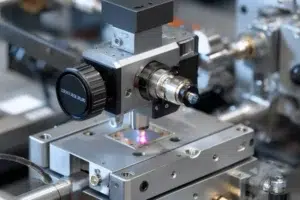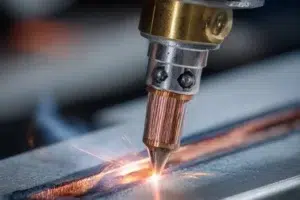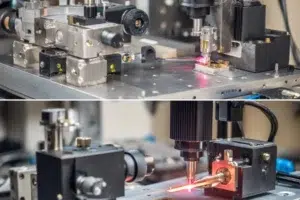
When gold prices hit the skies, every fraction of a gram lost in welding turns into lost profit. Blue lasers offer precision and efficiency that protect your margins.
Blue lasers are ideal for welding high-priced gold due to their short wavelength and high absorption rate by gold—over 20 times that of traditional infrared lasers.
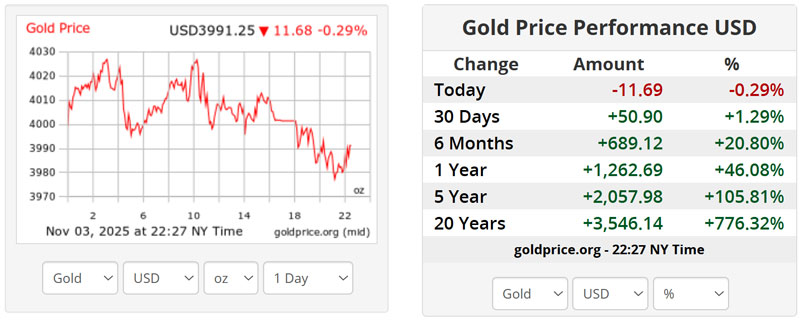
In a booming gold market—fueled by investment trends, consumer demand, and wedding surges—precision welding becomes mission-critical. With gold prices exceeding $4000 per ounce, even minor welding flaws lead to costly waste or rework. That’s where blue laser technology steps in.
Why Are Blue Lasers Ideal for Welding Expensive Gold?
When gold is expensive, every weld must be flawless. Blue lasers make that possible.
With a wavelength around 450nm, blue lasers1 deliver concentrated energy and enable gold to absorb over 65% of the light—making welds stronger, cleaner, and more precise.
Why Precious Metals Require Different Laser Strategies
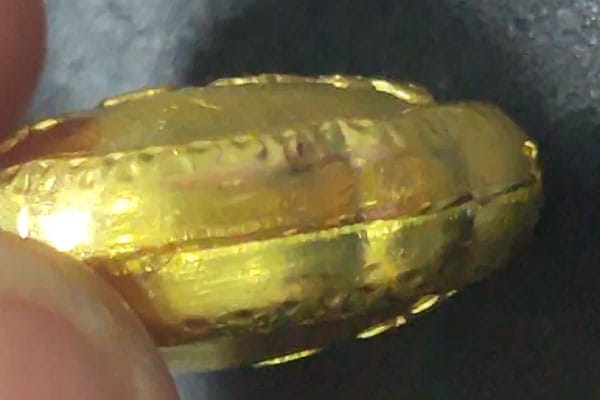
Precious metals such as gold, platinum, and palladium present unique challenges in laser processing that differ significantly from common industrial metals like steel or aluminum.
Unlike structural metals, precious metals combine high reflectivity, high thermal conductivity, and extremely high material value, meaning that even microscopic welding defects can translate into substantial financial loss or functional failure.
Gold, for example, reflects most infrared laser energy while rapidly dissipating heat, making stable melt pool formation difficult. Platinum introduces additional challenges due to its high melting temperature and sensitivity to thermal stress, while palladium alloys used in electronics demand precise energy control to avoid microcracking or material deformation.
Because of these characteristics, welding strategies for precious metals prioritize:
Highly localized energy deposition
Minimal heat-affected zones
Stable and repeatable melt initiation
Reduced spatter and material loss
Short-wavelength laser systems—particularly 445 nm blue lasers—are increasingly adopted in precious metal processing because they improve absorption efficiency while reducing overall thermal input. This enables cleaner joints, improved cosmetic quality, and higher material utilization in applications such as jewelry manufacturing, medical electrodes, microelectronics bonding, and precision connectors.
As industries move toward higher-value materials and miniaturized components, laser systems optimized specifically for precious metals are becoming essential rather than optional.
Why Does Gold Absorb Blue Light So Well?
Gold reflects most infrared light but absorbs blue wavelengths efficiently.
At near-infrared wavelengths (800–1000nm), gold reflects nearly all light, absorbing less than 5%. But at blue wavelengths (400–480nm), gold can absorb over 65% of the energy—leading to more efficient heating and better welding performance.
Benefits of Blue Laser Welding for Gold
| Benefit Category | Blue Laser Performance |
|---|---|
| Absorption Efficiency | Up to 65% absorption by gold |
| Power Efficiency | Lower power needed due to better absorption |
| Stable Weld Pool | Clean, consistent joints |
| Low Heat Impact | Reduced oxidation and discoloration |
| Fine Detail Welding | Ideal for gold wires and micro-parts |
Infrared lasers reflect off gold, causing unstable heating and weld inconsistency. Blue lasers overcome this with higher energy absorption and better control.
The Higher the Gold Price, the More Welding Precision Matters
| Comparison Factor | Infrared Laser | Blue Laser |
|---|---|---|
| Gold Absorption | Low, mostly reflected | High, efficiently absorbed |
| Material Waste | Risk of burning/splash | Minimal loss, precise heating |
| Weld Pool Control | Wide heat spread | Focused, controllable zone |
| Rework Rate | Frequent due to defects | Low, high first-pass success |
| Appearance | Rough, discolored welds | Clean, uniform welds |
When gold prices rise, invisible losses in welding become hard costs. Blue lasers help manufacturers minimize those hidden expenses—offering a safer, more material-efficient, and reliable welding process, especially in premium or custom applications.
Which Industries Already Use Blue Lasers1 for Gold Welding2?
- Jewelry Manufacturers: Spot welding and repair of rings, bracelets, necklaces
- High-End Wedding Rings: Seamless micro-welding, zero surface discoloration
- Electronics Factories: Gold wires and pads, high conductivity welding
- Medical Device Makers: Welding gold electrodes with zero thermal deformation
In these industries, the visible difference in weld quality with blue lasers is no longer optional—it’s expected.
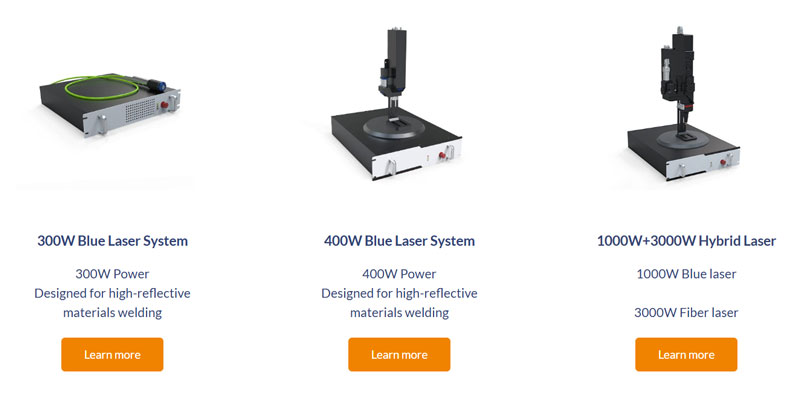
Vivlaser’s Blue Laser Modules: Built for Gold Welding
As a national high-tech leader in laser development, Shenzhen Vivlaser Technology Co., Ltd. offers high-performance blue laser modules with features designed for demanding gold welding scenarios:
- Wavelength: 450nm with stable power output
- Supports fiber-coupled or micro-focus laser heads
- Excellent beam shaping, ideal for micro-welding
- Compact module size for easy integration
Whether you’re running a small jewelry station or scaling up industrial production lines, Vivlaser offers complete blue laser welding solutions.
Final Thoughts
As gold prices rise, every weld must justify its worth. Vivlaser blue lasers make every gram count.
About Us
Shenzhen Vivlaser Technology Co., Ltd. is a nationally certified high-tech enterprise focused on the R&D and manufacturing of high-performance semiconductor lasers. Our blue, infrared, and multi-wavelength laser modules serve industrial, medical, aesthetic, and scientific applications worldwide.
FAQ: Blue Lasers for Gold Welding
Q1: Why not use traditional infrared lasers for gold welding?
Infrared lasers have poor absorption on gold—less than 5%—leading to high reflection, energy waste, and inconsistent weld quality. Blue lasers, with over 65% absorption, offer more precise and efficient results.
Q2: Are blue lasers suitable for all types of gold, including white and rose gold?
Yes. Blue lasers work well on all gold alloys. Their short wavelength allows high energy concentration, ensuring clean welds even on alloys with reflective or complex surfaces.
Q3: Can blue lasers damage delicate components like gold wires or microstructures?
No. Blue lasers offer tight control over heat input, minimizing thermal diffusion. This makes them ideal for precision applications like micro-jewelry, electronics, or medical components.
Q4: Is blue laser welding faster than other methods?
Yes. Due to higher absorption, blue lasers require less power to achieve the same welding effect, reducing welding time while increasing throughput.
Q5: Does Vivlaser offer customization for specific welding needs?
Absolutely. We offer custom solutions including wavelength tuning, beam shaping, and optical configurations tailored to your material and process requirements.
Q6: How reliable are Vivlaser blue laser modules for continuous use?
Vivlaser modules are built with industrial-grade stability, advanced thermal management, and long-life components. Our blue lasers undergo extensive reliability testing to ensure 24/7 production compatibility.
Q7: Where can I find more technical specifications or request a quote?
Visit www.vivlasers.com or contact us at [email protected] for product datasheets, pricing, and expert support.