Cutting glass with lasers is a technical challenge that requires deep understanding of material-light interaction. Unlike metals or polymers, glass is highly transparent to many common laser wavelengths (e.g., 1064 nm for fiber lasers or 10.6 μm for CO₂ lasers), meaning it reflects or transmits most of the energy rather than absorbing it. This makes conventional laser sources ineffective—and often dangerous—since uncontrolled thermal buildup can lead to cracking or shattering.
Why is glass difficult to cut with traditional lasers?
Glass presents multiple challenges for laser cutting due to its optical, thermal, and mechanical properties11.
Most traditional lasers operate at wavelengths that glass either reflects or transmits, causing inefficient absorption and high risk of thermal stress22.
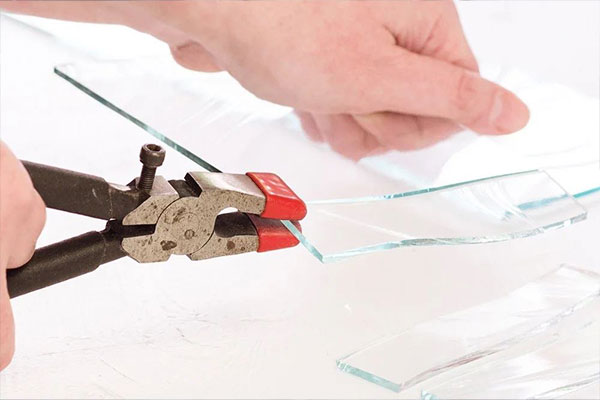
Traditional Glass Cutting Methods with Lasers
In practice, conventional laser cutting of glass typically relies on two thermal-based techniques:
✅ 1. Laser Scribing + Mechanical Breakage33
This is one of the earliest and still commonly used methods for cutting glass with lasers.
Working principle:
- A laser (usually CO₂ or green laser) is used to heat the glass surface along a predefined path.
- Rapid cooling (with air jets or coolants) induces localized thermal stress22, forming a micro-crack.
- Mechanical force is applied to break the glass cleanly along this path.
Features:
- Fast cutting speed, ideal for straight-line cuts.
- Lower edge quality compared to ultrafast or internal separation methods.
- Commonly used for architectural glass, automotive glass, and other thick or low-precision sheets.
✅ 2. CO₂ Laser Thermal Cracking44 (Laser Thermal Cleaving)
This method uses focused CO₂ laser heating to initiate controlled cracks in the glass.
Steps:
- The laser locally heats the glass surface to induce thermal expansion.
- The expansion followed by rapid cooling creates internal cracks.
- Crack propagation is guided along the laser path with precise thermal control.
Advantages:
- Mature and widely adopted technique.
- Effective for straight cuts in thicker glass substrates.
Limitations:
- Not suitable for complex shapes or small-radius curves.
- Poor results with thin, chemically strengthened, or cover glass.
- Susceptible to internal stress and edge chipping.
How do ultrafast lasers5 cut glass without cracking it?
Ultrafast lasers, such as femtosecond and picosecond lasers, enable a technique called "cold processing6."
They deliver energy faster than heat can spread, allowing crack-free, high-precision cutting of brittle materials like glass.
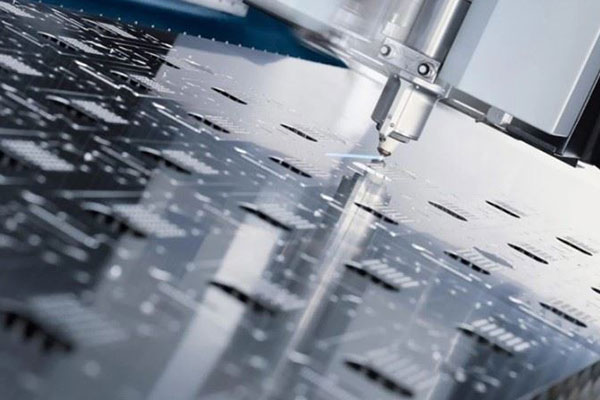
These lasers induce nonlinear absorption inside transparent materials. The ultrashort pulses deposit energy in femtoseconds (<10⁻¹² s), preventing thermal diffusion and avoiding heat-affected zones. This creates micro-scale modifications for cutting, drilling, or scribing glass with superior edge quality.
What is laser glass separation and how does it work?
Laser-induced internal separation (LIS), also called stealth dicing57, is a method for clean internal cleaving of glass.
The laser focuses inside the glass bulk to create a separation plane through stress or refractive changes.

This process uses internal stress fields or micro-cracks induced by the laser and thermal gradients. Mechanical force or mild thermal shock can then cleave the glass along the modified path. It produces extremely smooth edges with minimal debris, especially useful for smartphone displays and thin glass substrates.
Are green and UV lasers suitable for glass processing?
Yes. Shorter wavelengths like green (532 nm) and UV (355 nm or 266 nm) are better absorbed by many types of glass.
These lasers enable precise micro-drilling, texturing, and cutting without introducing cracks or thermal damage.

Green lasers balance precision and power, making them ideal for thin glass cutting and perforation. UV lasers, with higher photon energy, are ideal for delicate work like marking borosilicate or quartz, used in medical and optical industries.
Which types of glass can be cut with lasers?
With the right laser system, many kinds of glass can be processed effectively.
Ultrafast or short-wavelength lasers68 handle transparent and brittle glasses with high precision.
- Borosilicate Glass79 (e.g., Pyrex): Used in labware and optics; cut well with green or UV lasers.
- Aluminosilicate Glass: Common in mobile phone cover glass.
- Quartz/Fused Silica: Needs UV lasers due to high transmission.
- Soda-Lime Glass: Found in windows and automotive use.
- Gorilla® Glass: Strengthened glass that requires ultrafast lasers or stealth dicing due to internal tension.
Laser vs. Mechanical Cutting: Which is better for glass?
Laser cutting offers distinct advantages over traditional methods, especially for complex or high-precision work.
Lasers provide clean edges, fine resolution, and lower maintenance in high-value glass processing.
| Aspect | Laser Cutting | Mechanical Cutting |
|---|---|---|
| Precision | ±10 μm or better | Limited by tool wear |
| Edge Quality | Crack-free, smooth | Often chipped or rough |
| Complex Shapes | Easy | Difficult/expensive |
| Tool Wear | Non-contact | High maintenance |
| Debris | Minimal | Requires cleanup |
| Cost | Higher setup | Higher long-term costs |
Conclusion
Glass is a challenging material, but with the right laser—especially ultrafast, green, or UV systems—it becomes not only manageable but highly precise. For manufacturers in the optics, electronics, and specialty glass sectors, laser processing offers a powerful path to achieving high-yield, low-defect, and scalable glass cutting operations.
- Understanding these properties is crucial for effective glass cutting and can enhance your knowledge of material science. ↩
- Understanding thermal stress is key to mastering glass cutting techniques and avoiding common pitfalls. ↩ ↩
- This method is a foundational technique in glass cutting; exploring it can provide insights into traditional and modern practices. ↩
- Learning about this method can reveal advanced techniques in laser cutting, beneficial for both industry professionals and enthusiasts. ↩
- Explore this link to understand the technology behind ultrafast lasers and their applications in various fields. ↩
- Learn about cold processing techniques and how they enhance precision in laser cutting without damaging materials. ↩
- Discover the advantages of stealth dicing for achieving clean cuts in glass, especially for delicate applications like smartphone displays. ↩
- Explore this link to understand how ultrafast lasers enhance precision in cutting various glass types. ↩
- Learn about Borosilicate Glass and its unique properties that make it ideal for labware and optics. ↩



One Response
Excellent article….very informative.
Thanks!