Portable beauty devices are everywhere. Many brands promise professional laser treatment at home. Yet engineers struggle to fit real laser technology inside small handheld tools.
Integrating laser sources into handheld devices is difficult because engineers must balance size, heat control, power stability, safety, and long-term reliability inside extremely limited space. Compact semiconductor laser modules are helping solve these challenges. 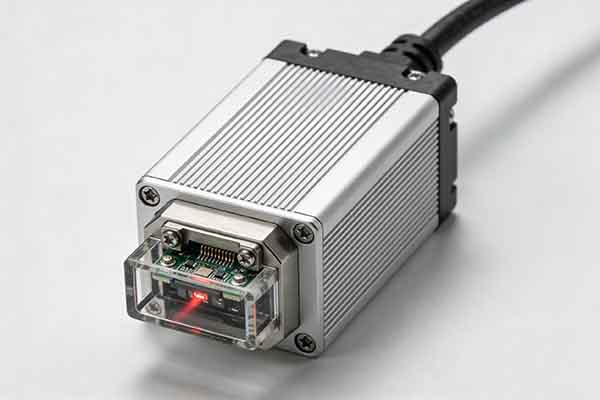
The beauty device market is moving quickly toward compact and portable systems. Hair removal tools, skin rejuvenation devices, and dermatology platforms now aim to deliver clinic-level performance in handheld formats. However, laser technology was originally developed for large medical systems. This difference creates several engineering barriers when designers attempt to miniaturize laser systems.
Why Do Handheld Devices Create Serious Size and Optical Integration Constraints?
Small consumer devices promise convenience. But engineers face major design problems when trying to integrate professional laser systems into compact housings.
Handheld aesthetic devices limit the size of optical assemblies, cooling systems, and laser modules1. Engineers must redesign laser architectures to fit within extremely small mechanical structures without sacrificing beam quality or power output.
The Structural Limits of Handheld Device Architecture
Traditional dermatology laser equipment2 is large. Clinical laser systems usually contain multiple optical subsystems. These systems include beam shaping optics, fiber coupling units, cooling modules, and driver electronics3. These components work together to stabilize output power and ensure treatment accuracy.
However, handheld devices operate under strict size limits. Designers must compress the entire laser system into a much smaller enclosure4. This constraint directly affects optical layout, mechanical structure, and system reliability.
Engineers must shrink several core components at the same time.
| --- | --- | --- | --- | --- | --- | --- | | System Component | Traditional Medical Laser | Handheld Device Requirement | | Laser Module | Large diode arrays | Miniaturized semiconductor modules | | Beam Shaping Optics | Multi-lens optical assemblies | Simplified optical coupling | | Cooling System | Water cooling or large heat sinks | Compact passive cooling | | System Structure | Large frame systems | Lightweight handheld casing |
This reduction is not simple scaling. Optical performance must remain stable even when the module becomes smaller.
Miniaturization Requires New Semiconductor Laser Designs
Modern handheld devices rely heavily on semiconductor laser modules. These lasers provide several advantages. They offer high electro-optical efficiency and compact packaging5. Their modular design also simplifies integration.
Manufacturers now design laser modules specifically for integration into portable equipment. These modules often include pre-aligned optics and integrated fiber coupling6.
For example, companies specializing in semiconductor lasers focus on producing modules that combine high power output with compact mechanical packaging. Shenzhen Vivlaser Technology Co., Ltd. focuses on semiconductor laser research and manufacturing. The company develops pump sources, high-power diode lasers, and laser modules used in medical and industrial systems.
These integration-friendly modules reduce the engineering burden for device manufacturers. However, size reduction alone does not solve all design problems. Thermal management becomes even more critical when lasers operate inside small handheld systems.
Why Is Thermal Management One of the Hardest Problems?
Heat is the hidden enemy of laser performance. When heat accumulates inside a handheld device, it can quickly degrade laser stability and shorten device lifetime.
Laser diodes generate high heat density in small semiconductor junction areas. Handheld devices lack large cooling systems, so engineers must design efficient thermal paths7 and compact heat dissipation structures.
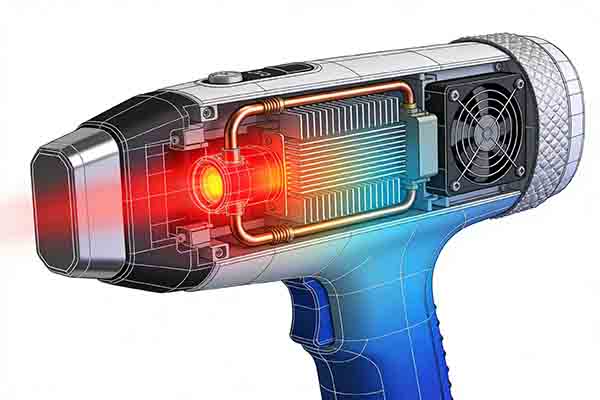
Heat Generation Inside Semiconductor Laser Junctions
Semiconductor lasers convert electrical energy into optical energy. 8However, the conversion is never perfect. A portion of electrical power always becomes heat.
This heat concentrates inside the laser junction region. The active area of a semiconductor laser chip is extremely small. Therefore heat density becomes very high during operation.
If the temperature rises too much, several problems occur:
| --- | --- | --- | --- | --- | | Thermal Effect | Impact on Laser Performance | | Junction temperature increase | Output wavelength drift | | Thermal expansion | Beam quality degradation | | Heat accumulation | Reduced optical efficiency | | Long-term overheating | Device lifetime reduction |
Large clinical laser systems often use active cooling systems such as water circulation or thermoelectric cooling. These systems remove heat efficiently.
However, handheld devices cannot use large cooling hardware. Designers usually rely on compact heat sinks or passive cooling structures. Therefore thermal design must become much more efficient.
Advanced Packaging and Heat Dissipation Technologies
To solve thermal problems, semiconductor laser manufacturers focus on packaging technology9. Efficient packaging improves heat transfer from the laser chip to external cooling structures.
Several thermal engineering approaches are widely used:
· optimized heat sink materials
· low thermal resistance packaging
· advanced solder bonding structures
· heat spreading substrates
Some manufacturers also design custom packaging structures based on device applications.
For example, Vivlaser has developed thermal management techniques and structural designs that improve heat dissipation in high-power semiconductor lasers. These designs allow stable performance even during high power operation. Effective thermal control is essential for maintaining stable wavelength and consistent output power. But heat is not the only challenge. Electrical control systems also play a critical role in handheld laser devices.
Why Does Power Supply Design Affect Laser Stability?10
Stable electrical driving circuits are essential for semiconductor lasers. Even small fluctuations in current can affect optical output. 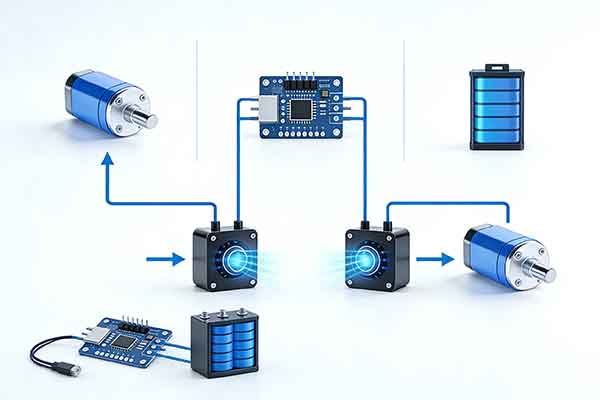
Laser diodes require precise current control to maintain consistent power output and wavelength stability. Handheld devices use compact battery systems, which makes driver circuit design more complicated.
Laser Diodes Depend on Accurate Current Control
Laser diodes operate differently from traditional light sources. Their optical output power is directly linked to drive current11.
If current fluctuates, the optical output also changes. This instability can affect treatment effectiveness and system safety.
Key issues caused by unstable driver circuits include:
| --- | --- | --- | --- | --- | | Electrical Instability | Resulting Laser Problem | | Current spikes | Optical power fluctuation | | Voltage noise | Beam instability | | Temperature-related drift | Wavelength shift | | Overcurrent | Laser damage |
Clinical laser systems typically use large power supplies and stable driver electronics. These systems can maintain precise current regulation.
However, handheld devices rely on small batteries and compact power circuits. This limitation increases the complexity of electrical design.
Balancing Efficiency and Stability
Engineers must optimize driver circuits to achieve two goals at the same time. They must maintain stable current control while preserving battery efficiency.
Several design strategies help achieve this balance:
· high efficiency driver ICs
· precise current feedback circuits
· low noise power regulation
· temperature compensation systems12
In addition, integrated laser modules often include optimized electrical interfaces. These designs simplify integration for device manufacturers.
Reliable power control ensures stable laser output. However, aesthetic devices must also meet strict safety requirements before entering the consumer market.
How Do Safety Requirements Influence Laser Device Design?
Laser energy interacts directly with human skin13. For this reason, aesthetic devices must follow strict safety standards.
Engineers must carefully control laser energy density, beam distribution, and skin contact conditions to ensure safe operation in consumer environments.
Managing Energy Density and Beam Distribution14
Laser-based aesthetic treatments rely on controlled photothermal effects. The laser energy must reach the target tissue without damaging surrounding skin.
Designers must carefully control several optical parameters.
| --- | --- | --- | --- | --- | | Safety Parameter | Design Goal | | Energy density | Safe but effective treatment level | | Beam uniformity | Even energy distribution | | Pulse duration | Controlled thermal effect | | Spot size | Consistent skin coverage |
Uniform beam shaping is particularly important. Uneven beam distribution can create localized hot spots on the skin surface.
Engineers therefore design optical systems that produce consistent energy profiles across the treatment area.
Safety Systems for Consumer Devices
Consumer handheld devices operate outside clinical supervision. Therefore additional safety features15 must be built into the system. 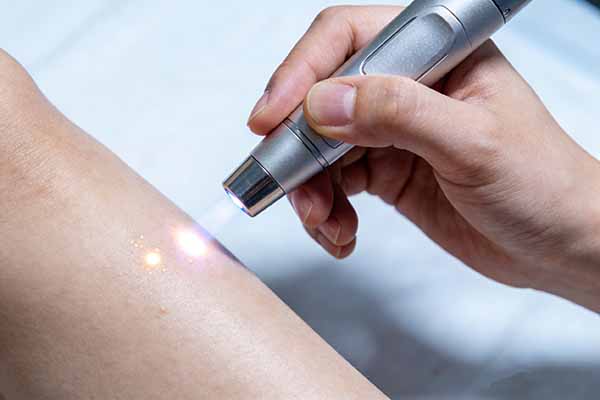
Common protection mechanisms include:
· skin contact sensors
· temperature monitoring systems
· automatic power shutdown functions
· real-time energy monitoring
These systems help prevent accidental laser exposure.
Laser module reliability also affects safety. If output power becomes unstable, the device may deliver unpredictable energy levels.
Therefore reliability and lifetime testing remain critical parts of laser module development.
Why Is Reliability a Long-Term Engineering Challenge?
Consumer devices must operate consistently over many treatment cycles. Reliability becomes difficult when lasers operate in small systems with limited cooling capacity.
Laser modules in handheld devices must withstand repeated thermal cycling, environmental changes, and long operating hours while maintaining stable optical performance.
Environmental and Thermal Stress Factors
Handheld devices experience frequent temperature changes. The device heats during operation and cools afterward. These cycles repeat thousands of times during product lifetime.
Repeated thermal cycling can cause mechanical stress inside the laser module. Packaging materials expand and contract at different rates.
Potential reliability risks include:
| --- | --- | --- | --- | --- | | Stress Factor | Reliability Risk | | Thermal cycling | Packaging fatigue | | Environmental humidity | Optical degradation | | Mechanical vibration | Alignment shift | | Long operation time | gradual power degradation |
Manufacturers must carefully design packaging structures to withstand these conditions.
Reliability Testing and Quality Control
Laser manufacturers perform extensive testing before releasing products to the market.
Typical reliability tests include:
· temperature cycling tests
· high temperature storage tests
· vibration and mechanical shock tests
· long-term life testing
For example, semiconductor laser modules produced by Vivlaser undergo environmental testing and lifetime evaluation to ensure stable operation over extended periods.
These quality control processes help ensure that laser modules maintain stable output power and wavelength stability during long-term use.
As laser module technology improves, engineers are gradually overcoming these integration barriers.
Conclusion
Handheld laser devices require advanced semiconductor laser modules, efficient thermal design, stable electronics, and strict safety control. Continuous innovation in laser technology is making compact aesthetic devices increasingly practical.
Industry insight
From my perspective, integrating a laser source into a handheld aesthetic device is not a theoretical challenge—it is a practical battle with physics, space, and heat.
When I review many portable beauty devices on the market, I often see the same issue: marketing promises “clinic-level laser technology,” but the internal design struggles to support stable laser operation in such a small enclosure. The real difficulty is that laser diodes are high power-density devices, and once you compress them into a handheld structure, thermal load, electrical stability, and optical alignment immediately become limiting factors.
In my experience working with semiconductor laser systems, the first thing engineers must solve is thermal path design. If the heat generated at the laser junction cannot be efficiently transferred to the housing, the junction temperature rises quickly. Once that happens, output power becomes unstable, wavelength drifts, and the lifetime of the device drops dramatically. This is why packaging structure, substrate material selection, and solder bonding quality matter far more than many people realize.
The second issue is power stability. Handheld devices rely on compact battery systems and small driver circuits. Even small current fluctuations can directly affect laser output. For diode lasers, optical power is tightly coupled with drive current, so the driver design must include precise current control and low-noise regulation.
At Vivlaser, when we design semiconductor laser modules for medical and aesthetic applications, we focus on practical integration issues that device manufacturers actually face. That means optimizing module packaging for heat dissipation, maintaining stable beam output under thermal cycling, and ensuring the electrical interface works reliably with compact driver systems.
In other words, building a laser for a handheld device is not just about making it smaller. It is about designing a laser module that can survive real operating conditions inside a small, thermally constrained system while still delivering consistent optical performance.
And from an engineer’s viewpoint, that difference between theory and real-world integration is exactly where the quality of the laser source is proven.
- Understand why cooling systems are critical for stable laser operation. ↩
- Learn how optical assemblies shape and control medical laser beams. ↩
- Discover common laser modules used in aesthetic treatment systems. ↩
- -Understand challenges of shrinking laser modules without performance loss. ↩
- Learn how semiconductor laser modules power handheld aesthetic devices. ↩
- Learn how fiber coupling improves laser energy delivery. ↩
- Learn how temperature affects semiconductor laser performance ↩
- Learn the basics of semiconductor lasers and their applications. ↩
- Learn how packaging design improves laser heat dissipation. ↩
- Learn how power supply quality impacts laser output stability and device performance. ↩
- Learn why laser output power is controlled primarily by current. ↩
- See how temperature changes are managed to maintain laser stability. ↩
- Understand the biological effects of laser energy on skin. ↩
- Understand key optical factors that influence treatment safety and results. ↩
- Understand why consumer devices require extra safety protection. ↩