Industrial components constantly face wear, corrosion, and surface damage. Traditional coating technologies often struggle to deliver durable coatings with strong bonding and minimal distortion. Manufacturers therefore need a more reliable surface engineering solution.
Diode lasers have become one of the most efficient laser sources for laser cladding systems because they provide high electrical efficiency, uniform beam profiles, stable thermal input, and flexible integration into industrial equipment.

Laser cladding is now widely used in modern manufacturing to extend the service life of expensive components. The performance of the laser source directly determines the stability of the melt pool and the quality of the coating. High-power diode lasers have therefore become a preferred solution for industrial laser cladding systems, especially when large-area coatings and high processing efficiency are required.
What Is Laser Cladding1 and Why Is It Important?
Many industrial components fail because their surfaces are exposed to abrasion, corrosion, or erosion2. Even when the internal structure remains intact, surface damage can lead to equipment failure and costly downtime.
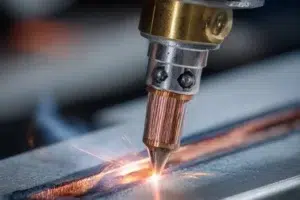
Laser cladding is a laser-based surface engineering process in which metal powder or wire is melted by a laser beam and deposited onto a component surface, forming a dense metallurgically bonded coating.

Basic Principle of Laser Cladding
Laser cladding works by creating a localized melt pool on the surface of a metal component.3
The typical process includes the following steps:
-
A focused laser beam heats a small region of the substrate.
-
The laser energy melts a thin layer of the base material.
-
Metal powder or wire is delivered into the molten pool4.
-
The coating material melts and mixes with the substrate.
-
The molten metal solidifies and forms a dense coating layer.
The resulting coating forms a metallurgical bond with the base metal. This bonding method provides much stronger adhesion than traditional coating technologies.
Typical Coating Characteristics
Laser cladding produces dense coatings that significantly improve component performance.
| --- | --- | --- | --- | --- | | Parameter | Typical Range | | Coating thickness | 0.2 – 1 mm | | Heat affected zone | Small | | Dilution with substrate | Low | | Coating density | Very high |
Because of these characteristics, laser cladding is widely used in industries such as oil and gas5, mining, aerospace, automotive manufacturing, and power generation.
Key Benefits of Laser Cladding
Laser cladding technology improves the surface performance of many industrial components.
Improved Wear Resistance
Hard alloy coatings protect components operating in abrasive environments.
Better Corrosion Protection
Special coating materials help components resist chemical damage and harsh environments.
Extended Component Lifespan
By strengthening the surface layer, laser cladding significantly extends the service life of expensive equipment.
These advantages explain why laser cladding is widely used in heavy industry and advanced manufacturing.
Why Do Diode Lasers Perform Better in Laser Cladding Systems?
The performance of the laser source directly influences melt pool stability and coating quality. Different laser types can be used in cladding systems, but high-power diode lasers offer several unique advantages.
Diode lasers deliver stable thermal energy, high efficiency, and uniform beam distribution. These characteristics make them particularly suitable for industrial cladding applications.
Uniform Top-Hat Beam Profile
One of the most important advantages of diode lasers is their top-hat beam profile6.
Many traditional laser sources generate Gaussian beams7 where energy is concentrated in the center of the spot. This uneven distribution can lead to unstable melt pools.
Diode lasers distribute energy more uniformly across the beam spot.
This uniform heat distribution helps achieve:
· stable melt pool formation
· consistent coating thickness
· reduced defects such as pores or cracks
As a result, diode laser cladding often produces coatings with high density and excellent metallurgical bonding.
High Electrical Efficiency
Diode lasers offer very high wall-plug efficiency, typically exceeding 50–60%.
Higher efficiency leads to several operational advantages.
| --- | --- | --- | --- | --- | | Advantage | Impact | | Lower energy consumption | Reduced operating costs | | Reduced heat generation | Lower cooling requirements | | Higher energy utilization | Improved system efficiency |
For industrial manufacturers operating large cladding systems, these advantages significantly reduce operating costs.
Stable Thermal Input
Laser cladding requires precise thermal control to maintain melt pool stability.
Diode lasers provide stable and controllable heat input during long production cycles.
Stable heat input helps minimize several problems during coating.
· substrate distortion
· excessive dilution
· large heat affected zones
These improvements are particularly important when coating large industrial components.
Large and Adjustable Spot Sizes
Diode laser systems often support larger and adjustable beam spot sizes.
This allows wider cladding tracks and higher deposition efficiency.
For large components such as:
· hydraulic cylinders
· drilling tools
· brake discs
wider tracks enable faster processing speeds and shorter production cycles.
How Do Diode Lasers Compare With Other Laser Sources?
Several laser technologies8 can be used for laser cladding. However, their beam characteristics and efficiency differ significantly.
Laser Source Comparison
| --- | --- | --- | --- | --- | --- | --- | | Laser Type | Characteristics | Cladding Suitability | | Diode Laser | High efficiency, uniform beam profile | Excellent | | Fiber Laser | High brightness, smaller spot size | Moderate | | CO₂ Laser | Longer wavelength, lower metal absorption | Limited |
Diode lasers are particularly suitable for large-area coating processes where uniform heat distribution is important.
Fiber lasers often provide higher brightness but smaller spot sizes, which are more suitable for cutting or precision welding applications.
How Vivlaser High-Power Diode Lasers Support Laser Cladding Systems?
For laser cladding equipment manufacturers and system integrators, selecting a stable and powerful laser source is critical for achieving high deposition efficiency and consistent coating quality.
Vivlaser specializes in the development and production of high-power semiconductor laser systems used directly in industrial laser cladding applications.
High-Power Diode Laser Solutions for Laser Cladding
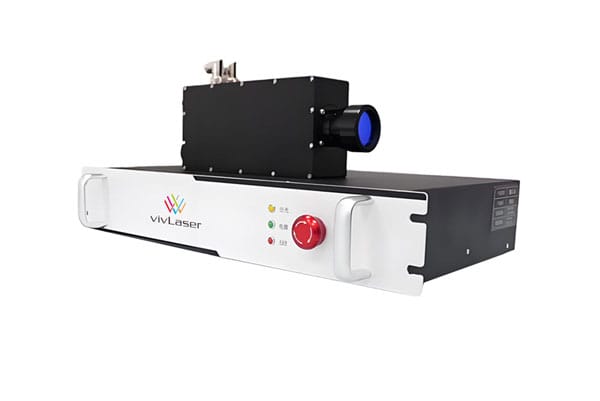
Vivlaser provides high-power diode laser systems 9ranging from hundreds of watts to 20,000W, designed for demanding industrial surface engineering processes.
| --- | --- | --- | --- | --- | --- | --- | | Product Series | Power Range | Typical Applications | | High Power Diode Laser | 300W – 20,000W | Laser cladding, surface treatment | | Fiber-Coupled Diode Laser | 100W – 3000W | Industrial laser processing | | Blue Laser Systems | 20W – 400W+ | Specialized metal processing |
These high-power semiconductor lasers 10can serve as the direct laser source for laser cladding systems, providing reliable energy input for stable melt pool formation and high deposition efficiency.
Key Advantages for Cladding Equipment Manufacturers 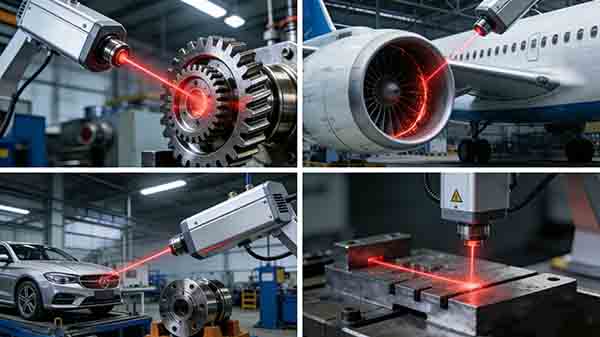
Vivlaser diode laser systems are designed to support demanding industrial environments and large-scale cladding operations.
Key performance advantages include:
· output power scalability up to 20 kW, enabling high deposition rate cladding
· stable optical output for consistent melt pool control
· high electro-optical conversion efficiency for energy-efficient operation
· compact modular structure for easy integration into robotic or CNC cladding systems
· customizable wavelength and beam configuration to match different cladding materials
These features make Vivlaser diode lasers well suited for:
· robotic laser cladding systems
· automated surface treatment production lines
· heavy-duty industrial cladding equipment
· additive manufacturing systems
Built for Large-Scale Industrial Cladding
High-power diode lasers are particularly suitable for large-area cladding and high-deposition-rate processes.
With power levels up to 20 kW, Vivlaser laser systems allow manufacturers to process large components such as:
· hydraulic cylinders
· mining equipment components
· oil and gas drilling tools
· steel mill rollers
· large industrial shafts
This high-power capability significantly improves processing speed, coating productivity, and overall manufacturing efficiency.
Reliable Manufacturing and Technical Support
Vivlaser focuses on semiconductor laser technology research and manufacturing. The company provides laser modules that are widely used in industrial processing, medical equipment, and scientific research applications.
With strong R&D capability and stable manufacturing capacity, Vivlaser supports global equipment manufacturers with reliable diode laser solutions for advanced laser processing systems.
Where Are Diode Laser Cladding Systems Used?
Laser cladding systems powered by diode lasers are widely used in industries11 where components operate under harsh conditions.
Drilling equipment is exposed to severe abrasion and corrosion.
Laser cladding coatings improve durability and extend the service life of drilling tools and valves.
Laser cladding is increasingly used to produce wear-resistant brake disc coatings that reduce particulate emissions and improve environmental performance.
Mining equipment operates under heavy loads and abrasive conditions.
Laser cladding coatings improve wear resistance and corrosion protection for hydraulic cylinders.
Agricultural tools such as cutting blades and plough components experience continuous wear.
Laser cladding coatings increase durability and reduce maintenance costs.
Conclusion
High-power diode lasers offer significant advantages for laser cladding systems, including uniform beam profiles, high electrical efficiency, stable thermal input, and flexible processing capability.
These characteristics make diode laser technology an ideal solution for producing durable coatings and improving industrial component performance.
Industry insight
From our real engineering experience, we often see customers assume that higher laser power automatically means better cladding performance. In practice, this is rarely the case.
Laser cladding is essentially a process-matching challenge. The optimal power level depends on factors like powder material, track width, scanning speed, and the thermal properties of the substrate. If the power is too high, it can lead to excessive dilution, unstable melt pools, and unnecessary heat input. If the power is too low, the coating may suffer from incomplete melting and weak bonding.
In many projects we have supported, the right solution was not determined by specifications on paper, but by practical testing and parameter tuning under real working conditions.
This is also why we believe choosing a laser supplier should go beyond comparing power numbers. What really matters is working with a partner who is willing to test, adjust, and optimize the laser source together with the customer, ensuring the system truly fits the application rather than simply chasing higher specifications.
References
- Understand the principle, workflow, and industrial applications of laser cladding technology. ↩
- Learn how different wear mechanisms damage industrial equipment surfaces. ↩
- Learn the fundamentals and applications of laser cladding surface engineering. ↩
- Understand how laser energy creates and controls the molten pool. ↩
- See real industrial applications of laser cladding in oil and gas. ↩
- Learn why diode lasers outperform other laser sources in cladding. ↩
- Discover how beam uniformity improves laser processing results. ↩
- Compare common laser sources used in industrial cladding systems. ↩
- Learn about Vivlaser diode laser solutions for cladding equipment. ↩
- Discover how semiconductor lasers enable industrial cladding. ↩
- Understand the conditions that require protective coatings. ↩