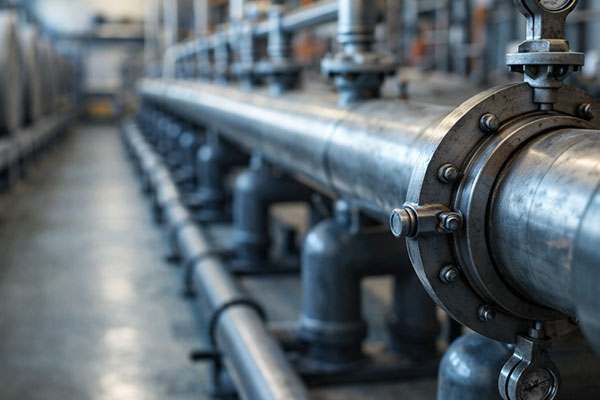
Heat exchangers and chemical pipelines operate under some of the harshest industrial conditions. Aggressive chemicals, high temperatures, pressure fluctuations, and erosive flow continuously attack internal and external surfaces. Once corrosion or erosion begins, efficiency drops rapidly—often followed by leaks, unplanned shutdowns, and costly replacements.
Laser cladding provides a high-performance surface protection solution by forming dense, corrosion-resistant layers with precise thickness control. Using advanced systems from VivLaser, operators can significantly extend component life while maintaining dimensional integrity and flow performance.
Why Heat Exchangers and Pipelines Degrade So Quickly
Unlike static structures, these components face combined stress factors:
- Chemical corrosion from acids, alkalis, and reactive media
- High-temperature oxidation in thermal exchange processes
- Erosion-corrosion caused by high-velocity fluids, slurries, or particulates
- Localized attack at welds, bends, joints, and inlet zones
Traditional protection methods such as coatings, liners, or bulk material upgrades often fail due to poor adhesion, uneven thickness, or high replacement cost.
How Laser Cladding Protects Critical Flow Components
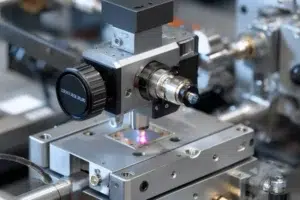
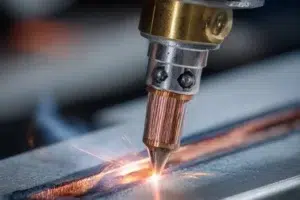
Laser cladding deposits a thin, metallurgically bonded alloy layer onto the surface of pipes, tubes, or exchanger components. The process uses a precisely controlled laser beam to melt the cladding material and a shallow surface layer of the substrate, creating a dense and durable protective zone.
The result is a coating that behaves like part of the base material—without the cracking, peeling, or delamination seen in conventional coatings.
Key Benefits for Chemical and Thermal Systems
Improved Corrosion and Erosion Resistance
Nickel-based, cobalt-based, or iron-based corrosion-resistant alloys can be applied to withstand acids, chlorides, high-temperature oxidation, and particle erosion.
Controlled Coating Thickness
Laser cladding enables precise thickness control, which is critical for:
- Maintaining internal pipe diameter
- Preserving heat transfer efficiency
- Avoiding flow turbulence or pressure loss
Suitable for On-Site or Factory Processing
Laser cladding systems can be deployed in production facilities or adapted for on-site repair, making them ideal for large pipelines, installed heat exchangers, or shutdown maintenance scenarios.
Typical Applications
Laser cladding is widely used to protect and restore:
- Heat exchanger tubes and tube sheets Corrosion-resistant layers extend service life without compromising thermal performance.
- Chemical pipelines and elbows Localized reinforcement at high-wear and high-corrosion zones reduces leak risk.
- Valves, flanges, and connectors Enhanced resistance in sealing and transition areas exposed to aggressive media.
- High-temperature process lines Protection against oxidation and thermal cycling in petrochemical and chemical plants.
Why VivLaser Laser Cladding Equipment Fits These Applications
VivLaser laser cladding systems are engineered for precise energy control and industrial reliability—key requirements for flow and process components.
Process Advantages
- Stable, uniform energy distribution Produces consistent cladding quality around curved tubes and internal surfaces.
- Low dilution and strong metallurgical bonding Ensures long-term resistance under chemical attack and thermal cycling.
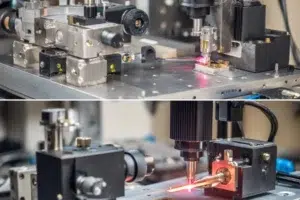
- Flexible integration Compatible with robotic systems, pipe rotators, and custom fixtures for internal or external cladding.
- Scalable power platforms Suitable for thin-walled tubes as well as heavy-duty pipeline sections.
Extending Service Life Without Full Replacement
Instead of replacing entire heat exchangers or pipeline sections, laser cladding allows targeted protection and repair. This approach:
- Reduces material and replacement costs
- Shortens maintenance shutdowns
- Supports sustainable plant operation by minimizing waste
For industries where downtime equals lost revenue, laser cladding becomes a strategic maintenance and asset-protection tool rather than a reactive repair method.
Conclusion
Laser cladding offers a robust and precise solution for protecting heat exchangers and chemical pipelines exposed to corrosion, erosion, and high temperatures. By combining controlled coating thickness with superior bonding strength, it ensures long-lasting performance without compromising system efficiency.
Frequently Asked Questions (FAQ)
How does laser cladding protect heat exchangers from corrosion?
Laser cladding applies a dense, metallurgically bonded corrosion-resistant alloy to heat exchanger surfaces. This layer resists chemical attack, oxidation, and erosion while maintaining thermal performance.
Can laser cladding be used inside chemical pipelines?
Yes. Laser cladding can be applied to internal pipe surfaces using specialized optics and pipe rotation systems, making it suitable for protecting pipelines exposed to aggressive chemicals and erosive flow.
Is laser cladding better than traditional coatings for chemical service?
Laser cladding provides superior adhesion and durability compared to sprayed or painted coatings. Because the clad layer is metallurgically bonded, it does not peel or delaminate under chemical or thermal stress.
Does laser cladding affect flow or heat transfer efficiency?
No. Laser cladding allows precise control of coating thickness, helping maintain internal diameters, smooth flow characteristics, and efficient heat transfer.
Can laser cladding be performed on-site for pipelines and heat exchangers?
Yes. Laser cladding can be carried out both in factory settings and on-site during planned shutdowns, reducing the need for full component replacement and minimizing downtime.
What materials are commonly used for corrosion-resistant laser cladding?
Nickel-based, cobalt-based, and iron-based alloys are commonly used, selected according to chemical media, temperature, and erosion conditions.
Why choose VivLaser equipment for chemical and thermal applications?
VivLaser laser cladding systems offer stable energy control, low dilution, and flexible integration—critical for coating pipes, tubes, and heat exchanger components exposed to harsh environments.