Many dentists struggle with achieving complete smear layer removal during root canal procedures, affecting long-term treatment success.
Diode lasers help overcome the limitations of traditional irrigation by thermally removing smear layers and opening dentinal tubules, especially in hard-to-reach areas.

While traditional irrigation methods have been standard practice, diode lasers are now emerging as a promising addition. Let’s explore why.
What Is the Smear Layer on Tooth Surfaces?
Dentists often overlook the microscopic residue left behind after mechanical instrumentation, known as the smear layer.
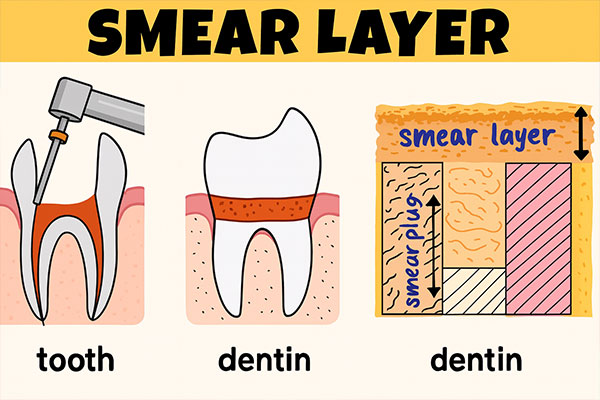
The smear layer is a thin film of debris created during dental procedures, composed of dentin particles, tissue remnants, and sometimes bacteria.
Composition and Formation
The smear layer typically forms during root canal instrumentation or cavity preparation. It consists of organic matter (pulp remnants, bacteria) and inorganic material (dentin dust). This layer can block the openings of dentinal tubules, potentially reducing the efficacy of irrigants and preventing proper sealing of the canal.
Clinical Implications
| Component | Clinical Concern |
|---|---|
| Organic debris | Supports bacterial regrowth |
| Inorganic debris | Blocks disinfectant penetration |
| Bacterial residue | Promotes post-treatment infection |
Why Is Smear Layer Removal Important in Dentistry?
Leaving the smear layer untreated can compromise even the best root canal procedures.
Removing the smear layer improves sealer adhesion, allows deeper disinfectant penetration, and reduces residual bacteria in the canal system.
Adhesion and Seal Integrity
If the smear layer remains, it prevents proper contact between the canal walls and sealing materials. This can lead to leakage, reinfection, and long-term failure.
Disinfection Efficacy
Canal irrigants work best when they reach deep into dentinal tubules. The smear layer acts as a barrier to chemical penetration, reducing disinfection effectiveness.
Risk Reduction
Residual bacteria in the smear layer are linked to persistent periapical infections. Proper removal reduces the risk of flare-ups and retreatments.
How Do Traditional Methods Remove the Smear Layer?
Chemical irrigants have been the go-to method for decades, but are they enough?
Conventional irrigation with EDTA and sodium hypochlorite helps remove the smear layer, but results can be inconsistent and technique-sensitive.
Chemical Approach
EDTA chelates calcium ions, targeting the inorganic part, while sodium hypochlorite dissolves organic tissues. Used in sequence, they work together to partially eliminate the smear layer.
Limitations
| Limitation | Impact |
|---|---|
| Incomplete removal | Residual smear layer in apical area |
| Overuse risks | Dentin erosion |
| Manual delivery limitations | Inconsistent flow and penetration |
Can Diode Lasers Effectively Remove the Smear Layer?
You may wonder whether a soft-tissue laser can actually clean hard dental surfaces.
Yes, diode lasers can remove the smear layer using photothermal energy that vaporizes debris and opens dentinal tubules, especially in hard-to-reach canal areas.
Mechanism of Action
Diode lasers (810–980nm) penetrate deeper than traditional irrigation and produce heat that dislodges and vaporizes organic components of the smear layer. Studies show significant effectiveness in apical third cleaning.
Evidence from Studies
| Study/Author | Outcome |
|---|---|
| Gutknecht et al. | Diode laser significantly reduced smear layer |
| Moritz et al. | Enhanced canal wall cleanliness |
| Yared et al. | Effective adjunct to chemical irrigation |
Vivlaser’s Diode Laser Modules for Dental Applications
Clinicians need compact, reliable laser systems designed for dental applications—not just generic tools.
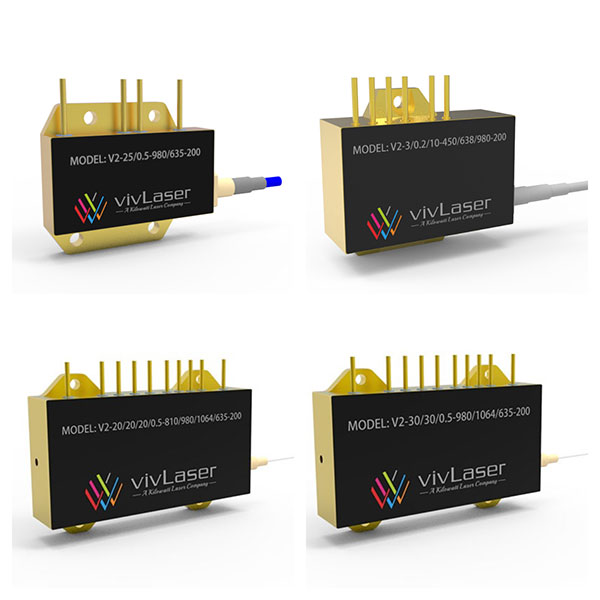
Vivlaser offers medical-grade, multi-wavelength fiber-coupled diode laser modules ideal for endodontic cleaning, smear layer removal, and periodontal care.
Recommended Models:
| Model | Wavelengths (nm) | Power (W) | Fiber Core | Application Notes |
|---|---|---|---|---|
| V2-3/0.2/10-450/638/980 | 450 / 638 / 980 | 3 / 0.2 / 10 | 200 µm | Ideal for soft tissue and canal disinfection with visible beam guidance |
| V2-15/15/15/0.5-810/980/1064/638 | 810 / 980 / 1064 / 638 | 15 / 15 / 15 / 0.5 | 200 µm | Suitable for deep disinfection, biofilm removal, and tissue vaporization |
| V2-20/20/20/0.5-810/980/1064/635 | 810 / 980 / 1064 / 635 | 20 / 20 / 20 / 0.5 | 200 µm | High-power option for clinic-grade continuous use |
Features and Support
-
Compact design with SMA905 fiber interface
-
Output power up to 60W total
-
Multiple wavelengths for simultaneous or selective tissue targeting
-
Excellent thermal stability and high electro-optical conversion
👉 Contact us for detailed specifications, integration support, or clinical sample evaluation.
Conclusion
Diode lasers can support smear layer removal in endodontics when used with the right parameters. For deeper cleaning, enhanced disinfection, and improved clinical outcomes, diode lasers are a reliable and innovative tool in modern root canal therapy.