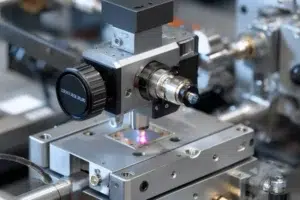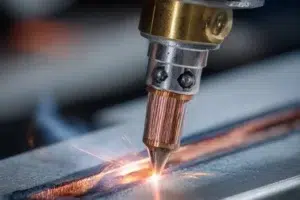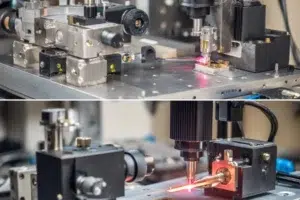
Ultrafast laser systems demand precision, and even a minor instability in the pump source can ruin everything.
The best pump source for ultrafast lasers is one that maintains wavelength stability, low noise, and high coupling efficiency under demanding thermal and operational conditions.
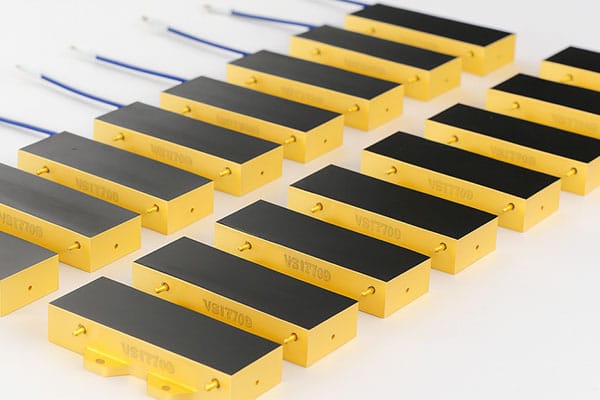
When choosing a pump source for ultrafast lasers, system architects need more than just power—they need precision, reliability, and spectral control. Let’s dive in.
Why the Pump Source Matters More in Ultrafast Lasers?
The stability of the pump source directly determines pulse quality, compression performance, and output stability.
Ultrafast lasers are highly sensitive to noise and spectral drift, making pump source stability1 critical for clean, compressible pulses.
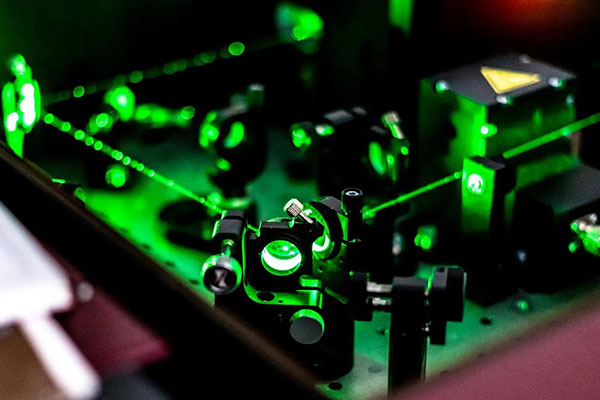
Pulse Duration and Compression Sensitivity
-
Pulse duration in femtosecond regimes relies on broad gain bandwidth and precise spectral shape.
-
Spectral noise from the pump source introduces timing jitter and compressibility issues.
Noise Amplification
-
Pump-induced intensity noise transfers to the seed pulse.
-
This affects mode-locking, spectral coherence, and output energy consistency.
Thermal Drift
-
Pump wavelength drift affects gain symmetry and pulse shaping.
-
Maintaining thermal equilibrium is essential for long-term pulse integrity.
What Defines a “Good” Pump Source for Ultrafast Systems?
A good pump source provides stable wavelength, clean beam quality, and high coupling efficiency2 across varying loads.
Core indicators of a good pump source include: wavelength stability3, low RMS noise, optimal power density, and predictable L/I performance.

Key Technical Criteria
| Parameter | Ideal Range | Impact |
|---|---|---|
| Wavelength Stability | ±1 nm or better | Maintains gain profile and pulse compression |
| RMS Noise | <1% | Prevents timing jitter and amplitude fluctuation |
| Spectral Width | <1 nm | Supports efficient absorption and narrow gain bandwidth |
| L/I Curve Linearity | High | Ensures controllable and stable power tuning |
| Coupling Efficiency | >90% | Maximizes use of pump power in gain medium |
The Most Common Pump Sources for Ultrafast Lasers?
Different gain media require tailored pump wavelengths4.
Typical pump wavelengths4 include 976 nm for Yb, 808/880 nm for Nd, and green DPSS for Ti:Sapphire systems.
Matching Pump to Gain Medium
-
Yb-doped fiber/solid-state: 976 nm matches absorption peak5.
-
Nd:YAG/Nd:YVO4: 808 nm (traditional) or 880 nm (low quantum defect).
-
Ti:Sapphire: Requires green pump (e.g., 532 nm DPSS).
Selection Criteria
-
Match absorption peak5.
-
Optimize for thermal load.
-
Ensure beam quality fits the gain profile.
Why 976 nm6 Pump Diodes Are Preferred for Yb-Based Ultrafast Lasers?
976 nm6 aligns closely with Yb’s absorption peak, ensuring high absorption efficiency and thermal performance.
976 nm6 provides peak absorption, high efficiency, and reduced thermal loading compared to other wavelengths.
Efficiency and Heat Management
-
Reduces quantum defect.
-
Enhances overall system wall-plug efficiency.
-
Simplifies thermal management in compact systems.
Stability Advantages
-
Supports narrow linewidth and steady gain.
-
Critical for short pulse amplification without spectrum distortion.
Application Fit
- Ideal for oscillators and amplifiers in ultrafast fiber and bulk Yb lasers.
Single-Emitter vs. Multi-Emitter7 vs. Fiber-Coupled Pump Modules?
Different laser designs require different pump module architectures.
Single-emitter8 modules are compact and efficient, while multi-emitter and fiber-coupled modules scale better for higher power.
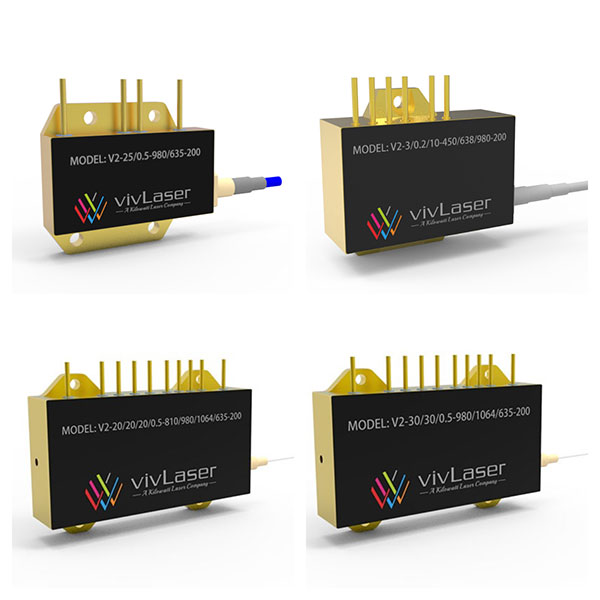
Architecture Comparison
| Type | Power Range | Pros | Cons |
|---|---|---|---|
| Single-Emitter | <30W | Simple, stable | Limited power, integration needed |
| Multi-Emitter7 | 30W-200W | Scalable, cost-effective | Beam shaping needed |
| Fiber-Coupled | Up to kW | Easy to integrate, remote delivery | Complex coupling optics |
When to Use What
-
Oscillators: Single-emitter8
-
Pre-Amplifiers: Multi-emitter
-
Main Amplifiers: Fiber-coupled modules
How Pump Wavelength Drift Impacts Pulse Compression and Stability?
Even small pump wavelength drift9s can disrupt spectral shape and pulse compression.
Pump wavelength drift alters gain spectrum, affecting pulse duration, compressibility, and nonlinear phase evolution.
Spectral Broadening and Nonlinear Effects
-
Gain narrowing reduces output spectral width.
-
Chirped pulse amplification (CPA) becomes less compressible.
-
Nonlinearities amplify instability.
Long-Term Drift Issues
-
Long-term usage induces thermal-induced drift.
-
Active thermal control and external feedback help maintain alignment.
Thermal Management: Keeping the Pump Source Wavelength-Locked?
Thermal control is the frontline defense against wavelength drift and spectral instability.
Precision thermal design ensures the pump diode stays within the optimal wavelength-locking10 range.
Techniques for Wavelength Locking
-
Use of volume Bragg gratings (VBG) for spectral feedback.
-
Closed-loop TEC control for sub-degree accuracy.
Vivlaser’s Approach
-
Vivlaser uses external VBG locking and optimized heat dissipation structures.
-
Ensures wavelength drift stays within ±1 nm over 10,000+ hours.
Choosing the Right Pump Source for Different Ultrafast Architectures?
Each stage in an ultrafast laser requires tailored pump characteristics.
Oscillators need low-power, ultra-stable pumps; amplifiers require scalable power and efficient coupling.
Role-Based Selection
-
Oscillator: 976 nm, <20W, ultra-low noise
-
Pre-Amplifier: 976 nm, 30-60W, high coupling
-
Main Amplifier: 976 nm, 100W+, low divergence fiber-coupled
Module Examples
| Stage | Vivlaser Model | Specs |
|---|---|---|
| Oscillator | 25W-976nm | <0.7 nm linewidth, 105 µm fiber |
| Pre-Amp | 65W-976nm | 200 µm fiber, locked wavelength |
| Main Amp | 120W-976nm | VBG-locked, <1 nm drift over 10k hrs |
Recommended Pump Configurations for Industrial Ultrafast Lasers?
Application-specific needs dictate pump configuration.
For industrial ultrafast lasers, choose pump modules with locked wavelength, fiber coupling, and high reliability.
Application-Based Choices
| Application | Pump Spec | Notes |
|---|---|---|
| Picosecond Marking | 30W-976nm | Stable, compact, low-noise |
| Femtosecond Cutting | 120W-976nm | Locked VBG, low drift |
| mJ-Class Amplifiers | 200W+ | Multi-module combined, cooled |
Why OEMs Choose High-Stability Pump Modules From Leading Manufacturers?
OEMs need dependable, long-life components that reduce integration risk.
Leading manufacturers like Vivlaser offer locked-wavelength, low-drift pump modules11 with proven reliability and responsive support.
What OEMs Value
-
Fast delivery and support
-
Consistent beam quality
-
Locked wavelength with low drift
-
Application customization
Vivlaser Advantage
-
Over 30% market share in solid-state pump modules12
-
Adopted by leading brands like Raycus, Maxphotonics, JPT, Inno, etc.
Conclusion
Stable, locked-wavelength pump sources are the foundation of every high-performance ultrafast laser system.
-
Understanding pump source stability can enhance your knowledge of ultrafast laser performance and applications. ↩
-
Exploring coupling efficiency can help you maximize pump power usage, enhancing the overall effectiveness of ultrafast systems. ↩
-
Understanding wavelength stability is crucial for optimizing ultrafast systems and ensuring consistent performance. ↩
-
Understanding pump wavelengths is crucial for optimizing laser performance and efficiency. ↩ ↩
-
Exploring the absorption peak can enhance your knowledge of laser efficiency and design. ↩ ↩
-
Explore how 976 nm enhances laser performance and efficiency, crucial for advanced applications. ↩ ↩ ↩
-
Learn about Multi-Emitter modules and their scalability for higher power applications. ↩ ↩
-
Explore the benefits of Single-emitter modules for compact and efficient laser designs. ↩ ↩
-
Understanding pump wavelength drift is crucial for optimizing laser systems and ensuring stable performance. ↩
-
Understanding wavelength-locking is crucial for maintaining stability in laser systems, making this resource invaluable for engineers. ↩
-
Explore this link to understand how locked-wavelength, low-drift pump modules enhance reliability and performance in OEM applications. ↩
-
Discover the advantages of solid-state pump modules and how they can improve efficiency and longevity in your projects. ↩